


Jonathan Swift, Contests and dissentions (Boston 1728): The first Irish book published in America
Swift, Jonathan (1667-1745). A discourse of the contests and dissentions between the nobles and the commons in Athens and Rome : with the consequences they had upon both those states. [Boston]: Printed [by Thomas Fleet?], in the year 1728. First American edition. [2], 59p.; 18 cm. Signatures: [A]⁴ B-H⁴ (H4 verso blank; D2 missigned C2). Lacking half title and final blank. Light chipping to margins of cover, small hole and area of discoloration to final leaf, but overall a remarkably well preserved example. Housed in a custom clamshell case. Teerink 478; Evans 3108; ESTC W38080.
Contests and Dissentions is the first work by Swift to be printed in America, and the only one published in his lifetime. It is also the rarest, represented in only five institutions.
Swift penned the pamphlet in 1701, in the context of a literary "Paper War" waged to curry the favor of public opinion in the contest between different branches of government. He was moved to write the work, his first satire, in response to a brewing political crisis. In the final years of his reign, King William III found himself stymied by a Tory House of Commons whose legislative agenda was contrary to his own. They reduced the size of the army, wrested control of forfeited Irish estates, and cowed the House of Lords by impeaching its most powerful members. As Swift later recalled, these acts of usurpation, "at least as it appeared to me from the views we received of it in Ireland," paralleled the proceedings that "had ruined the liberties of Athens and Rome." Swift's pamphlet addressed these matters by arguing for the importance of preserving the balance of power between the king, the nobles, and the commons -- the One, the Few, and the Many -- and especially of guarding against the political overreach of the Many. "When the Balance of Power is duly fixed in a State," he wrote, "nothing is more dangerous and unwise than to give way to the first steps of Popular Encroachments."
"Contests and Dissentions is for Swift a truly foundational work," notes Eugene Hammond. It established his reputation and demonstrated his ability "to command a thoughtful, serious voice that could carry his audience along with him if on an inevitable flow of logic, good sense, and admirable ethics." While evincing a deep learning and strong civic vision, the work also offers early glimpses of the biting wit for which the author would be most revered. In his first pamphlet, Swift employed the rhetorical devices that he would return to repeatedly over the course of his literary career -- litotes, dimunition, the dry mock, reification, and so on. As Frank Ellis notes, "What makes [Contests and Dissentions] a satire is that it creates a fictional world, like Lilliput and Brobdingnag, which in turn provides standards for a verbal attack on contemporary affairs." The dripping irony that rounds out the pamphlet anticipates the king of Brobdingnag's excoriation of "the most pernicious Race of little odious Vermin that Nature ever suffered to crawl upon the Surface of the Earth" in Gulliver's Travels:
[Members of] a Body of Commons ... have also the ill fortune to be generally led and influenced by the very worst among themselves; I mean, Popular Orators, Tribunes, or as they are now stiled, Great Speakers, Leading Men, and the like. From whence it comes to pass, that in their Results we have sometimes for the same Spirit of Cruelty and Revenge, of Malice and Price, the same Blindness and Obstinacy, and Unsteadiness; the same ungovernable Race and Anger; the same Injustice, Sophistry and Fraud, that ever lodged in the Breast of any Individual.
When William Burnet (1687-1729) arrived in July 1728 to serve as governor of Massachusetts, he had occasion to remember Swift's Contests and Dissentions. As the son of the late Bishop of Salisbury, a man highly respected by Increase Mather and other American divines for his support of the Glorious Revolution, Burnet might have expected support for his commission as representative of the King. But the Massachusetts Charter of 1691 granted to the province's House of Representatives the power of the purse, and Burnet was dismayed to find an aggressively independent body accustomed to using its financial authority in opposition to the directives of the Governor and his Council. Burnet recognized in Swift's Contests and Dissentions a compelling theoretical framework for him to present the case that the House of Representatives was encroaching upon the King's authority, and upsetting the balance of power that was a necessary bulwark against tyranny. He commissioned a reprint by a local printer. The publisher of the Boston edition is not identified, but the vignette on the title page (Reilly 145) suggests that it was Thomas Fleet, with premises on Cornhill (now Washington Street).
There is a certain irony that the Governor Burnet would turn to Swift, who had often crossed swords with his father. But Swift's brilliance, particularly in his use of classical sources as exempla in support of political ideas derived from Sir William Temple and John Locke, gave this work a timeless quality that the other productions of the Paper War waged 25 years earlier lacked. Where many other productions of the era were morassed in the minutiae of factional disputation, Swift framed the issues in principles derived from philosophy and supported by history, offering a model for the preservation of liberty against the encroachments of tyranny.
W. B. Yeats recognized Swift as one's of Ireland's champions of liberty. The poet translated the Latin epitaph on Swift's tomb in St. Patrick's Cathedral:
Swift has sailed into his rest;
Savage indignation there
Cannot lacerate his Breast.
Imitate him if you dare,
World-Besotted Traveler; he
Served human liberty.
Singling out Contests and Dissentions {"Swift's one philosophical work"} as his favorite among the Dean's tracts, Yeats identified in the pamphlet's celebration of civic and intellectual liberty -- and its concern with the popular movements that produced such destructive men as Oliver Cromwell -- the germs of Irish Nationalism.
This 1728 edition of Contests and Dissentions is the only work by Swift published in America during his lifetime, and almost 20 years would pass before another of his works was printed in the colonies. Copies of the pamphlet have been recorded in only five institutions, four in the United States (NYPL, NYHS, AAS, and BPL), and one in England (BL). So far as we have been able to determine, the last time a copy offered for sale was 1953, when Goodspeed's catalogued a copy for $250.
A keystone for collections on Jonathan Swift, Irish Americana, and the foundations of American liberty.
Works Cited
- Allen, Robert J. “Swift's Contests and Dissensions in Boston.” The New England Quarterly 29 (1956): 73-82
- Ellis, Frank H., ed. A Discourse of the Contests and Dissentions between the Nobles and the Commons in Athens and Rome, by Jonathan Swift. Oxford: Clarendon Press, 1967.
- Hammond, Eugene. Jonathan Swift: Irish Blow-in. New York: Rowman & Littlefield, 2016.
- Torchiana, Donald T. "W. B. Yeats, Jonathan Swift, and Liberty." Modern Philology 61, no. 1 (1963): 26-39
- Yeats, W. B. "The Words upon the window-pane: Introduction," in Wheels and Butterflies. London: Macmillan, 1934, pp. 5-27.
Product tabs
$0
$28,500
Recommend this product
Jonathan Swift, Contests and dissentions (Boston 1728): The first Irish book published in America
Related products
Richard Matheson. The Shrinking Man (1973). First hardcover edition.
Matheson, Richard (1926-2013). The Shrinking Man. London: David Bruce & Watson, 1973. First hardcover edition. A fine, unread copy in a crisp dust...
view details
$750
View details
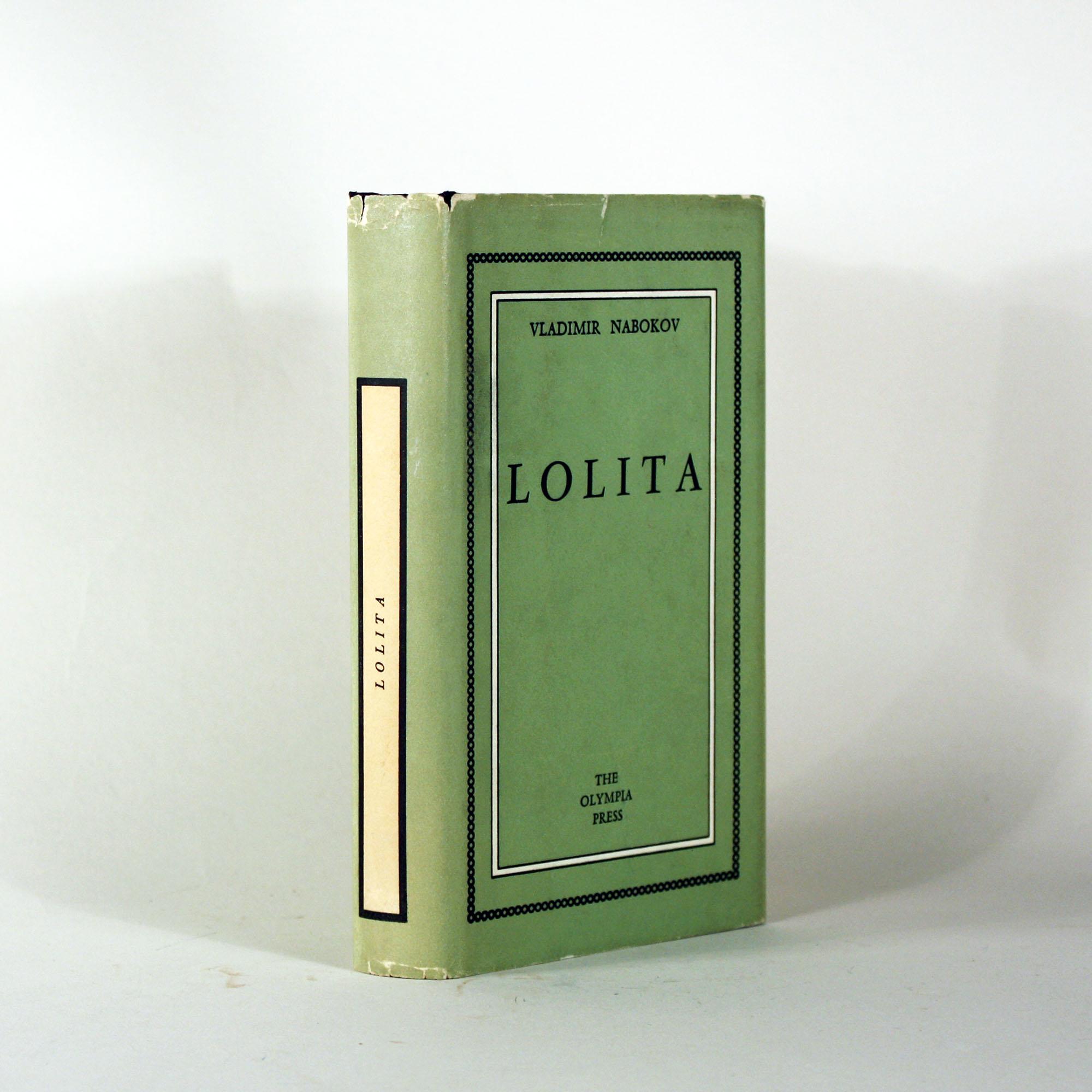
Vladimir NABOKOV. Lolita (1955). First hardcover edition
Nabokov, Vladimir. Lolita. Jerusalem: Printed in Israel for The Olympia Press by Steimatzky's Agency, 1955. 223 p. First hardcover edition. Fine in a ...
view details
$1,750
View details

George Lucas. Star Wars: From the Adventures of Luke Skywalker (1977). First edition.
Lucas, George (b. 1944). Star Wars: From the Adventures of Luke Skywalker. New York: Del Rey / Science Fiction Book Club, 1977. First edition. A very ...
view details
$200
View details

Truman CAPOTE. In Cold Blood (1965). A superior copy, signed
Capote, Truman (1924-1984). In Cold Blood. New York: Random House, 1965. First edition. A remarkably fine copy in a bright dustwrapper.Signed by the a...
view details
$1,500
View details
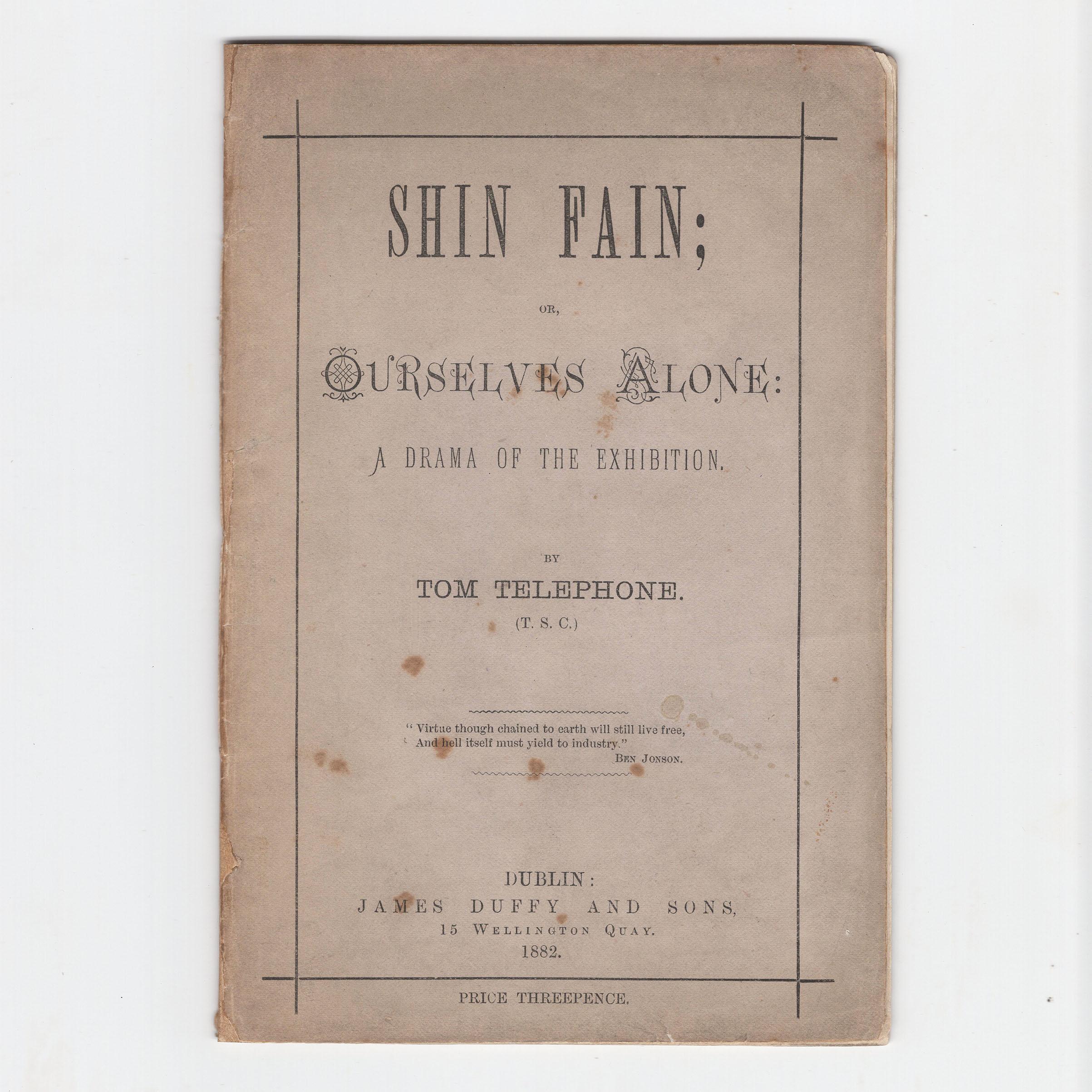
The origins of "Sinn Féin": Thomas S. Cleary's allegory of Irish independence
[Cleary, Thomas Stanislaus (1851–1898)]. Shin Fain; or ourselves alone: a drama of the exhibition, by Tom Telephone, pseud. Dublin: James Duffy and So...
view details
$2,750
View details

A Puritan text from the library of William Stoughton, the hanging judge of Salem
Owen, John (1616 – 1683). The doctrine of the saints perseverance, explained and confirmed. Or, The certain permanency of their 1. Acceptation with Go...
view details
$18,500
View details

Swinburne's Dolores: A forgery by Thomas Wise
[Wise, Thomas James (1859-1937)] Swinburne, Algernon Charles (1837-1909). Dolores. London: John Camden Hotten, Piccadilly, 1867 [i.e., T. J. Wise and ...
view details
$950
View details

Boston broadside blasting beer: an experimental printing in black and gold
Dod, John (ca. 1549-1645). Sermon on Malt. Boston: [Isaac R.] Butts, [ca. 1840]. Broadside, 24 x 19 cm. Printed in gold ink on paper with a glossy bla...
view details
$1,750
View details

Rackham, Arthur / Christina Rossetti. Goblin Market (1933). Signed limited edition in vellum.
Arthur Rackham (1867-1939) and Christina Rossetti (1830-1894). Goblin Market. London: George G. Harrap & Co. Ltd., 1933. First thus. Original limp...
view details
$1,400
View details

Rhode Island General Assembly Proceedings, June 1771
Rhode Island. General Assembly. June, 1771. At the General Assembly of the governor and Company of the English colony of Rhode-Island, and Providence ...
view details
$400
View details

E. E. "Doc" Smith, Vortex Blaster, inscribed
Smith, Edward E. "Doc" (1890–1965). The Vortex Blaster. Reading: Fantasy Press, 1960. Fine in a very good dustwrapper with a nick to the top gutter.In...
view details
$2,750
View details

John HAWKES. Fiasco Hall (1943). Juvenilia, from His Juvenile Library
Hawkes, John (1925-1998). Fiasco Hall, by J. C. B. Hawkes, Jr. Cambridge, MA: Privately Printed, 1943. First edition. [5] + 14p.; 21 cm. Bound (with c...
view details
$1,750
View details

Correspondence from the 18th century Irish poet Mary O’Brien
O'Brien, Mary (fl. 1785–1790). Three autograph letters from the author and her husband Patrick O’Brien to Michael Bourke, 1785 and n.d. 3 pp. bifolia....
view details
$3,500
View details

Rhode Island General Assembly Proceedings, October 1770
Rhode Island. General Assembly. October 1771 [i.e. 1770]. At the General Assembly of the governor and Company of the English colony of Rhode-Island an...
view details
$375
View details

W. Heath Robinson. Bill the Minder. His magnum opus. Signed, limited edition, in vellum
Robinson, W. Heath (1872-1944). Bill the Minder. London: Constable & Co. Ltd, 1912. First edition. Large 4to. Bound in publisher's full white vell...
view details
$3,250
View details

A 1797 Hudson Printing of George Washington’s Farewell Address
Washington, George. America's lecacy [sic]: being the address of G. Washington, on his declining a re-election to the presidency, to the people of th...
view details
$6,000
View details
William S. Burroughs, Naked Lunch: signed and finely bound
Burroughs, William S. (1914-1997) Naked Lunch. New York: Grove Press, 1980. Original wrappers rubbed; some evidence of an old water stain causing disc...
view details
$475
View details