



The Burmese novels of Maurice Collis: a manuscript archive
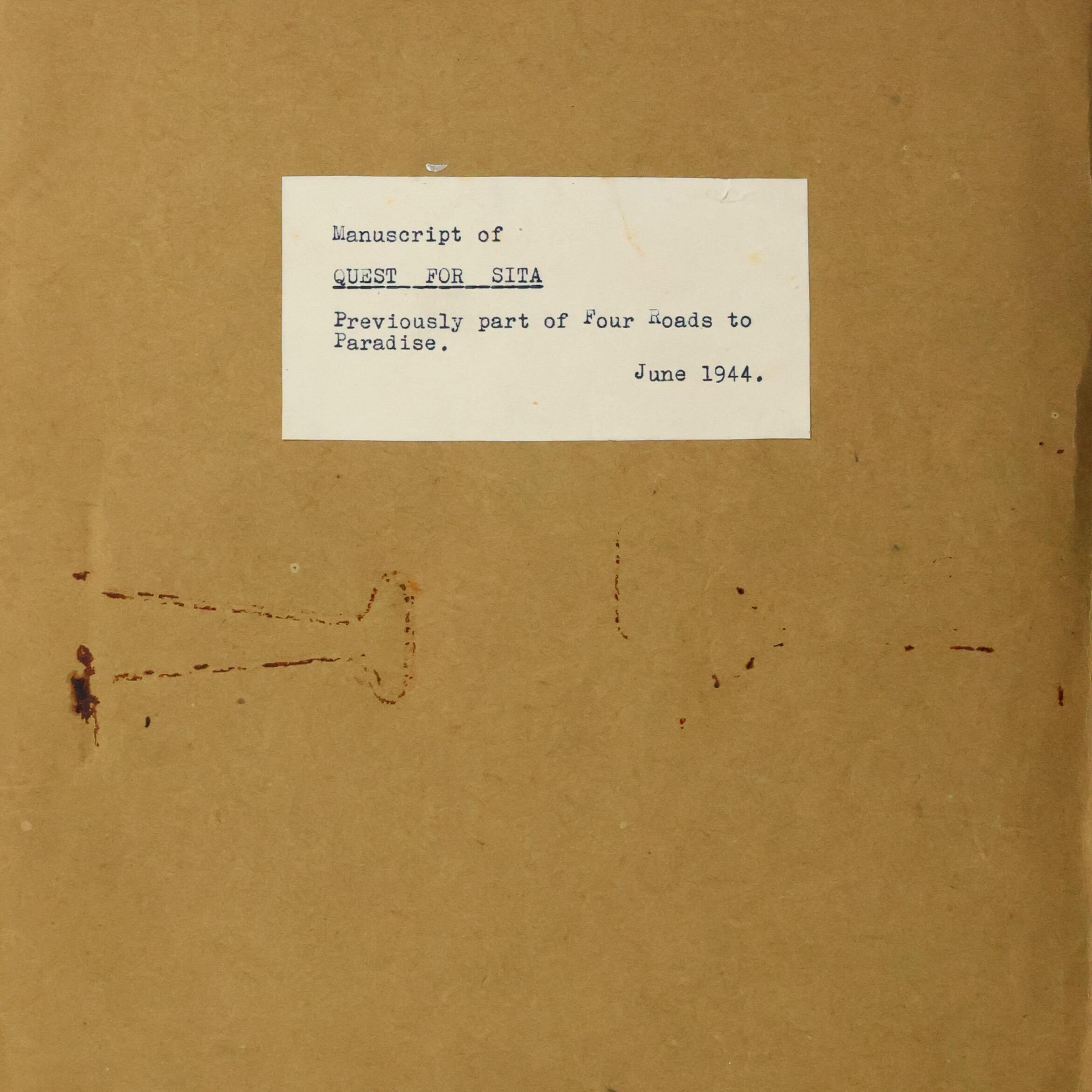
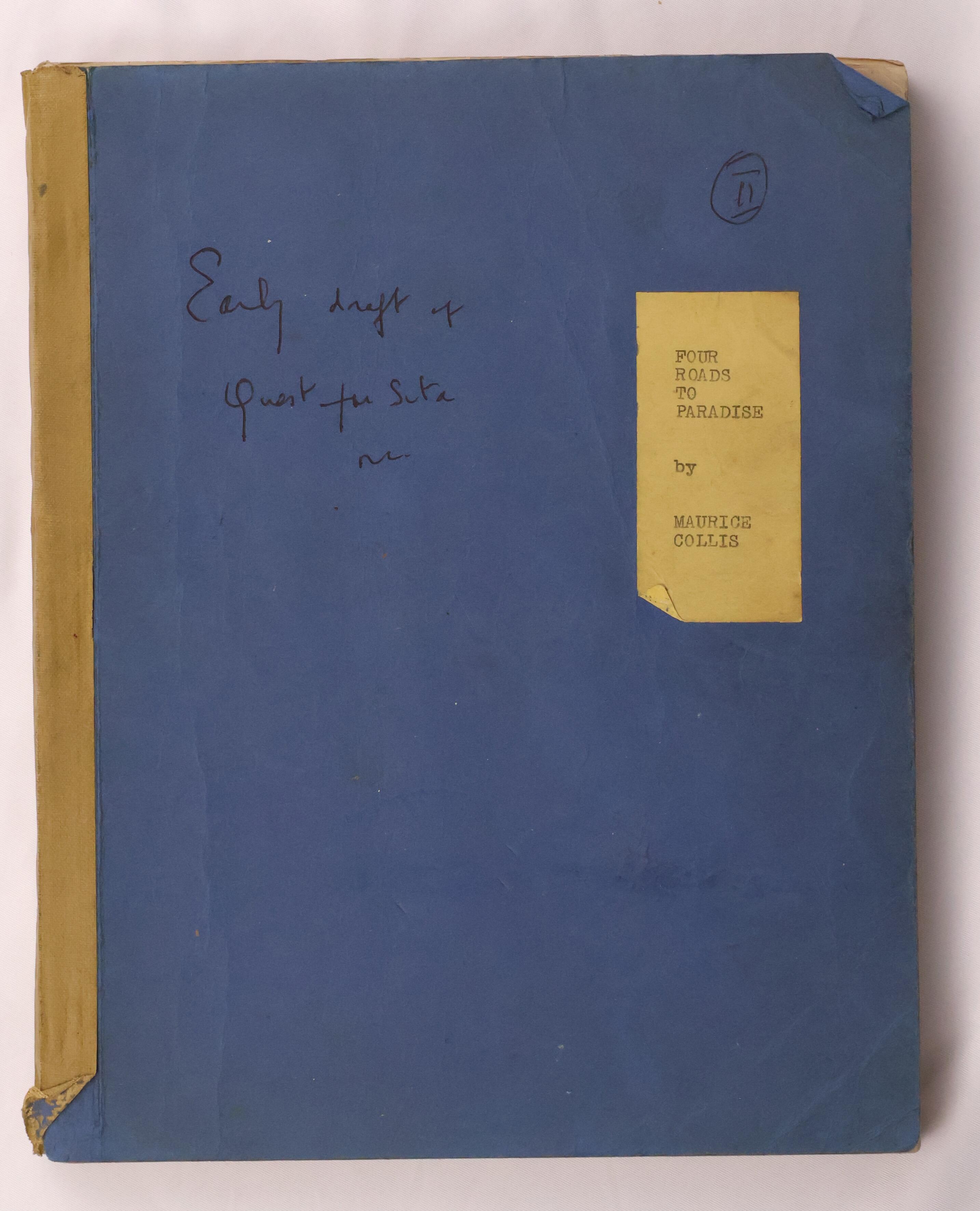
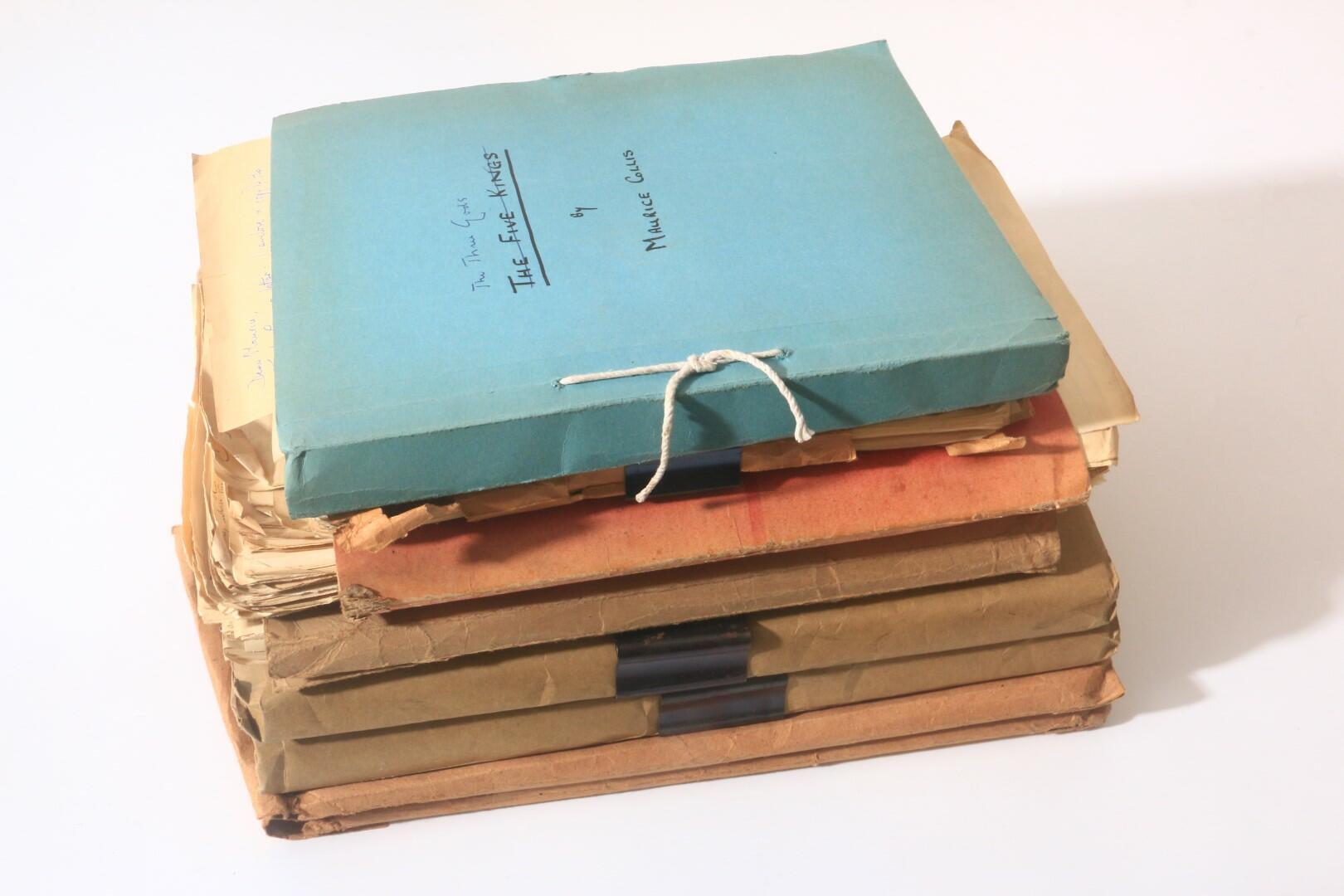
Collis, Maurice (1889 – 1973). Archive for his six works of fiction. London, 1937 to 1970, including holograph manuscripts, corrected typescripts, corrected proofs, and other materials. Materials generally in good to fine condition. Housed in one banker's box, 1.5 linear feet.
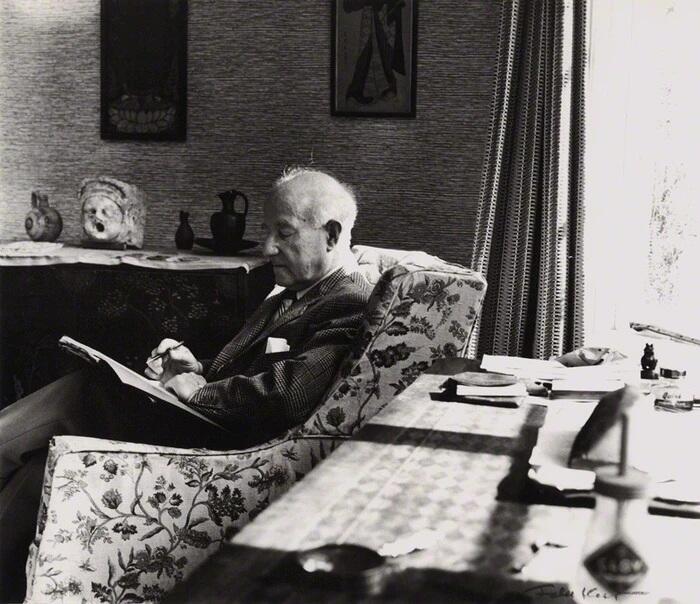
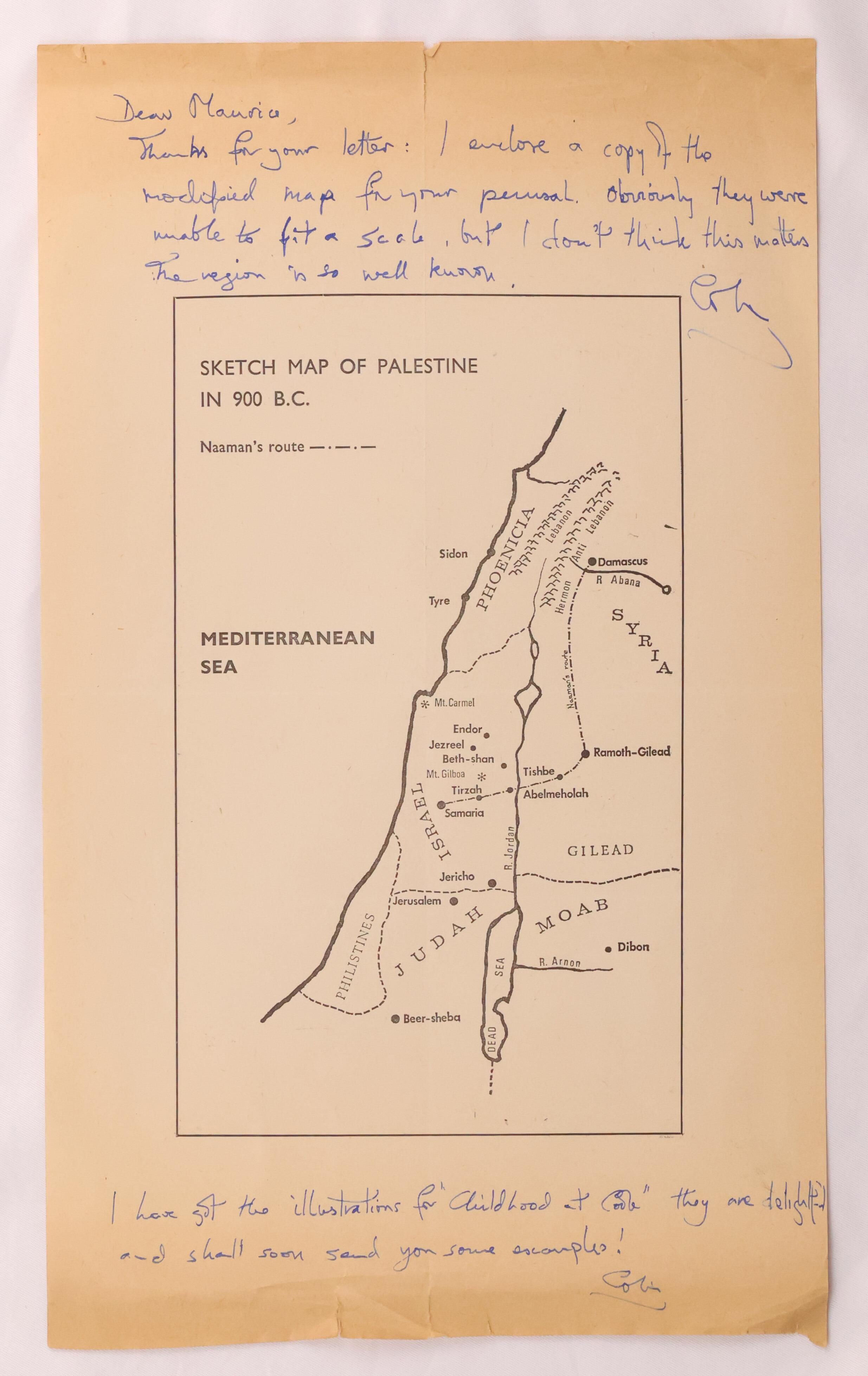
Maurice Collis circa 1960-61, likely working on his final novel, The three kings. Note the map of Israel at right. Portrait by Ida Kar, National Portrait Gallery, London.
A native of Dublin, Collis was educated at Rugby and Oxford. He joined the Indian Civil Service in Myanmar in 1912, and soon found that his sympathies were entirely with the Burmese population rather than the empire he served. As a District Magistrate in Rangoon he ruled regularly against British Army officers. Demoted to a position on the distant Mergui Archipelago, his enchantment with southeast Asian culture – and his dissatisfaction with imperial power – only deepened. “Banishment to Myeik inadvertently did Collis a good turn,” notes Irish poet Joseph Woods; it was there that the civil servant found his voice as a writer.
George Orwell, another veteran of the Burmese service, wrote that Collis’s honesty “makes one wish that politics nearer home could be conducted in an equally decent spirit.” In 1922 Collis had published a volume of poetry influenced by his countrymen George Russell (AE) and James Stephens. Returning to London in 1934, he turned his talents to writing and produced a number of books including biography, history, travelogues and autobiography.
Collis also wrote six works of fiction, all of which are represented in this manuscript archive. His entire literary estate was auctioned by Sotheby’s in 1980 and acquired by the bookseller and collector George Locke. He kept the fiction for himself and sold off the non-fiction through Bloomsbury Auctions to various dealers; most of it eventually made it to Trinity College Dublin and the National Library of Ireland.
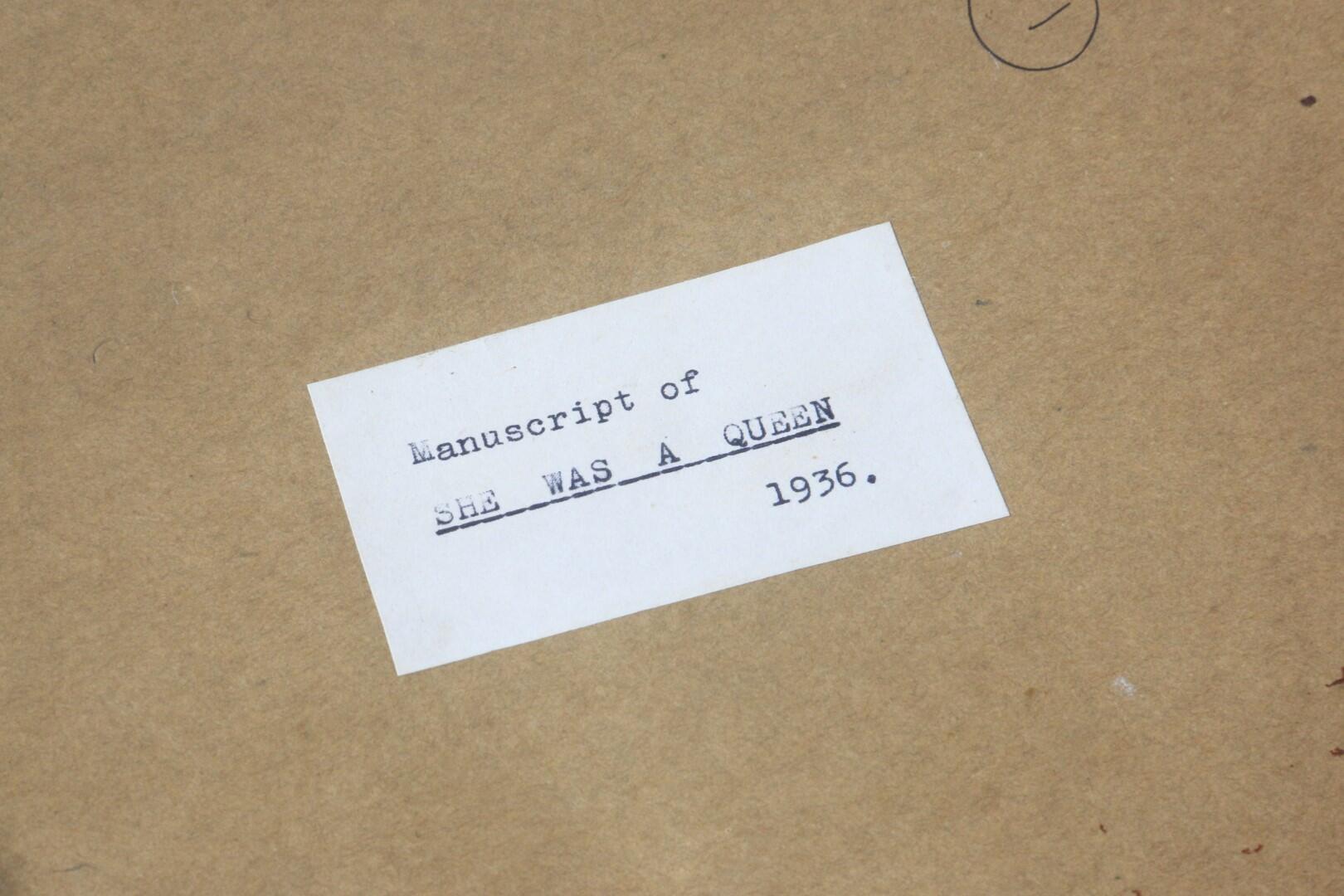
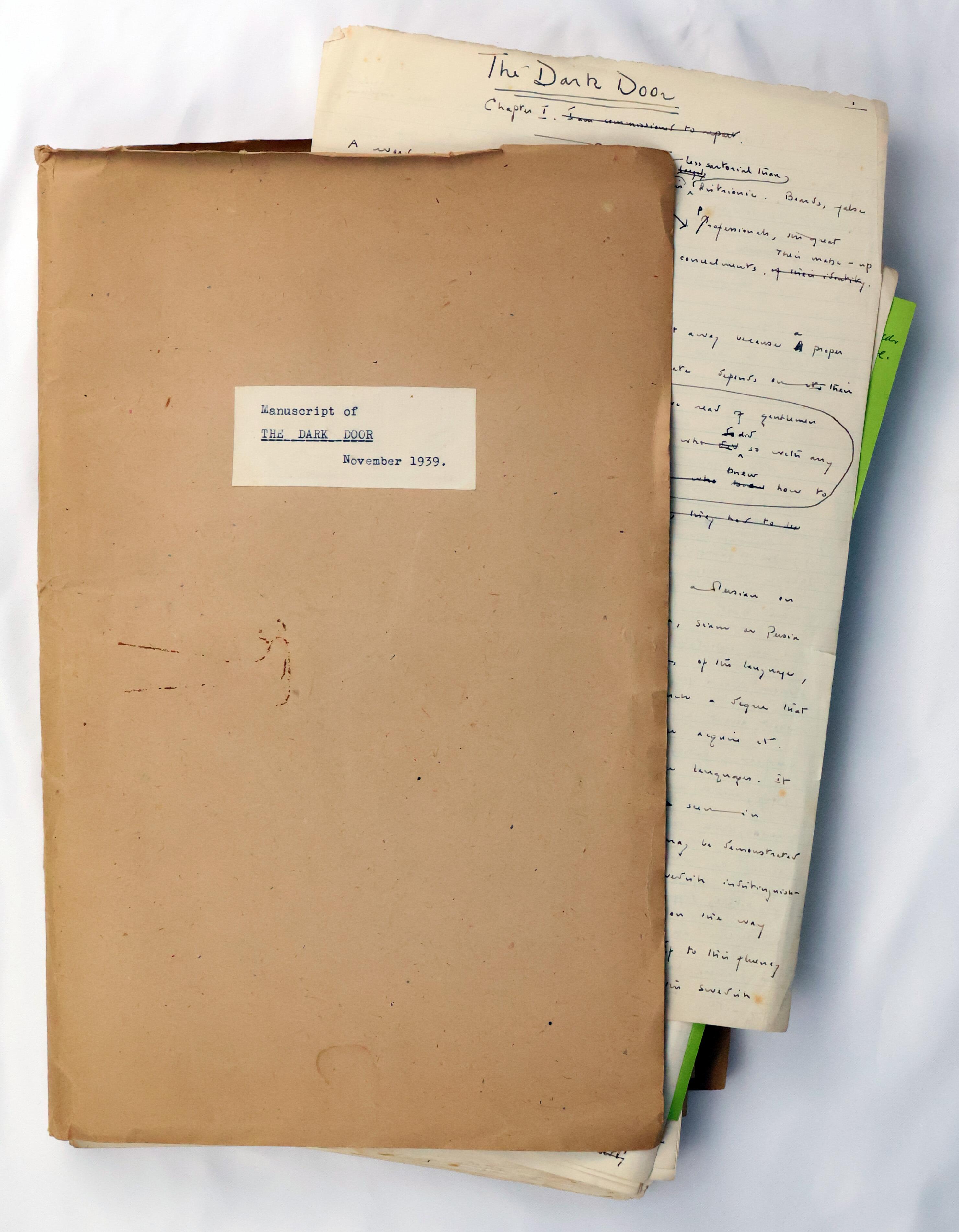
Eudora Welty offered fulsome praise for Collis’s writing, which “is as strategically put together and as fantastically simple as a fairy tale; and it affects us, quite aside from the scholarship of Mr. Collis, with that true belief we gave fairy tales when children.” His novels vary widely from Buddhist thrillers (The dark door) to romans à clef (Sanda Mala) to retellings of history and myth (She was a queen), but all are extensions of his deep admiration for Burmese culture.
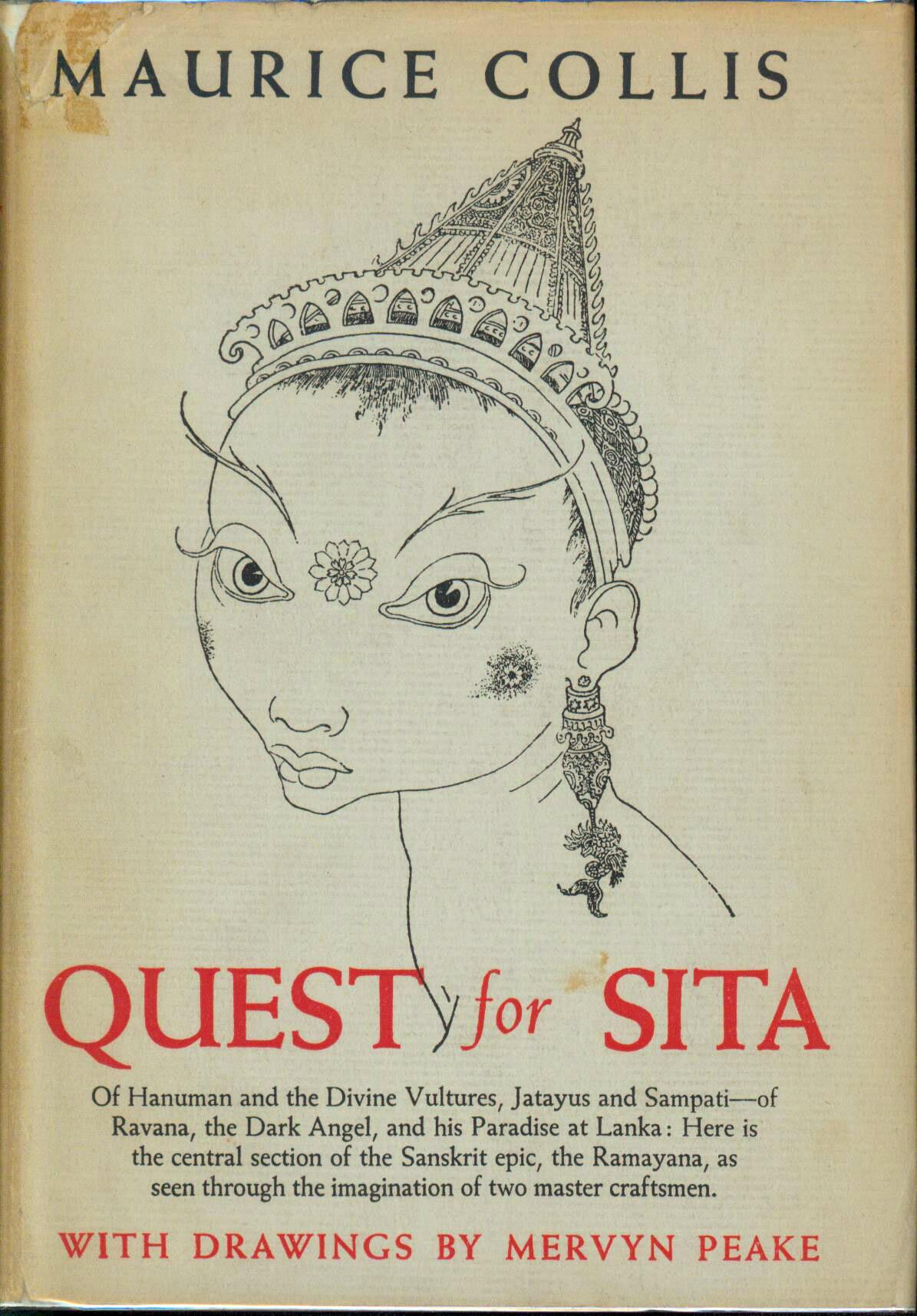
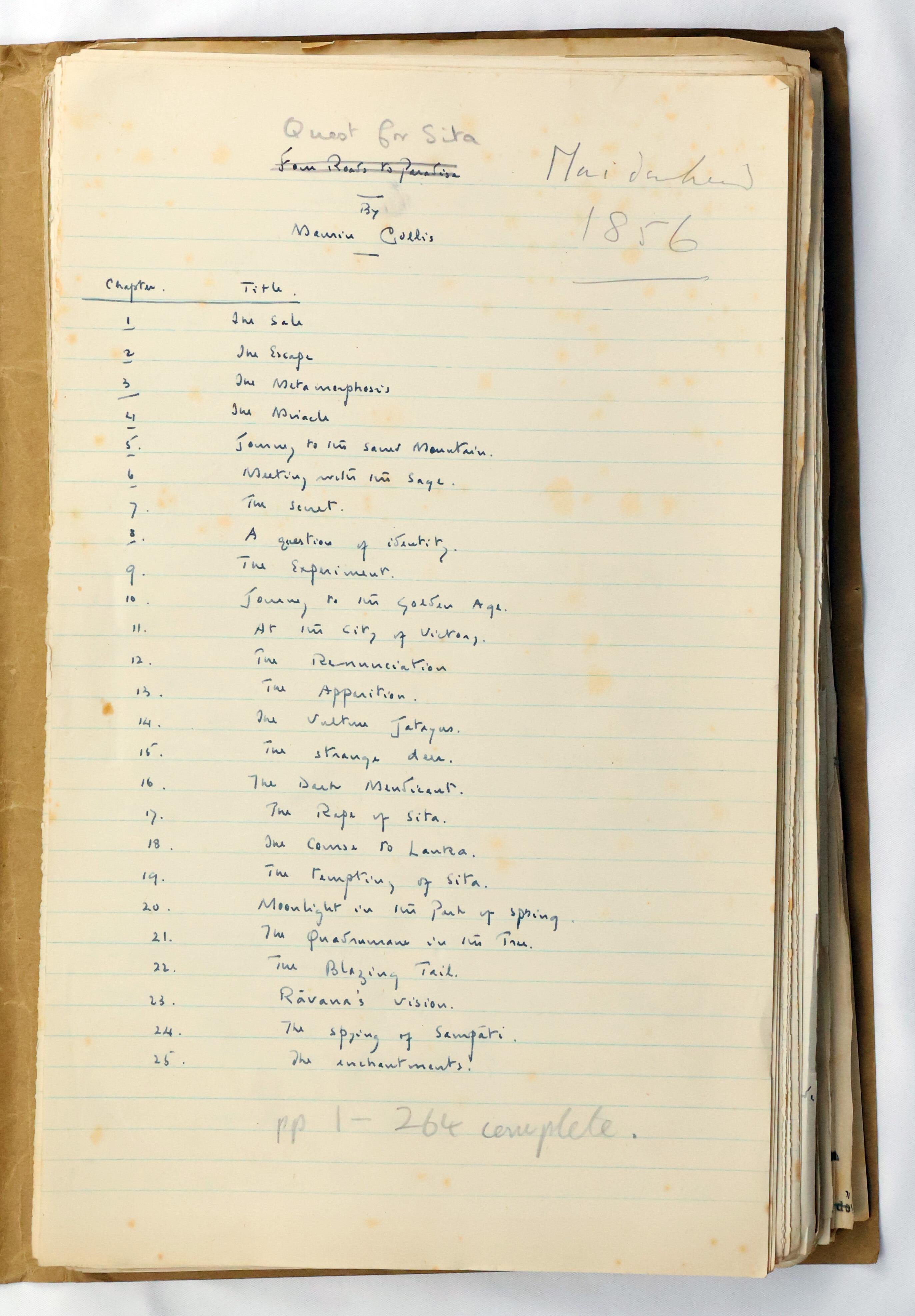
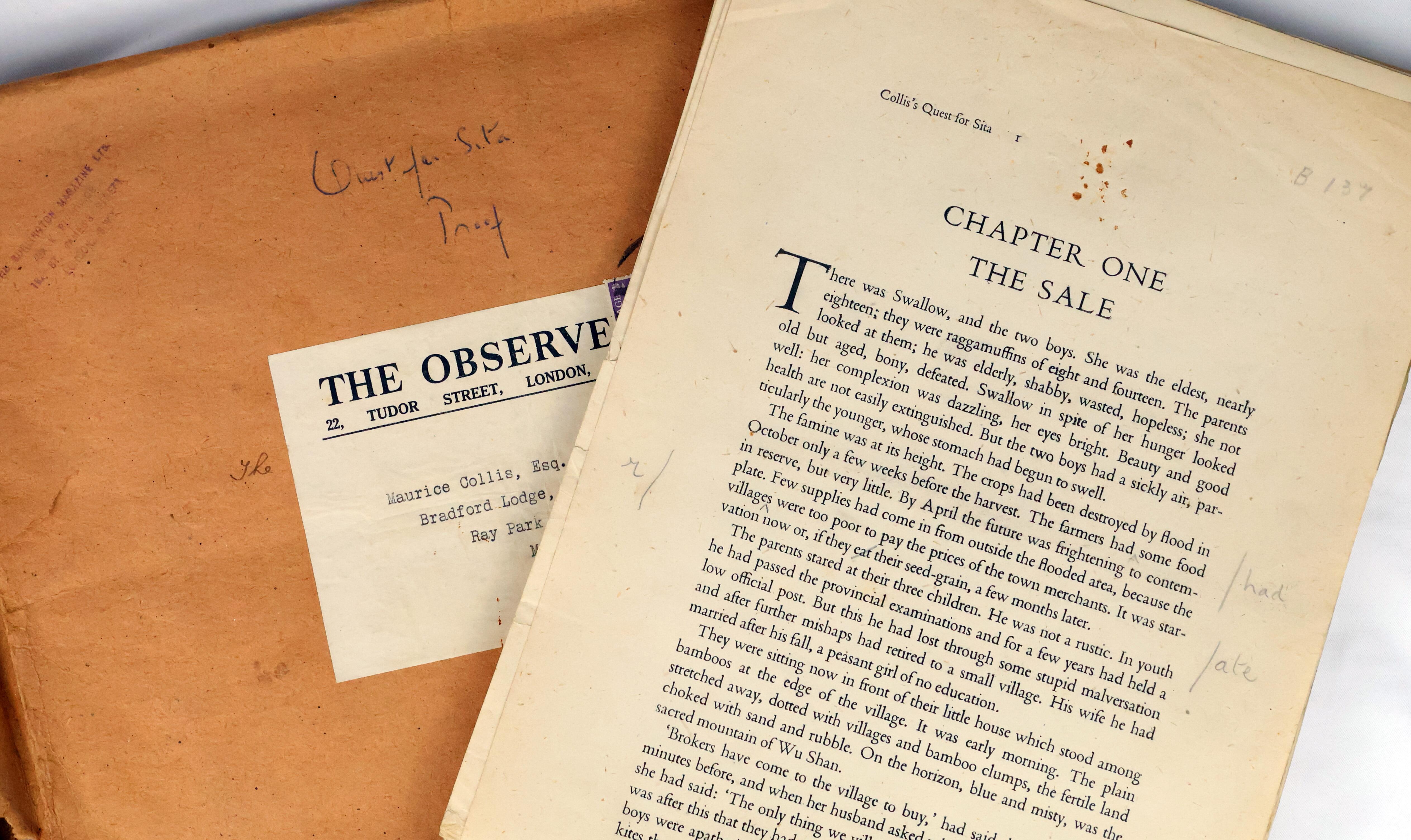
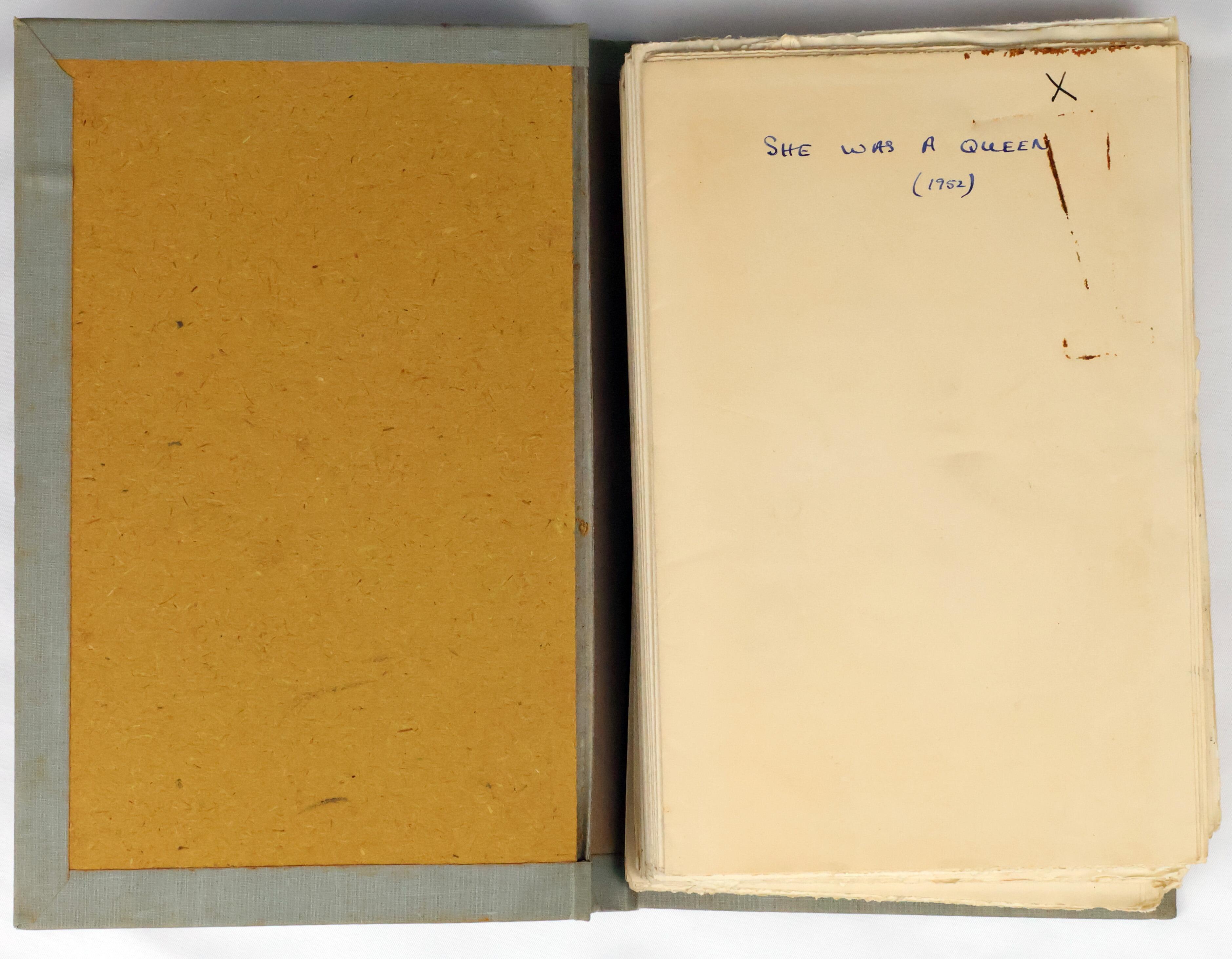
Draft manuscripts and proofs for Collis's most famous novel are included in the archive.
Collis’s novels reflect of his anti-imperialist sentiments and sympathies for Irish nationalism – the latter stemming from both from his childhood in Ireland and from the Sinn Féin pamphlets that were widely circulated in Burma in the 1930s. His most famous novel – several draft of which are included in this archive – is the extraordinary Quest for Sita (1946), a retelling of an episode from the Ramayana framed by a tale of struggle and resilience in present-day Burma. The critic Rob Maslen draws explicit parallels between the novel and The crock of gold (1912), the fabulist classic by James Stephens (who was friends with both Collis and Mervyn Peake, who illustrated Quest for Sita). Both Collis and Stephens sought “to get the old stories into widespread circulation among populations that did not know them, and thus to lend those stories a symbolic and political reach they would not otherwise have had,” notes Maslen. And both Quest for Sita and The crock of gold end with triumphant visions of independence.
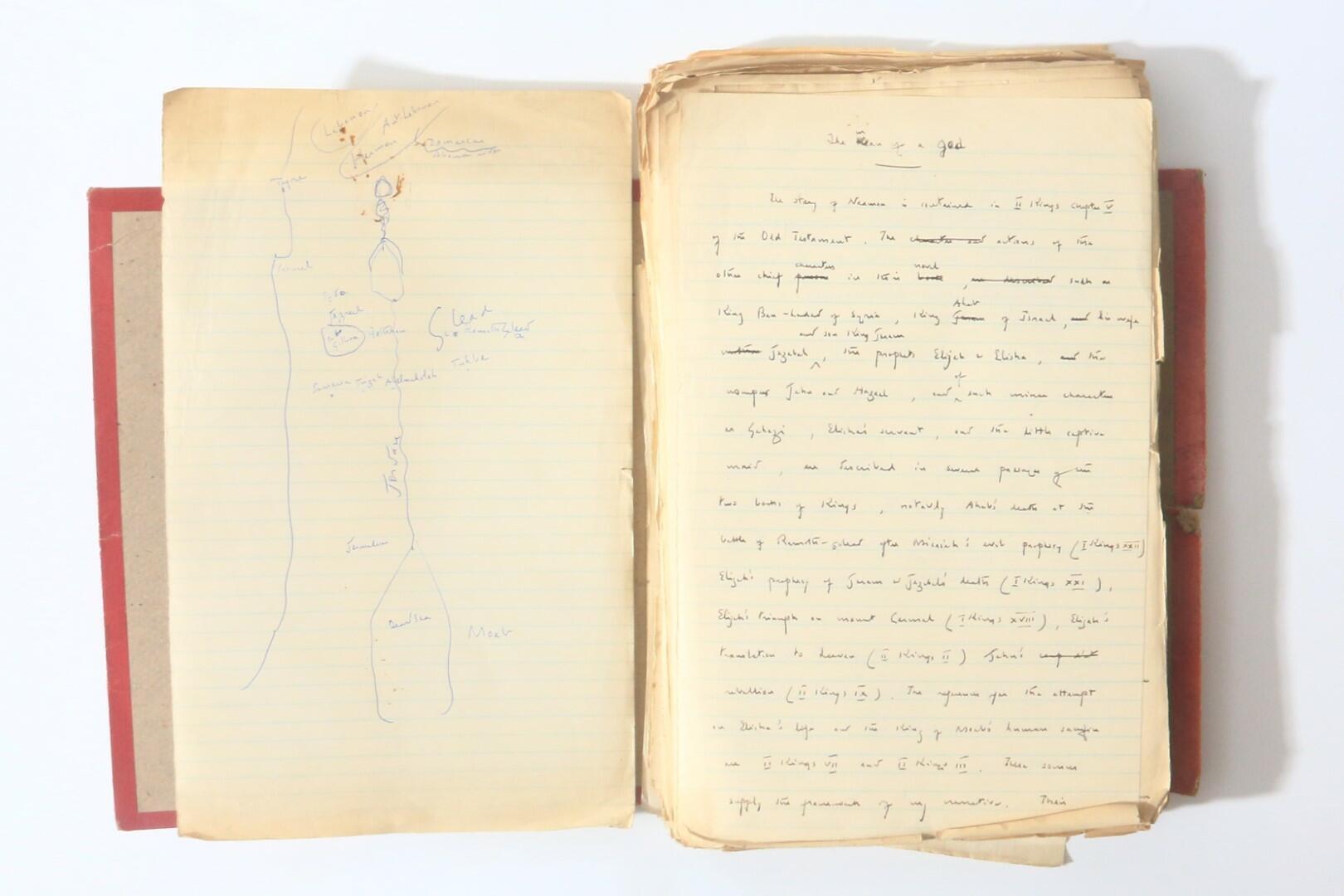
The archive also includes Collis’s intriguing final fiction. Begun in the 1950s and published in 1970, The three gods is a tale of religious change. But for this novel he abandoned the familiar precincts of Buddhist Myanmar. Doubtless influenced by his World War I service in Palestine and his friendship with the Jewish artist Siegfried Solomon Alweiss (1901–1973), known to all as Alva, The three gods is set in the court of Queen Jezebel in ancient Israel. Told in a rapid series of short vignettes, the book may have influenced the fantasist Terry Pratchett, who reviewed the novel for the Bucks Free Press.
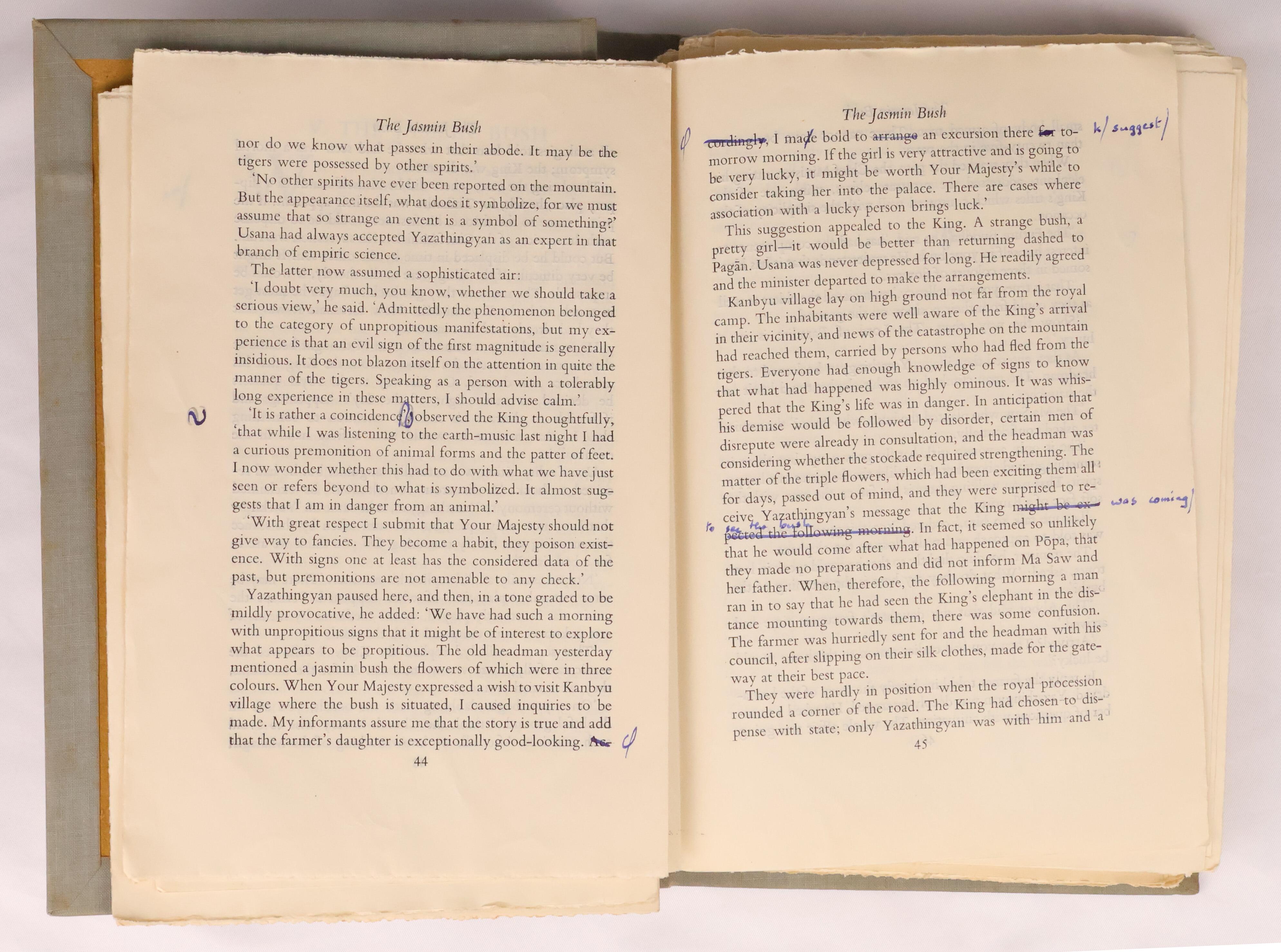
Included with Collis’s manuscripts are proofs of Quest for Sita and She was a queen, and annotated proofs of twelve illustrations executed by the Canadian artist Cawthra Mulock for Collis’s novel, The mystery of dead lovers (1951). The illustrations are in the style of Mervyn Peake’s drawing for Quest for Sita. The latter was likely too deeply immersed in his own writing at the time – Gormenghast was published in 1950 and Mr. Pye in 1953 – and Mulock made an able substitute.
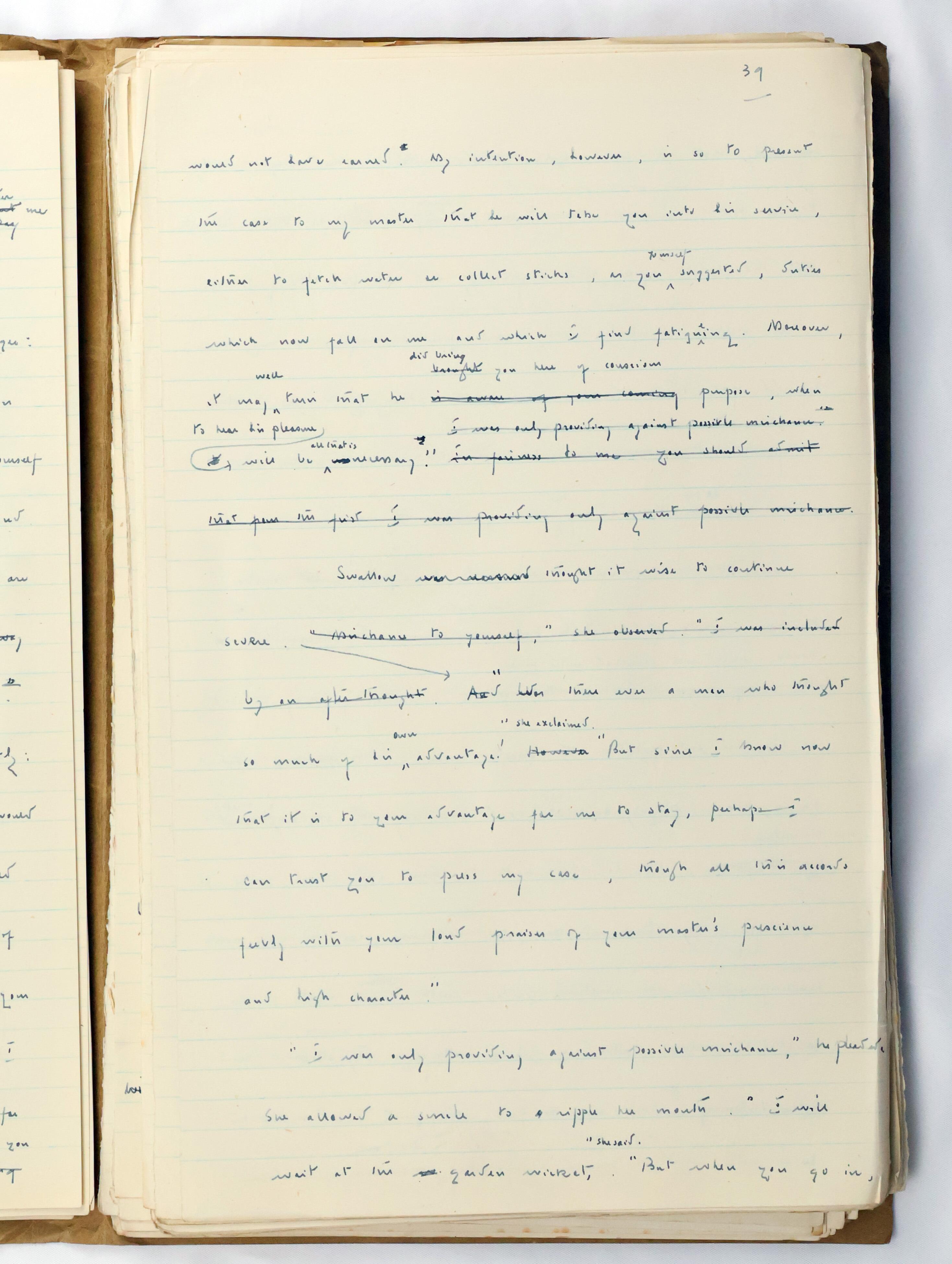
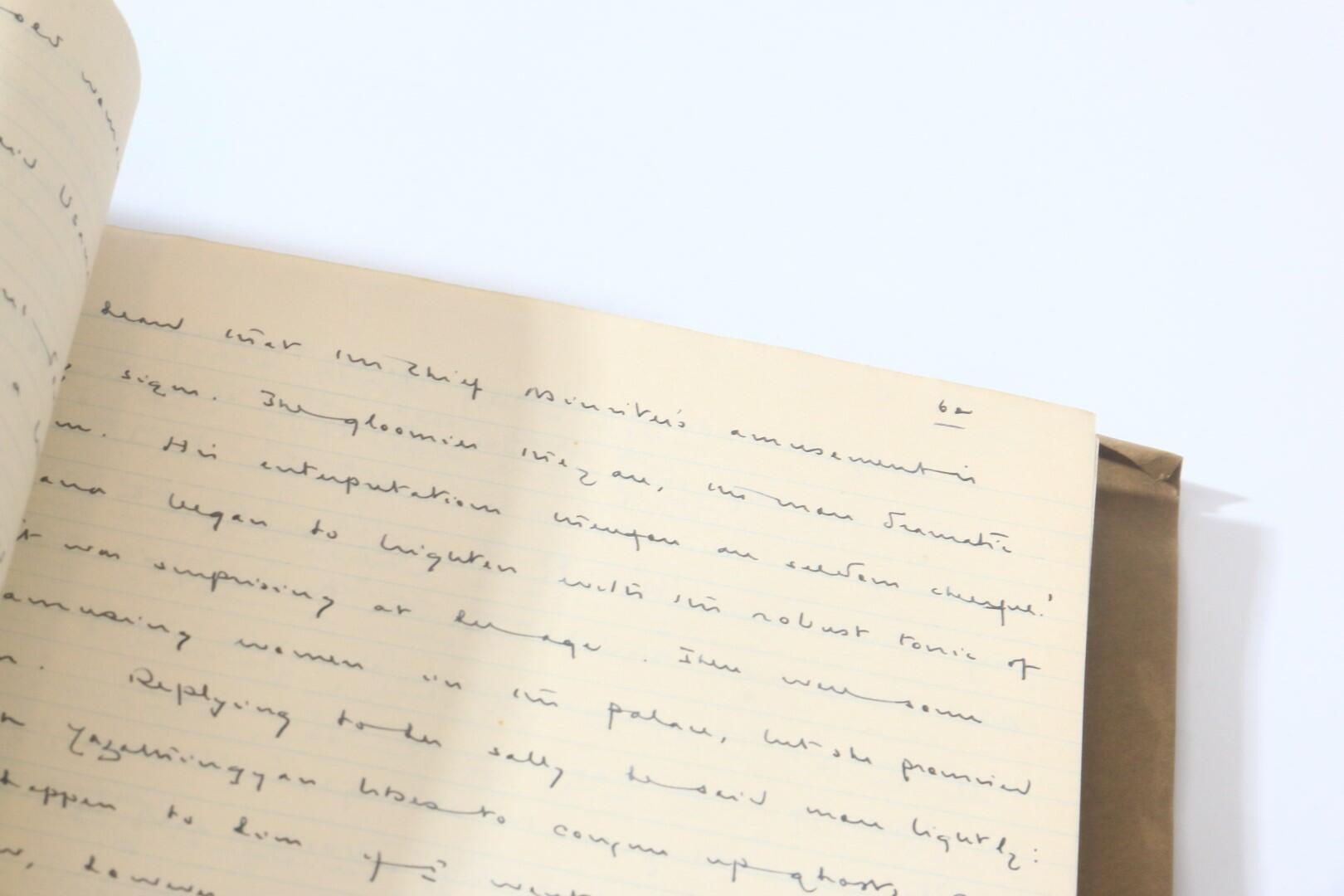
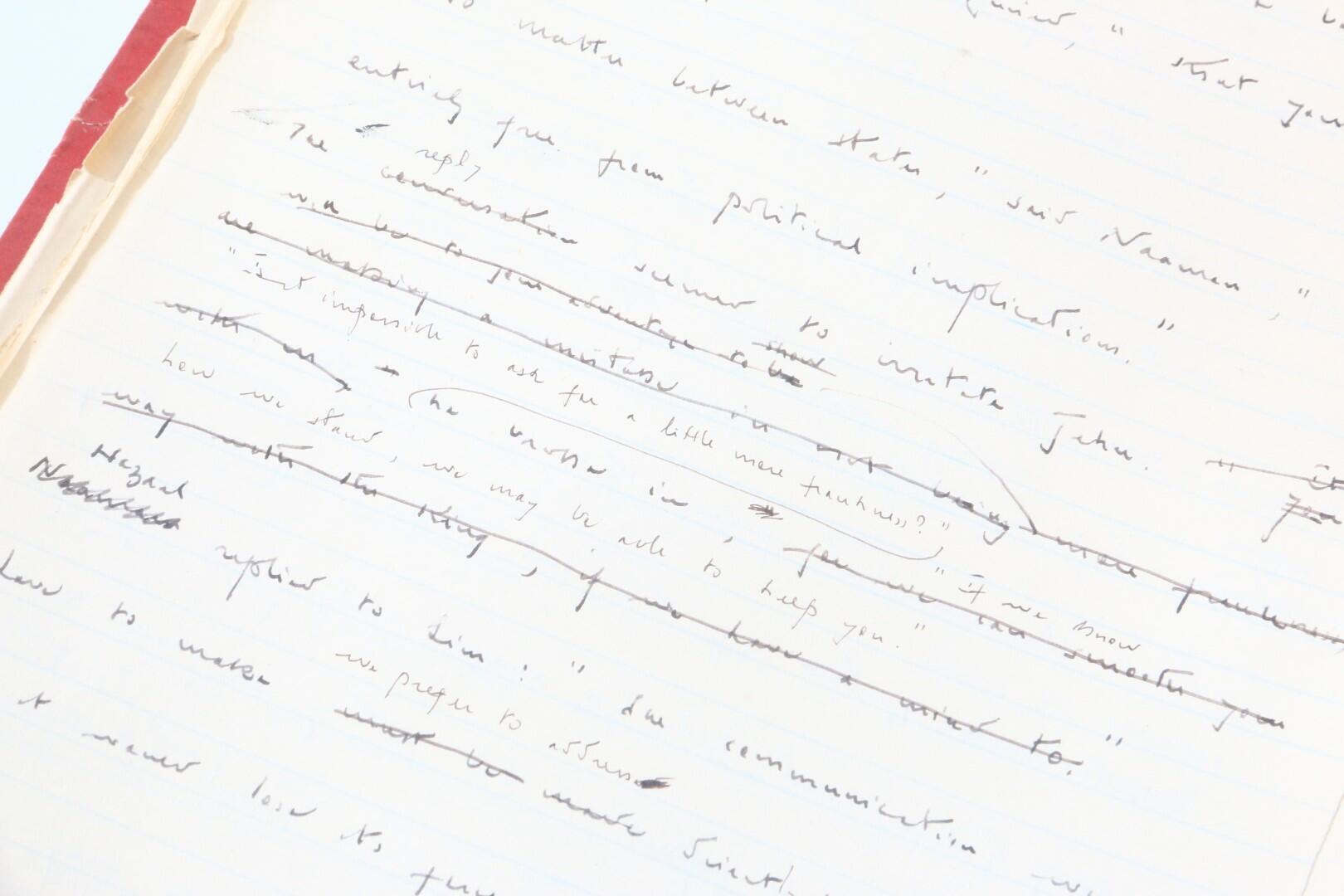
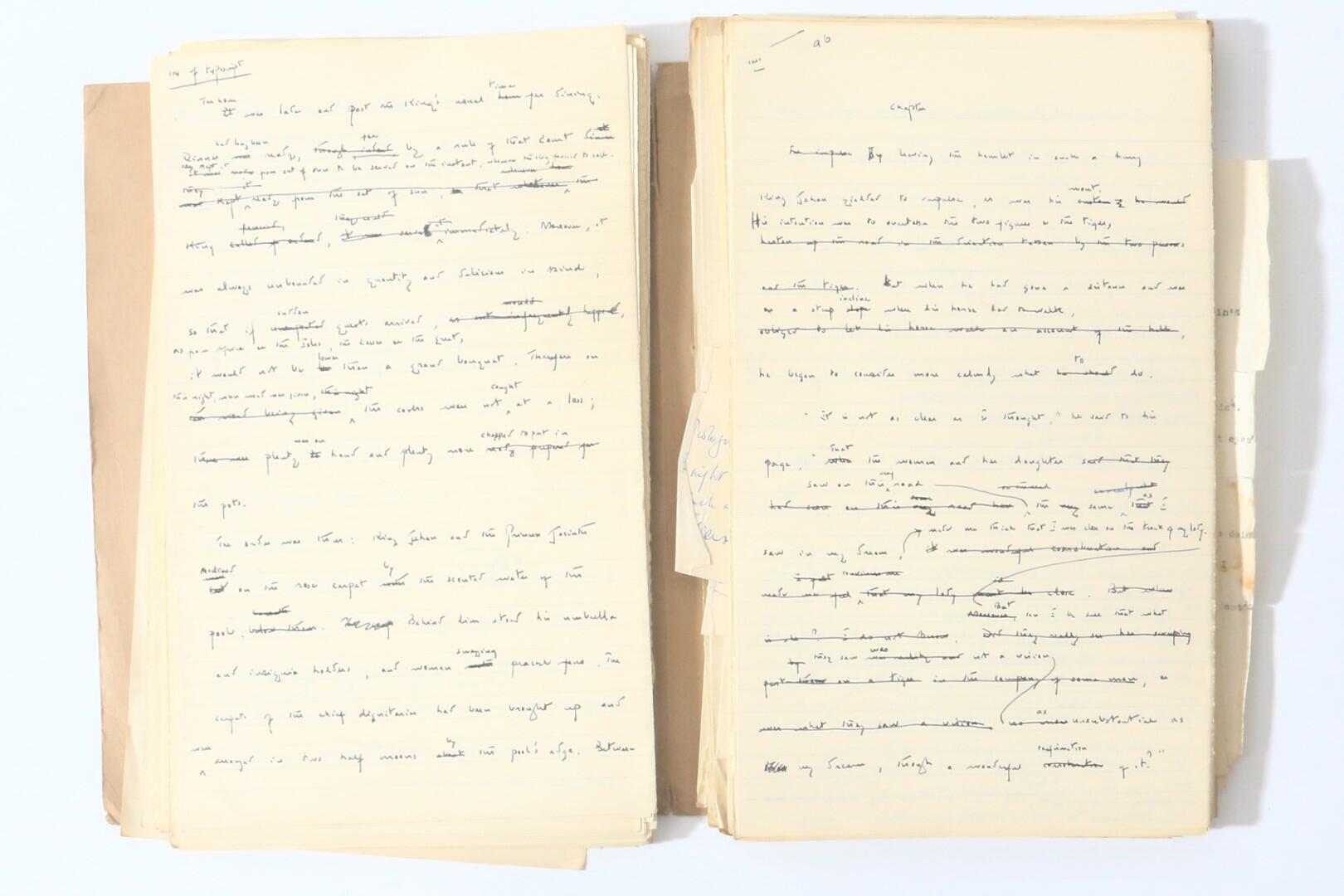
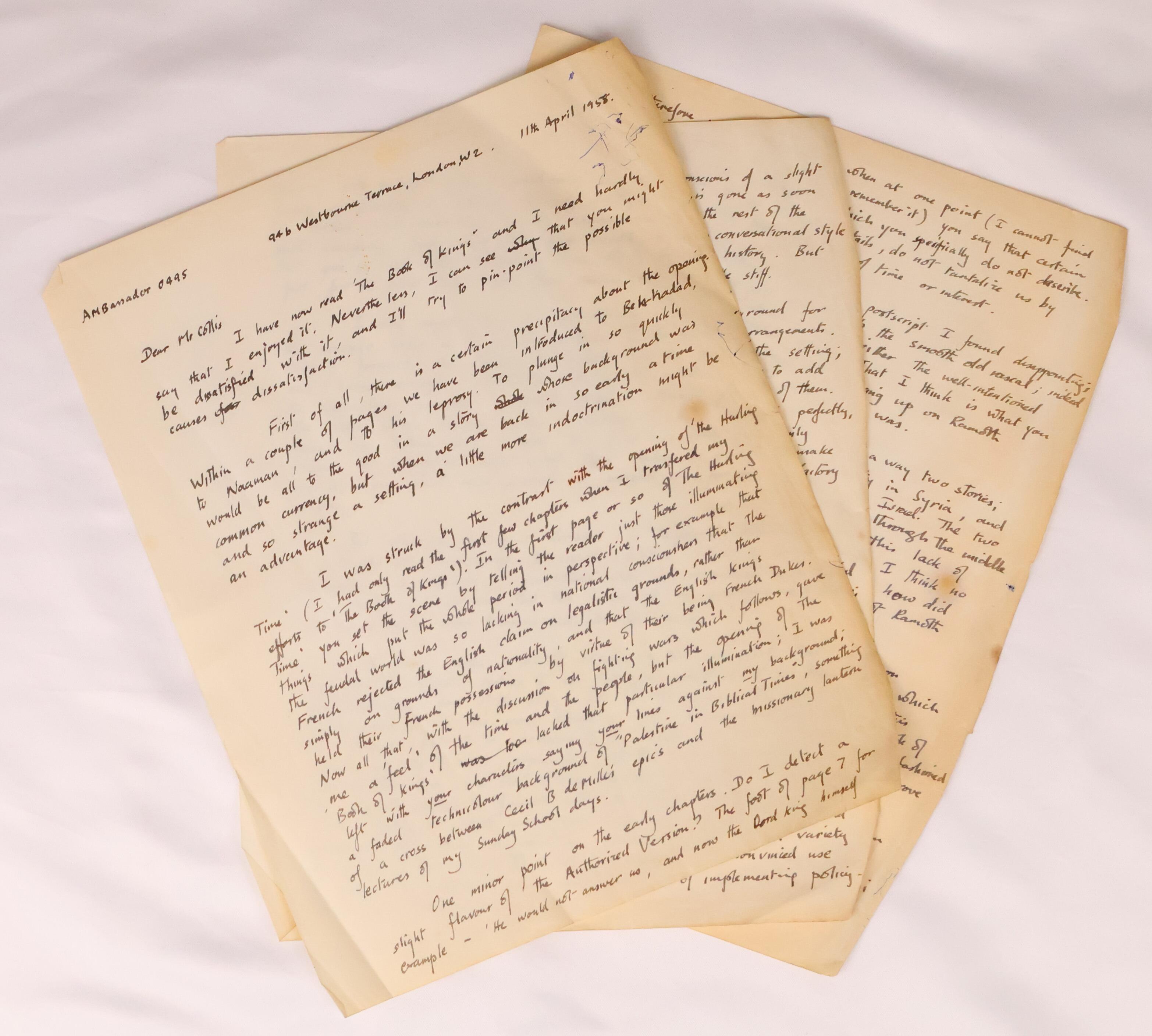
With extensive corrections throughout, Maurice Collis’s manuscripts offer rich insight into his processes of composition, and they include material evidently cut from the published texts. Collis’s compelling work has only recently begun to attract the scholarly attention it so richly deserves. This archive will serve as an essential resource for all future research on this intriguing novelist.

Selected References
- Collis, Maurice. Diaries 1949-1969, ed. Louise Collis. Heinemann, 1976.
- Frontier Myanmar. Maurice Collis: Colonial Burma’s forgotten author. Coconuts yangon, 25 January 2016. https://coconuts.co/yangon/lifestyle/maurice-collis-colonial-burmas-forgotten-author/.
- Locke, George. Spectrum of Fantasy (London, 1980-2002) 3:160-61.
- Maslen, Rob. Maurice Collis and Mervyn Peake, Quest for Sita (1946). Part 1: Text and Part 2: Drawings. The City of Lost Books, July 2020.
- Nováková, Dagmar. Maurice Collis and his novels on Burma, Journal of the Burma Research Society XLII, ii, December 1959.
- Orwell, George. Review of Trials in Burma by Maurice Collis. 9 March 1938. Orwell Foundation.
- Pratchett, Terry. After thirty-six long years the Burmese still remember him [review of The three gods by Maurice Collis], Mid-Week Free Press, 27 May 1970, p. 8.
- Snell, James. The mythical Burma of Maurice Collis. Englesberg Ideas, 15 August 2023.
- Welty, Eudora. The great Buddha [review of The land of the great image by Maurice Collis], New York Times, 29 August 1943.
Product tabs
$0
$18,500
Recommend this product
The Burmese novels of Maurice Collis: a manuscript archive
Related products
Correspondence from the 18th century Irish poet Mary O’Brien
O'Brien, Mary (fl. 1785–1790). Three autograph letters from the author and her husband Patrick O’Brien to Michael Bourke, 1785 and n.d. 3 pp. bifolia....
view details
$3,500
View details
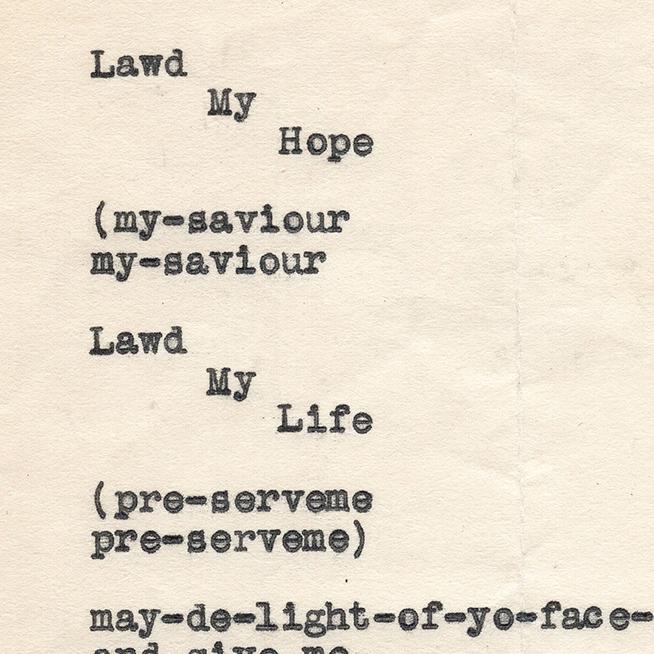
E. E. CUMMINGS, Lawd My Hope (1936). Manuscript for a lost poem.
CUMMINGS, Edward Estlin "E. E." (1894-1962). Lawd My Hope, original manuscript, [1936]. 8 ½ x 11 inches. Folding creases, a few cryptic notations in ...
view details
$5,000
View details

Charles COTTON. Signed document (1663). A bond to the creditor who acquired Beresford Hall
Cotton, Charles (1630-1687), Bond for the performance of covenants between Charles Cotton and Joseph Woodhouse, dated August 1, 1663. Parchment, about...
view details
$5,000
View details

Marcel Pagnol's draft for the unpublished screenplay of Carnaval (1953)
Pagnol, Marcel (1895–1974). Dardamelle, 1953. Manuscript, about 90 pages in a school notebook dated 4 January 1953. This is very much a working manusc...
view details
$8,500
View details

H. P. Lovecraft, A rare postcard to Alfred Galpin, “my intellectual superior” (1922)
Lovecraft, Howard Phillips (1890 – 1937). Postcard to Alfred Galpin, 21 November 1922. With a postscript by A. M. Adams. In fine condition.A charming ...
view details
$2,250
View details

A manuscript copy of an influential essay on Moravian folk songs by František Bartoš and Leoš Janáček
Bartoš, František (1837 - 1906) and Leoš Janáček (1854 - 1928). Několik slov o lidových písních moravských [A few words about Moravian folk songs...
view details
$850
View details

A 30-year Play-by-Mail collection
Price on Request
A 30-year Play-by-Mail collection
Persons,
Kelly S. (b. 1955), collector. Play-by-Mail Games archive, circa 1972–2005. An
extensive collection representing the activities of one dedica...
view details
Price on Request
View details

A revolutionary Tagalog manuscript from the Philippine-American War
Trinidad, Críspulo (1839-1925). Buhay ni Judit. Holograph manuscript, signed by the author and dated 22 September 1899. 16 x 22 cm; 99 pp. written on ...
view details
$8,500
View details

Samuel Palmer: The sketchbook of 1865-71
Palmer, Samuel (1805–1881). Pocket notebook, 1865-71. 50 leaves, about 7 x 12 cm. The notebook has been partially paginated in pencil by Palmer: [pp] ...
view details
$37,500
View details

A Coded film script by Lynn Riggs
Riggs, Lynn (1899-1954) and W. P. Lipscomb (1887-1958). The Garden of Allah: Dialogue Continuity. American Version. [Culver City:] Selznick Internatio...
view details
$750
View details
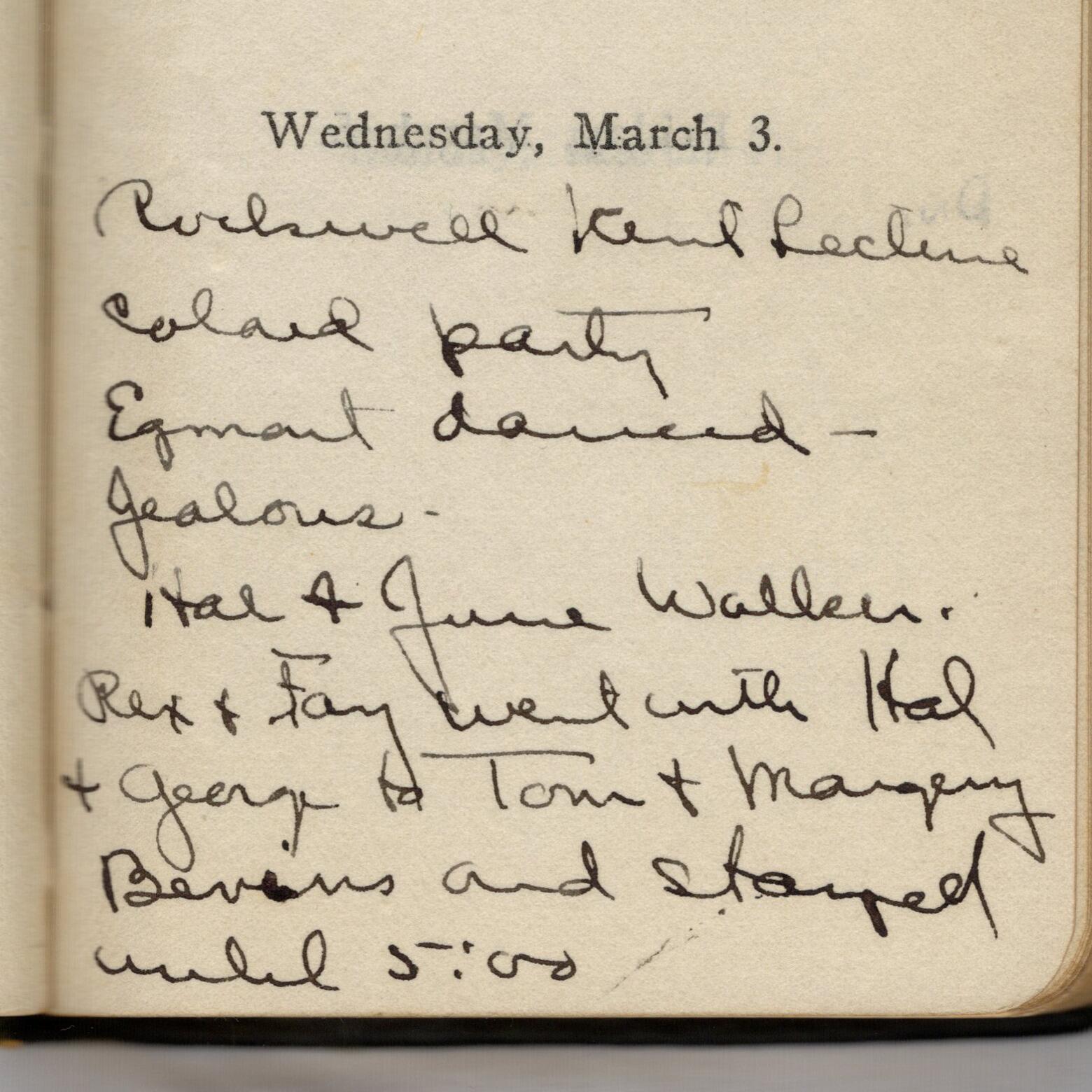
Free Love and New Masses: Ruth Chrisman Gannett in Bohemia
[Gannett], Ruth Chrisman (1896–1979). Pocket diary for 1926. 12mo.; 4.5 x 25 in.; approximately 180 pp. in easily legible black ink, with a few additi...
view details
$2,750
View details
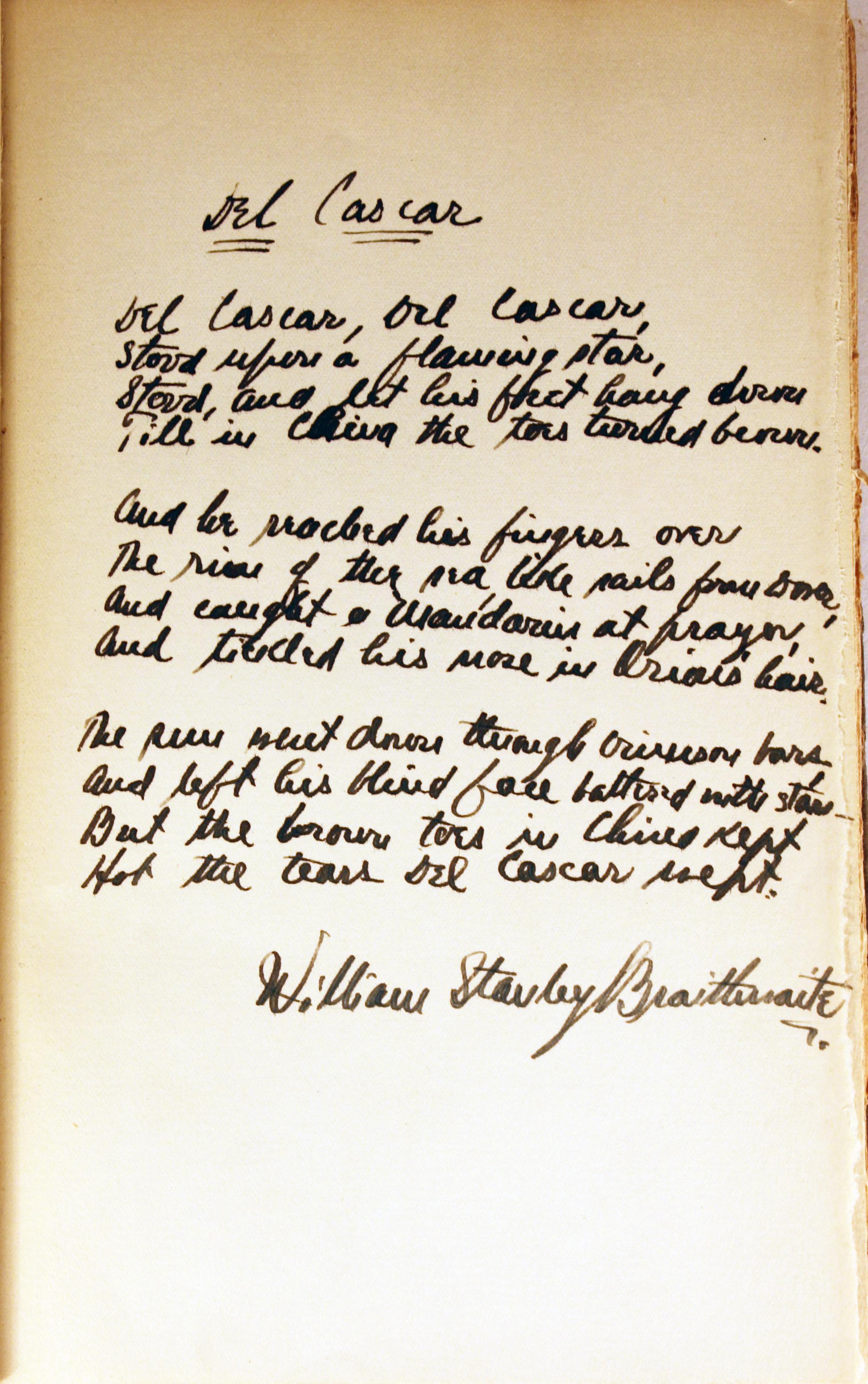
William Stanley Braithwaite / Winifred Virginia JACKSON / H. P. LOVECRAFT: the racial politics and family romance of Boston poetics
Braithwaite, William Stanley (1878-1962). "Del Cascar," manuscript poem in Anthology of Magazine Verse for 1921. Boston: Small, Maynard & Company,...
view details
$2,750
View details

Between Women: Margaret Conklin, Sara Teasdale, and Naomi Jacob
Teasdale, Sara (1884–1933). The selected poems of Sara Teasdale. Holograph manuscript in the hand of Margaret Conklin (1903–1984), [New York?], 1937. ...
view details
$3,750
View details

F. Scott FITZGERALD. The Princeton Bric-A-Brac (1915). His "country club."
FITZGERALD, F. Scott (1896-1940)]. The Princeton Bric-A-Brac, Volume XLI. Philadelphia: E.A. Wright Bank Note Co., 1915. First edition. Gilt embossed ...
view details
$1,500
View details

A memoir of Siberian prisons by Kropotkin and Andréoli
[Andréoli, Émile (1835–1901) and Pyotr Alexeyevich Kropotkin (1842–1921)]. Siberian Convict Life. Corrected typescript, circa 1886. 99 pp., each page ...
view details
$8,750
View details

Tom McGrath and the Scottish Sixties: the lost poems
McGrath, Tom (1940 – 2009). A small archive of poetry typescripts and proofs. London, circa 1967. About 114 pages total. The archive comprises two se...
view details
$0
View details