


Tom McGrath and the Scottish Sixties: the lost poems
McGrath, Tom (1940 – 2009). A small archive of poetry typescripts and proofs. London, circa 1967. About 114 pages total. The archive comprises two sets of proofs for his abortive first book, one with corrections by the poet and his editor, Martin Bax, along with a dozen loose poems, seven typed, five others in proofs. The works are unsigned and without an attributed author but are clearly McGrath’s work. Occasional creasing to edges of foolscap and smaller pages, but otherwise in very good condition. Provenance: from the files of Ambit, liquidated in 2023.
Early writings by the influential Scottish playwright and impresario Tom McGrath, including the corrected proofs for what would have been his first book, Love STOP Rain STOP Is, slated for publication by Martin Bax’s Ambit Press but never released.
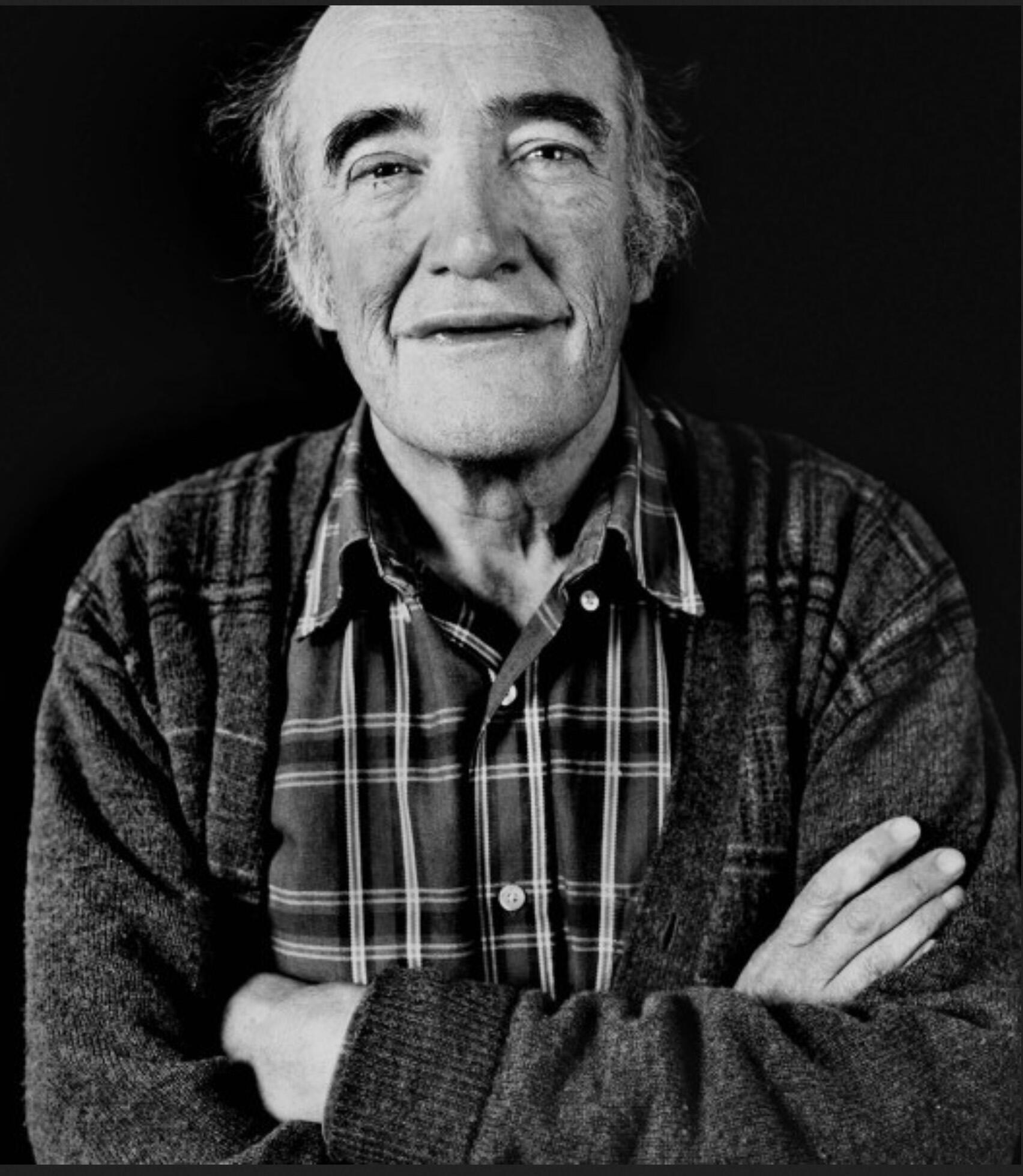
Tom McGrath in later years. Photograph by Kevin Low.
A native of Rutherglen, Glasgow, McGrath enjoyed a brief, heady career in the counterculture of 1960s London before making his wider reputation as a playwright. After publishing his first poems at the age of 22, he moved to Bermondsey in southeast London. He soon fell in with another Glaswegian expatriate, Alexander Trocchi, whose circle defined the epicenter of the literary underground. By 1965 McGrath was serving as features editor of Peace News, the organ of the Campaign for Nuclear Disarmament (CND). At the International Poetry Incarnation at Royal Albert Hall, an explosive happening that marked the arrival of the counterculture in the UK, McGrath read alongside Alexander Trocchi, Michael Horovitz, and Allen Ginsberg. (The event is documented in Peter Whitehead's celebrated film, Wholly Communion).
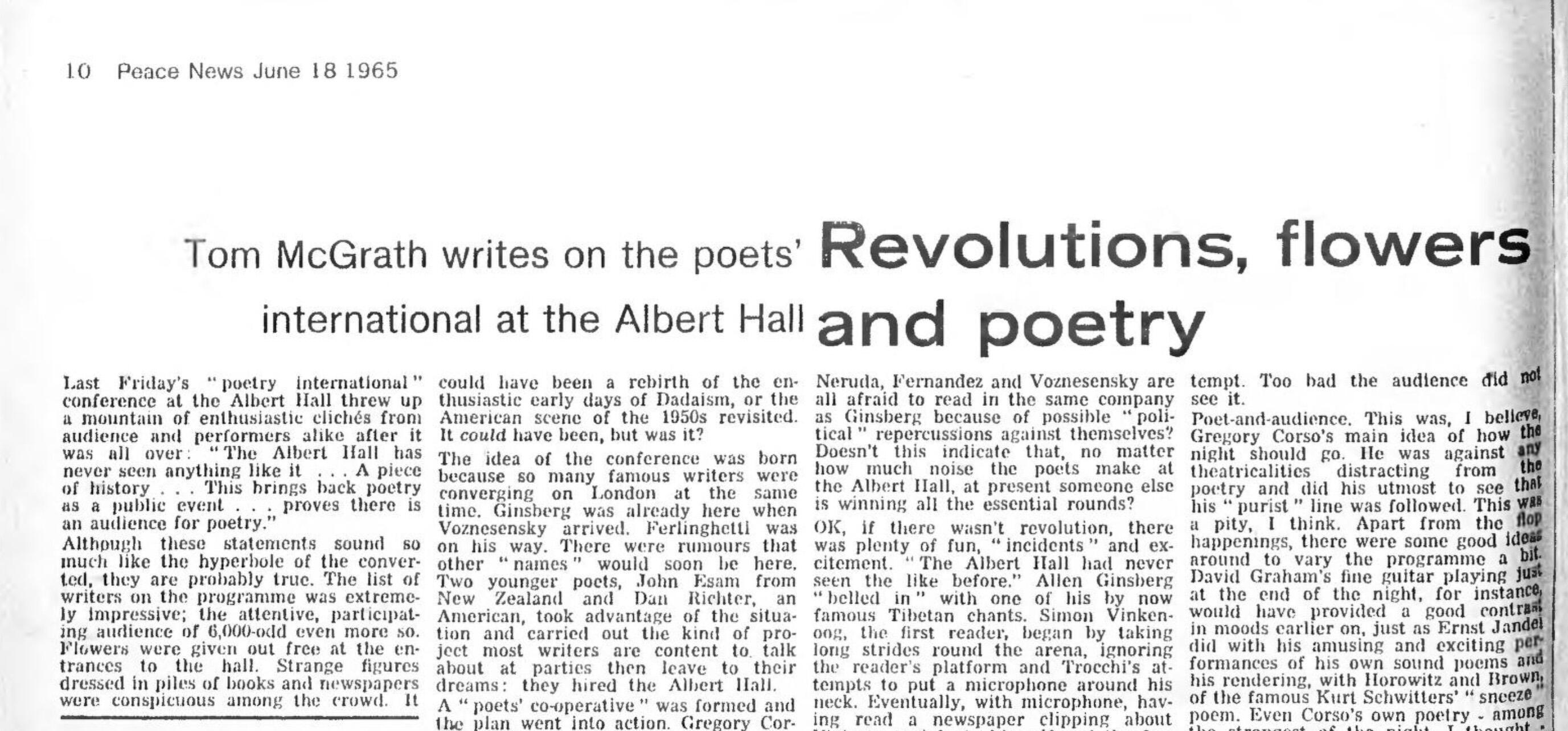
McGrath covered the International Poetry Incarnation for Peace News
In 1966 McGrath was appointed editor of the International Times, an underground paper founded by John Hopkins, Jim Haynes and Barry Miles, suffused with what McGrath later recalled as “the fervour of a revolutionary movement and the mystique of Zen.” His recreational drug use took a darker turn as he transitioned from psychedelics to heroin – the subject of several poems here, and of his autobiographical play The Innocent (1979). Finding himself in a downward spiral with a wife and several children to support, he returned to Scotland in 1968 and matriculated at the University of Glasgow.
Graduating in 1971, McGrath found his calling in the theatre, organizing performances by the Mahavishnu Orchestra and Miles Davis and serving as musical director for TheGreat Northern Welly Boot Show (1973). In 1974, he helped to establish the Third Eye Centre, later reorganized as the Centre for Contemporary Arts. His first play, Laurel and Hardy (1976), debuted at the Traverse Theatre, Edinburgh, and was soon exported to London. Many other works for the stage, radio, and television followed. After a brief stint as a visiting professor at the University of Iowa, McGrath returned to Scotland to found what would become the Tron Theatre. In the late 1980s he was appointed Associate Literary Director of the Scottish Arts Council, with offices at the Royal Lyceum Theatre. In this capacity he worked to foster a new generation of playwrights and poets. He established Playwrights Studio Scotland in 2004, and followed it shortly after with his last play, My Old Man (2005). After his passing, the Tom McGrath Trust continues to carry on his work.
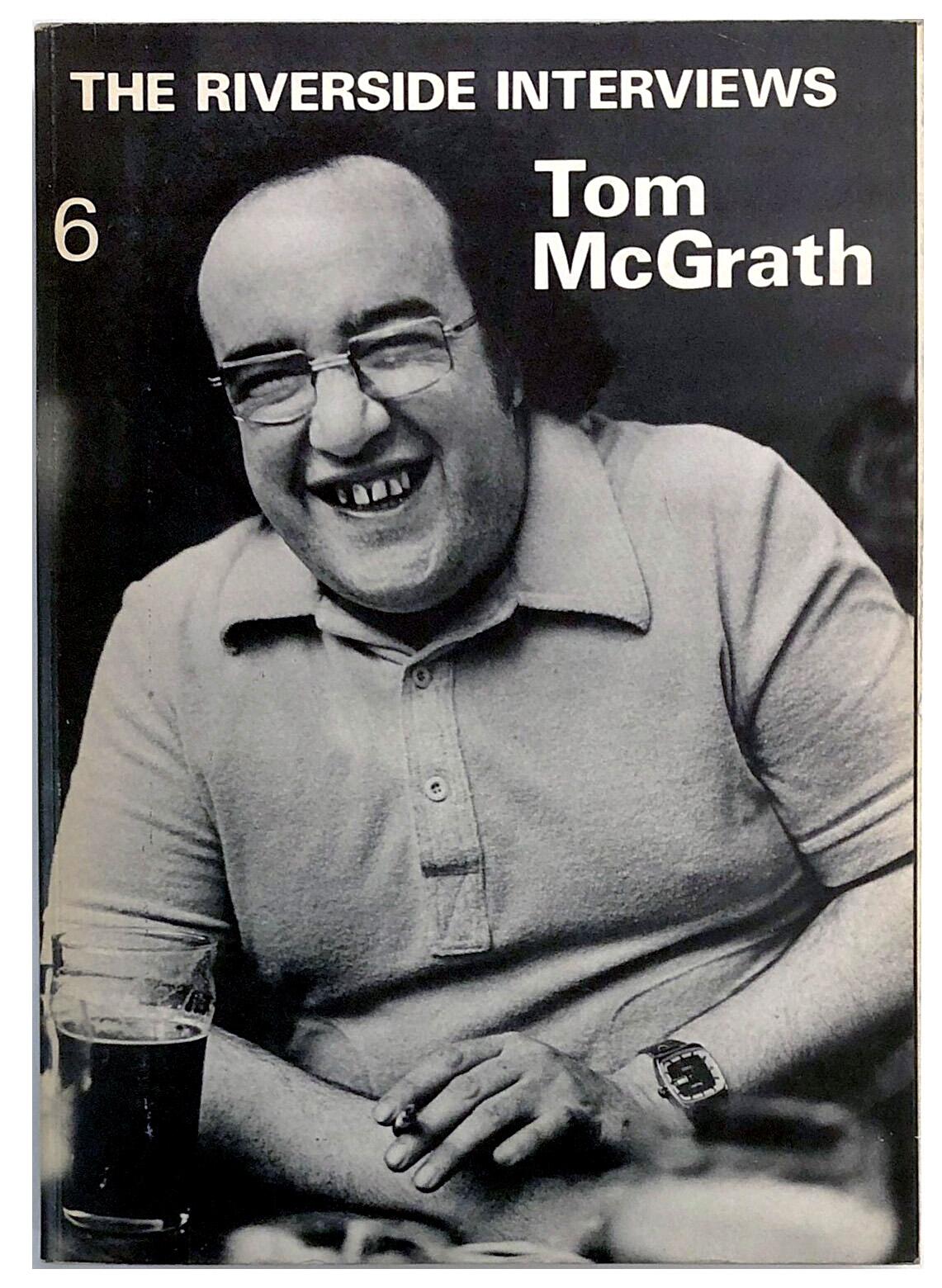
McGrath discussed his poetry extensively with Gavin Selerie in a series of interviews published in 1983
Before finding his feet as a playwright, McGrath was a poet, publishing his first work in Poor. Old. Tired. Horse. (a broadsheet edited by Ian Hamilton Finlay), New Saltire, the Scottish Poetry anthologies, Ambit, and other journals. But much of his poetic output remains unpublished. McGrath discussed this with Gavin Selerie in a series of interviews published in 1983.
Selerie: It strikes me that, from the point of view of your poetry, it’s difficult for an audience to gauge your achievement because so little of it has been published.
McGrath: Yes, that’s right. I always hesitated on it over the years. Early on, Martin Bax was going to publish My Love Stop Rain Stop and I withdrew it. . . .
Selerie: Michael Horovitz says that your unpublished material is much superior to what has seen the light of day – in print – and from hearing you read I’m inclined to agree with him.
McGrath: Yes, that’s probably true . . .
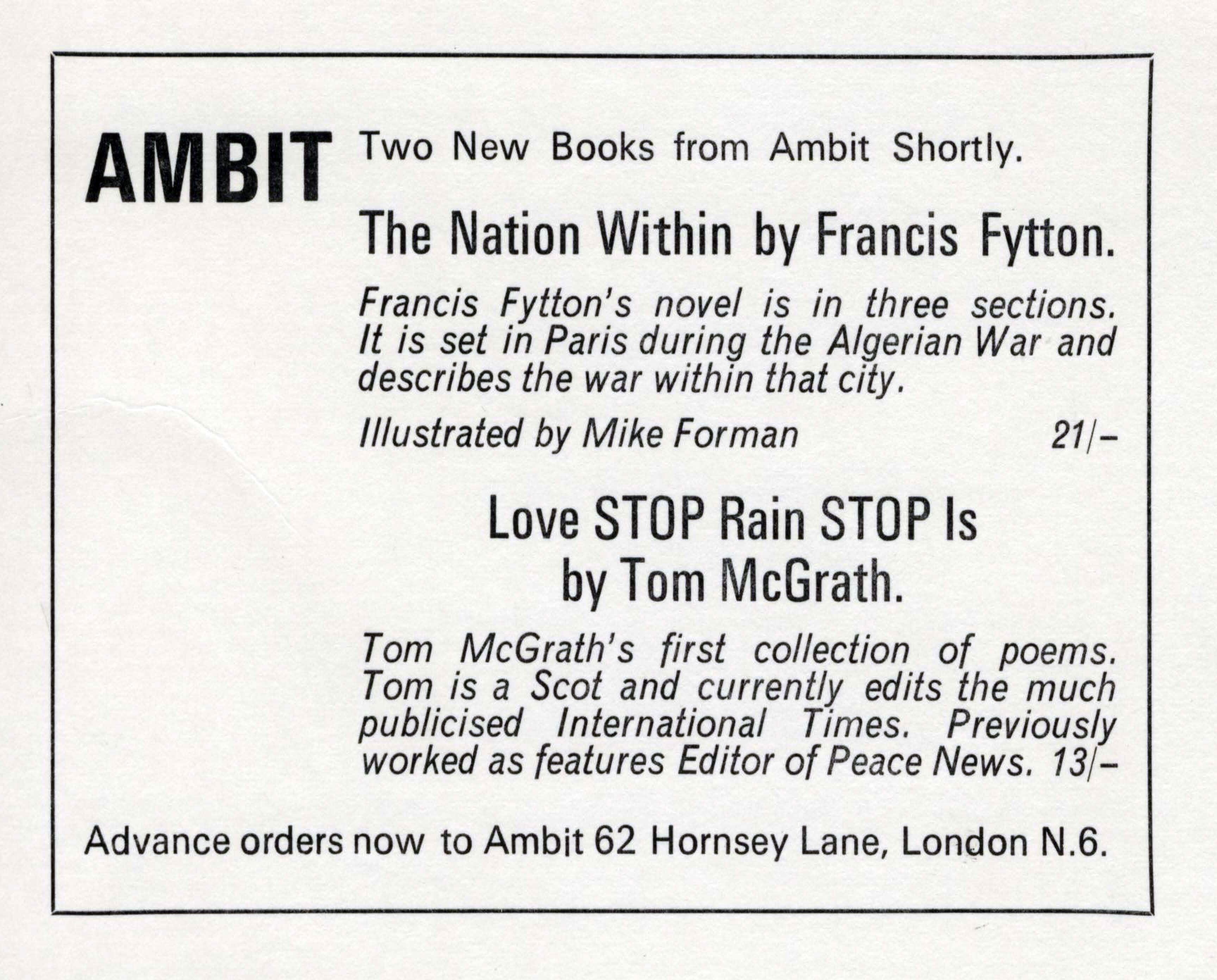
Advertisement for McGrath's unpublished first book in Ambit No. 31 (1966/1967)
The collection that McGrath planned to release in 1967 was advertised under a slightly different title than he later recalled. The publisher, Martin Bax, was the editor of the experimental literary journal, Ambit. McGrath credits him as “the first person who published me seriously.”
McGrath: [Bax] stuck his neck out for me because a lot of people attacked him for publishing my work. But the other people, such as Gael Turnbull, defended it. I was never terribly successful as a poet. Martin Bax was going to publish a book but I couldn’t believe in that enough to go through with it.
Selerie: Did you select the material and the sequence of poems?
McGrath: Yes. It got to the proof stage but I didn’t let it go any further. I had a confidence problem over the years and suddenly this came to a head and I disappeared. Being a writer can involve you in an identity crisis, like growing into manhood. I think I learned an awful lot about writing in that first phase when I was down here [in London], but I didn’t feel right till I got into the Glasgow part of myself and started doing readings up there.
In 1983, a much more confident McGrath considered a formal return to poetry:
McGrath: I think I’ve got the distance now. It took me a hell of a long time – twenty years at least – to feel able to release the poems in a more formal way than reading in publish or publishing occasionally, in magazines. I know which ones I want to put out . . . I want to spend the next year or so trying to get the work out of me into the world – so that I can get free of it.
But sadly other projects intervened.
It is uncertain whether McGrath would have been keen to release all of the works collected for Love STOP Rain STOP Is, though Selerie, who examined a set of proofs, gave them serious attention in his lengthy introduction to the Riverside interviews. The archive includes “The Retreat,” which McGrath read at the International Poetry Incarnation. Other poems treat drugs (Benzedrine, heroin), jazz, Malcolm X, the Vietnam war, and the streets of Glasgow. Selerie regarded McGrath’s poems as essential precursors to his dramatic work. In the poetry, he writes, “McGrath preserves balance between the lyrical and the mundane, the beautiful and the grotesque – something which becomes essential to the spirit of the plays.”
An important archive, essential for appreciating not only McGrath's later work but also for understanding the Scottish experience of the Sixties more broadly.
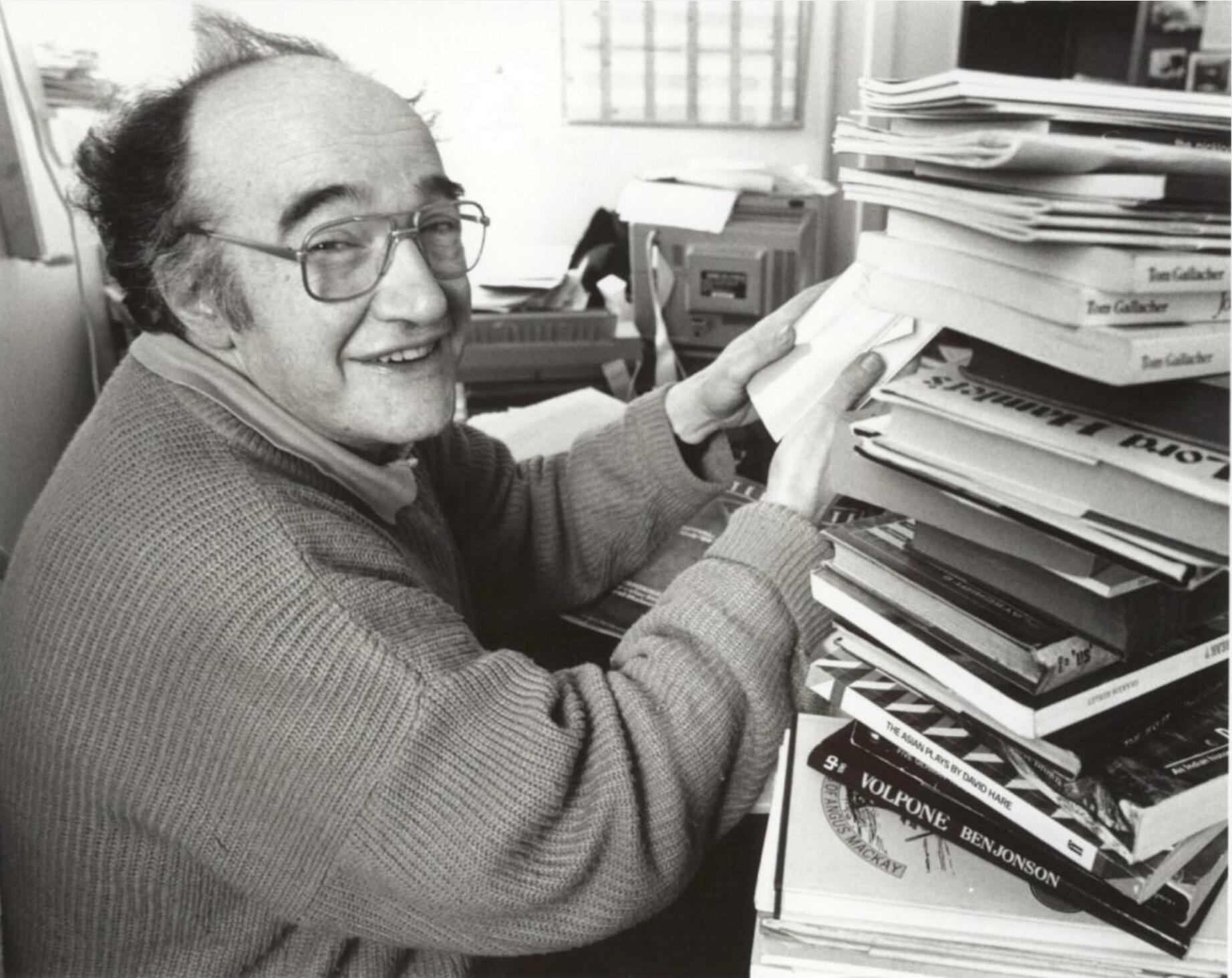
A later photograph of McGrath in his office, reviewing a stack of works by lesser playwrights
Selected Sources
Bartie, Angela. Explorer: Into the Sixties with Tom McGrath. In The Scottish Sixties: Reading, Rebellion, Revolution, edited by Eleanor Bell and Linda Gunn (Amsterdam: Rodopi, 2013), 47-67
Donnelly, Mark. Wholly Communion: Truths, Histories, and the Albert Hall Poetry Reading. Framework: The Journal of Cinema and Media 52 (2011): 128–144
Fisher, Mark. Obituary: Tom McGrath. The Guardian, 30 April 2009. https://www.theguardian.com/books/2009/may/01/obituary-tom-mcgrath-poet
Fulton, Niall Grieg. Who was Tom McGrath? Edinburgh International Film Festival, 28 April 2017. Archived at: https://web.archive.org/web/20180609221355/https://www.edfilmfest.org.uk/latest/who-was-tom-mcgrath
Horovitz, Michael, ed. Children of Albion: Poetry of the Underground in Britain. Harmondsworth: Penguin, 1969.
McGrath, Tom. Revolutions, flowers and poetry. Peace News, 18 June 1965, p. 10
Nuttall, Jeff, Bomb Culture, London: MacGibbon & Kee, 1968
Selerie, Gavin. The Riverside Interviews, 6 : Tom McGrath. London: Binnacle Press, 1983
Tom McGrath Trust. https://tommcgrath-trust.org/
Product tabs
SOLD
Recommend this product
Tom McGrath and the Scottish Sixties: the lost poems
Related products
George Bernard Shaw ghostwrites a preface for Lawrence of Arabia
Lawrence, T[homas] E[dward] (1888–1935) and Shaw, George Bernard (1856–1950). Draft foreword to Revolt in the Desert. Holograph manuscript, [Ayot St. ...
view details
$11,000
View details

The literary archives of Dudley Barker and his alter ego, Lionel Black
Barker, Dudley (1910–1980). Literary archive, comprising one file of notes and correspondence on John Galsworthy and 46 manuscripts, 1935-1980. The ma...
view details
$9,500
View details

A manuscript copy of an influential essay on Moravian folk songs by František Bartoš and Leoš Janáček
Bartoš, František (1837 - 1906) and Leoš Janáček (1854 - 1928). Několik slov o lidových písních moravských [A few words about Moravian folk songs...
view details
$850
View details
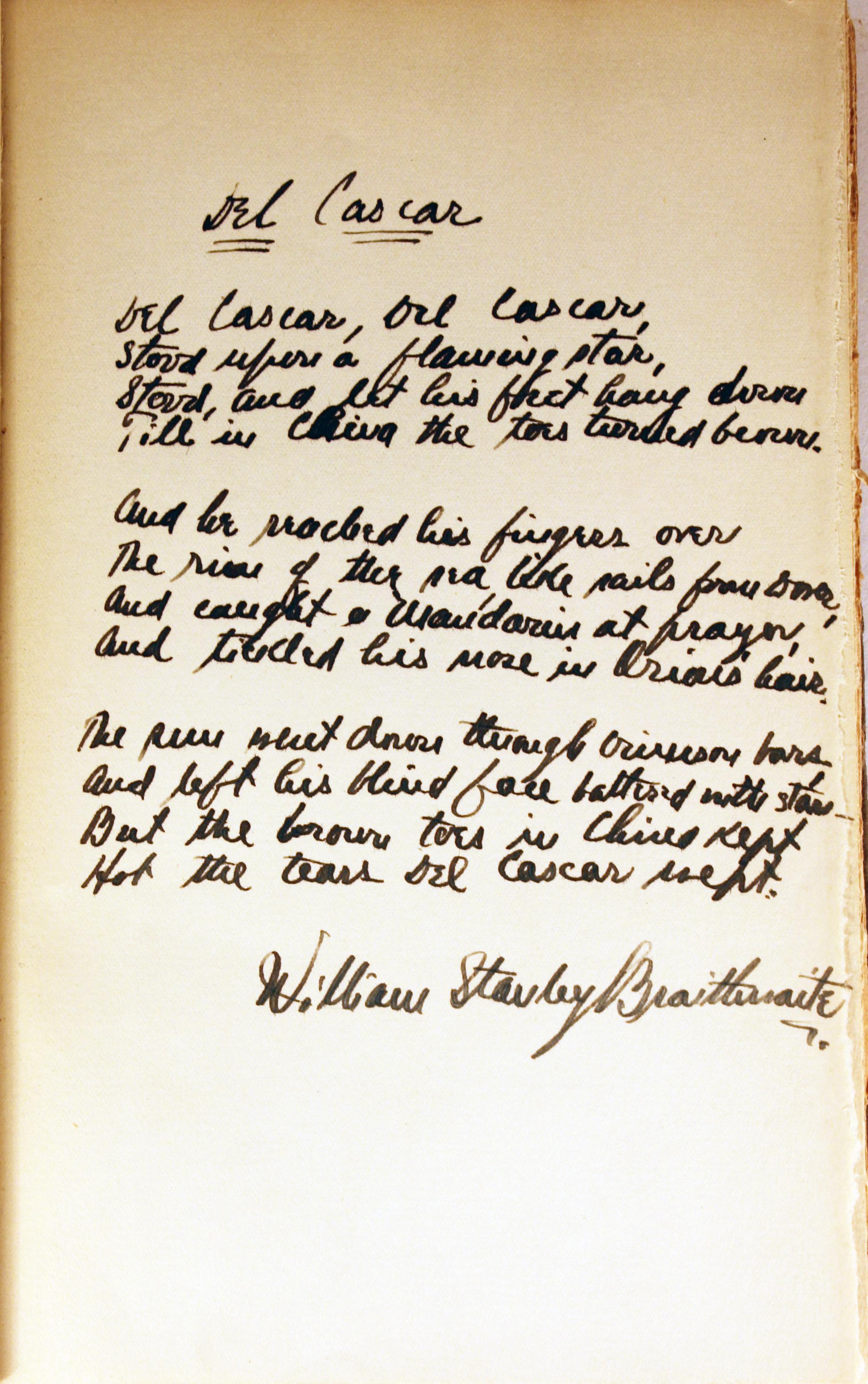
William Stanley Braithwaite / Winifred Virginia JACKSON / H. P. LOVECRAFT: the racial politics and family romance of Boston poetics
Braithwaite, William Stanley (1878-1962). "Del Cascar," manuscript poem in Anthology of Magazine Verse for 1921. Boston: Small, Maynard & Company,...
view details
$2,750
View details

F. Scott FITZGERALD. The Princeton Bric-A-Brac (1915). His "country club."
FITZGERALD, F. Scott (1896-1940)]. The Princeton Bric-A-Brac, Volume XLI. Philadelphia: E.A. Wright Bank Note Co., 1915. First edition. Gilt embossed ...
view details
$1,500
View details

A memoir of Siberian prisons by Kropotkin and Andréoli
[Andréoli, Émile (1835–1901) and Pyotr Alexeyevich Kropotkin (1842–1921)]. Siberian Convict Life. Corrected typescript, circa 1886. 99 pp., each page ...
view details
$8,750
View details
On
hold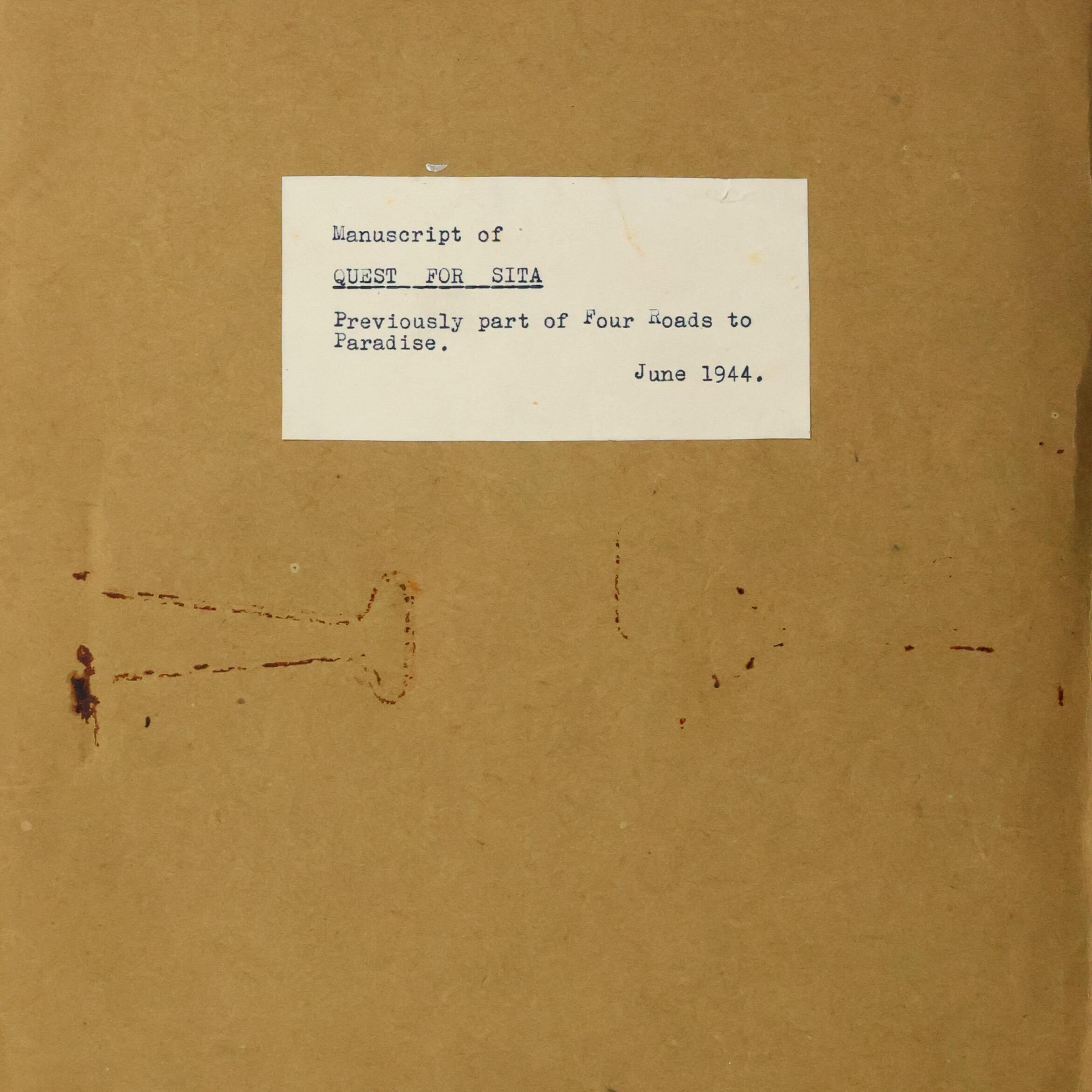
hold
The Burmese novels of Maurice Collis: a manuscript archive
Collis, Maurice (1889 – 1973). Archive for his six works of fiction. London, 1937 to 1970, including holograph manuscripts, corrected typescripts, cor...
view details
$18,500
View details

Samuel Palmer: The sketchbook of 1865-71
Palmer, Samuel (1805–1881). Pocket notebook, 1865-71. 50 leaves, about 7 x 12 cm. The notebook has been partially paginated in pencil by Palmer: [pp] ...
view details
$37,500
View details

Correspondence from the 18th century Irish poet Mary O’Brien
O'Brien, Mary (fl. 1785–1790). Three autograph letters from the author and her husband Patrick O’Brien to Michael Bourke, 1785 and n.d. 3 pp. bifolia....
view details
$3,500
View details

A 30-year Play-by-Mail collection
Price on Request
A 30-year Play-by-Mail collection
Persons,
Kelly S. (b. 1955), collector. Play-by-Mail Games archive, circa 1972–2005. An
extensive collection representing the activities of one dedica...
view details
Price on Request
View details

Marcel Pagnol's draft for the unpublished screenplay of Carnaval (1953)
Pagnol, Marcel (1895–1974). Dardamelle, 1953. Manuscript, about 90 pages in a school notebook dated 4 January 1953. This is very much a working manusc...
view details
$8,500
View details

French chansons of the 1780s
Receuil de Chansons Romances et Vaudeville. Manuscript, circa 1780-1789. Title + 21 pp. of text, 20.5 cm. Written on six sheets of paper with the “Vr...
view details
$375
View details

Pennsylvania, the Promised Land: emigration songs from the earliest years of the Harmony Society in America
Neff, Jacob (1757–1818). Harmony Society hymnal. [Lancaster, Pennsylvania], 1804–06. Manuscript. 88 pp. of German verse with musical annotations. Smal...
view details
$0
View details

Stan BRAKHAGE. Space as Menace in Canadian Aesthetics (1989), signed typescript.
BRAKHAGE, Stan (1933-2003). Space as Menace in Canadian Aesthetics: Film and Painting. Photocopy of the 25-page manuscript (typewritten, with holograp...
view details
$750
View details
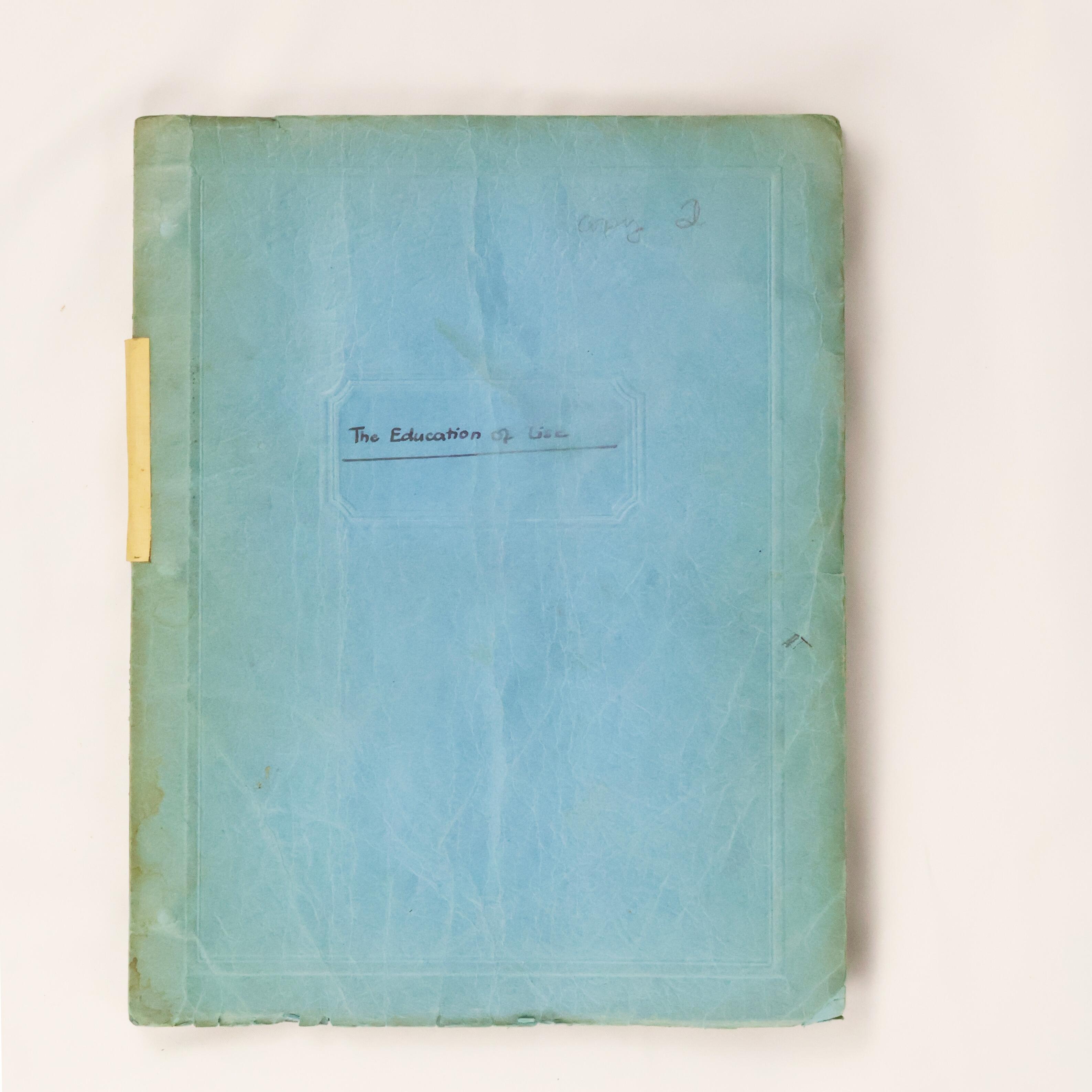
Five unpublished manuscripts by Madeleine L'Engle
L'Engle, Madeleine (1918–2007). A small archive of early plays and poems, circa 1941–1966. Five typescripts, comprising four plays and one collection ...
view details
$8,250
View details

A Coded film script by Lynn Riggs
Riggs, Lynn (1899-1954) and W. P. Lipscomb (1887-1958). The Garden of Allah: Dialogue Continuity. American Version. [Culver City:] Selznick Internatio...
view details
$750
View details
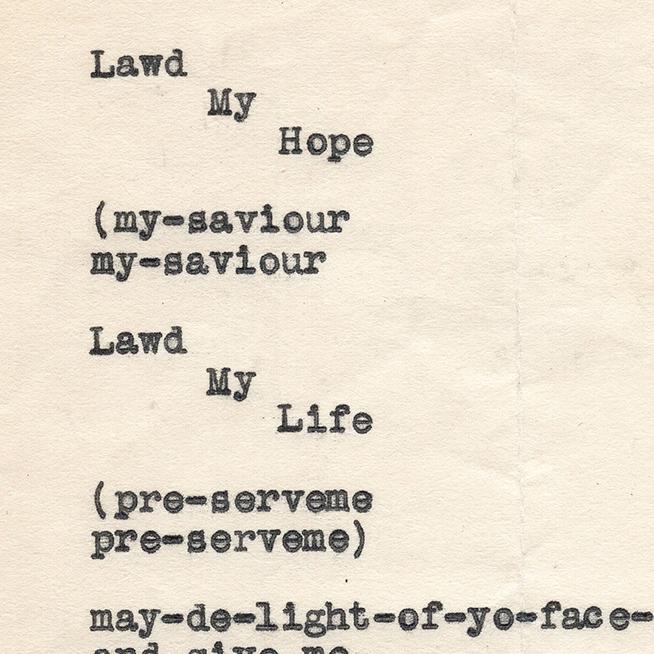
E. E. CUMMINGS, Lawd My Hope (1936). Manuscript for a lost poem.
CUMMINGS, Edward Estlin "E. E." (1894-1962). Lawd My Hope, original manuscript, [1936]. 8 ½ x 11 inches. Folding creases, a few cryptic notations in ...
view details
$5,000
View details

A revolutionary Tagalog manuscript from the Philippine-American War
Trinidad, Críspulo (1839-1925). Buhay ni Judit. Holograph manuscript, signed by the author and dated 22 September 1899. 16 x 22 cm; 99 pp. written on ...
view details
$8,500
View details