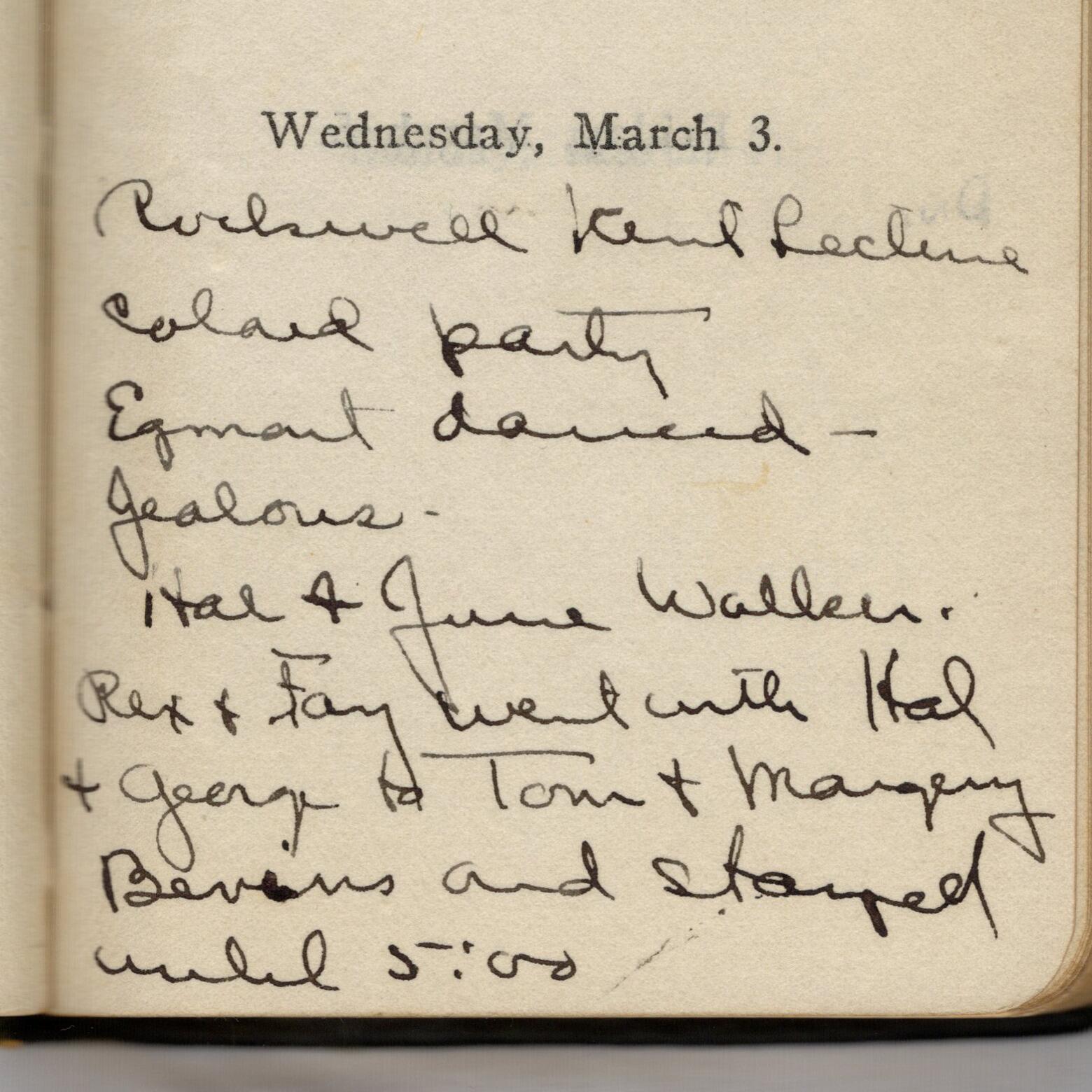
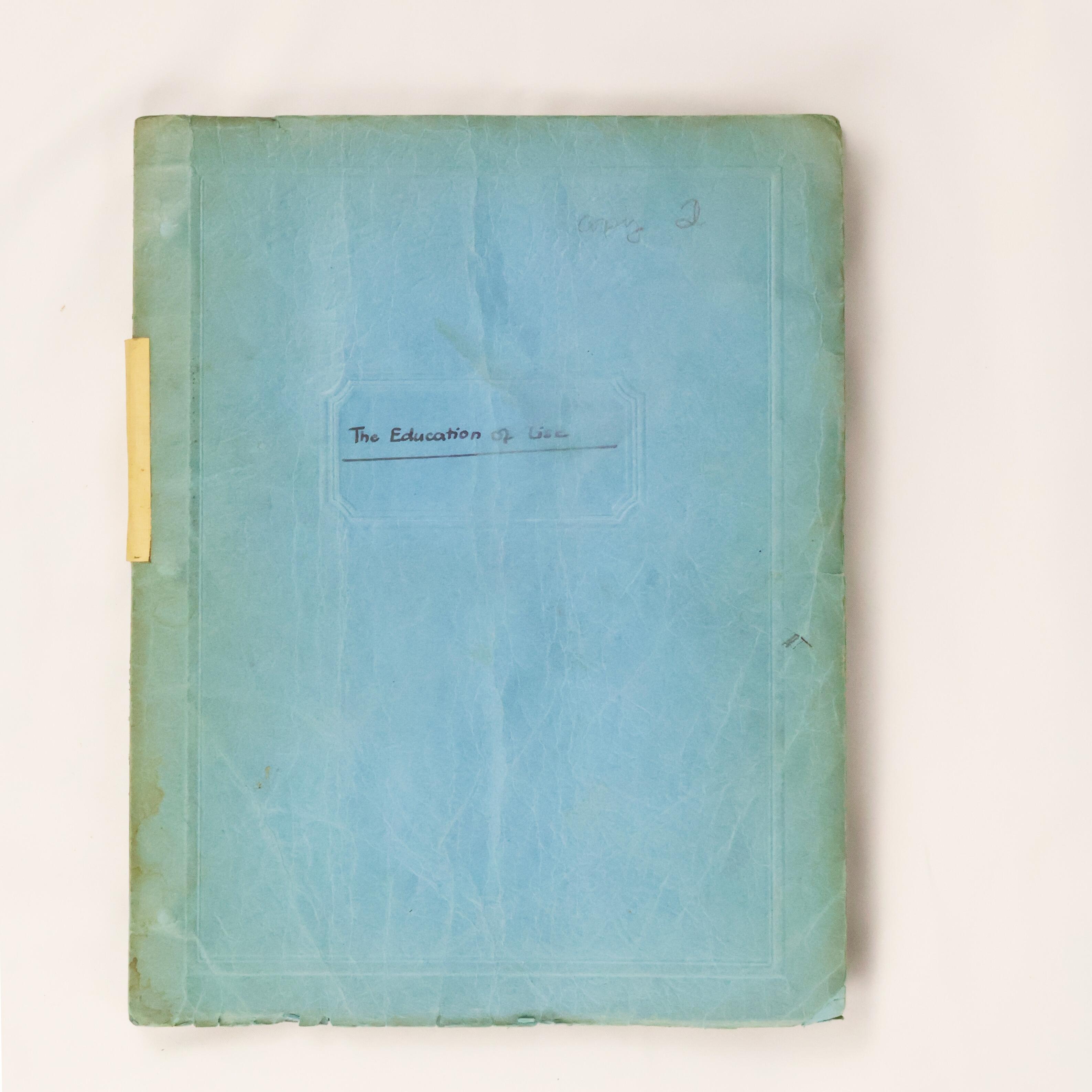
[Gannett], Ruth Chrisman (1896–1979). Pocket diary for 1926. 12mo.; 4.5 x 25 in.; approximately 180 pp. in easily legible black ink, with a few additions in blue and red pencil. No entries for the period 18 May to 28 October. Fine in supple buckram, AEG.
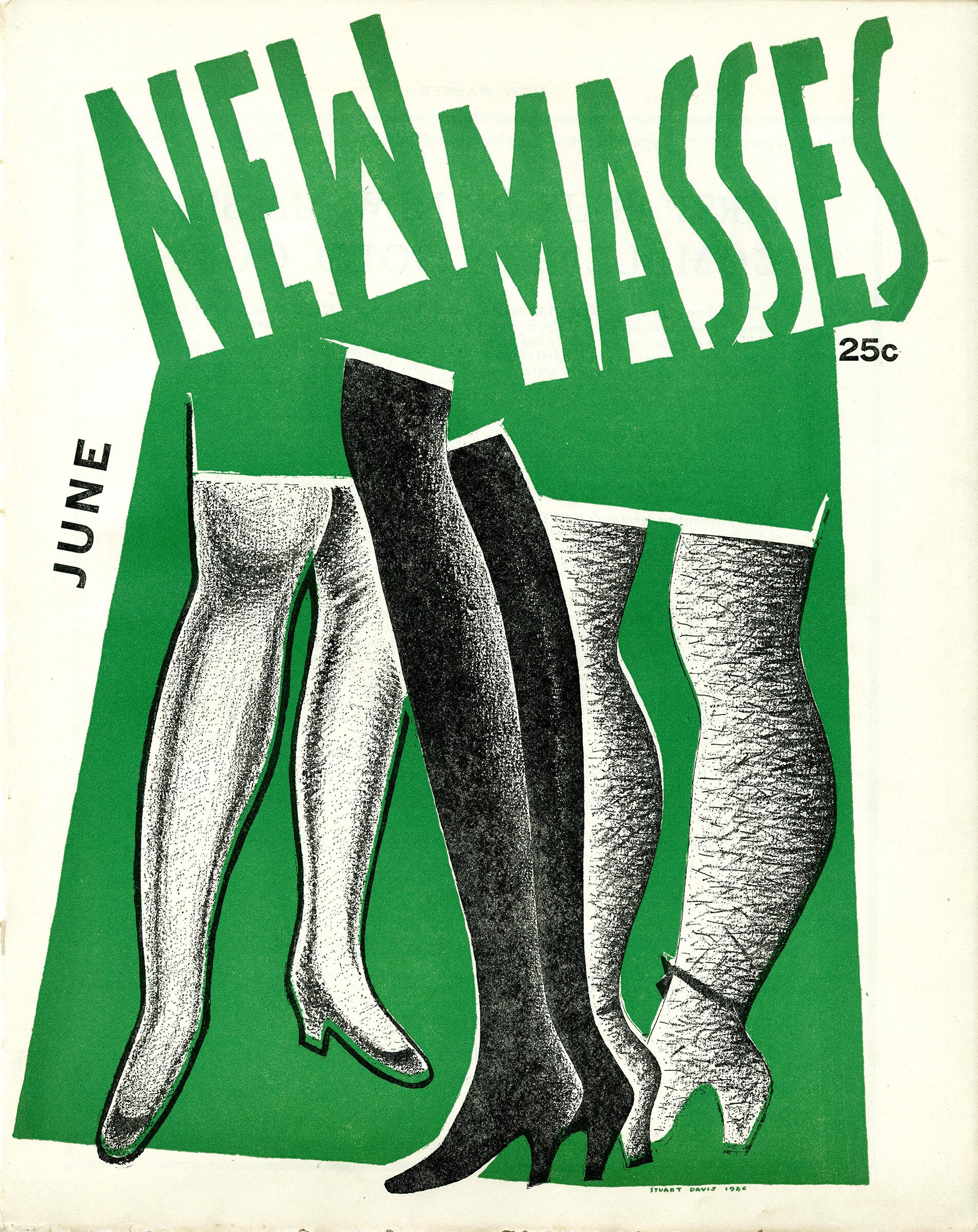
At the time of this diary, Chrisman's social life revolved around the magazine New Masses
Best remembered today as the Newbery and Caldecott winning illustrator of My Father’s Dragon and other children’s classics, Ruth Chrisman was in the 1920s deeply embedded in the bohemian circles of Greenwich Village. At the time, she was married to Egmont Arens (1887–1966), who later distinguished himself as an industrial designer, responsible for the Kitchen Aid mixer and other essentials. Before the Great Depression Arens moved in leftist literary circles. He had operated the Washington Square Book Shop at 27 West Eighth Street with his first wife, Josephine Bell, until he paired off with Ruth in 1923, and from 1919 to 1924 he published Playboy: a portfolio of art and satire, whose contributors included Djuna Barnes, e. e. cummings, Ben Hecht, Georgia O’Keefe, and Rockwell Kent. He also operated the Flying Stag Press, which issued plays by Floyd Dell and others. By the time of this diary, Arens was one of the editors of New Masses, which debuted in May, 1926. Other board members included Stout, John Dos Passos, Michael Gold, William Gropper, and Freda Kirchwey.
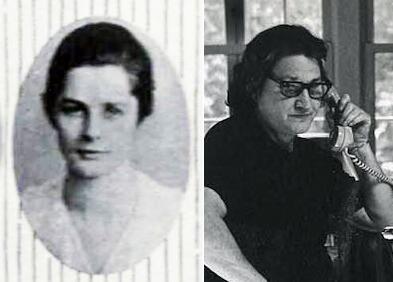
Ruth Chrisman in 1919 and the 1960s
Chrisman’s diary offers an intimate look into the lives of this charmed circle. She notes attending performances by Houdini, the People’s Symphony, the Provincetown Players, and Earl Carroll’s Vanities. She takes tea with Alfred and Blanche Knopf, attends a housewarming for Rockwell Kent, goes slumming in Chinatown with Wanda Gág, consorts with Lawrence Langner, Art Young, and Ralph Pulitzer, meets Ford Madox Ford, hosts Carl Ruggles, and participates in a Gurdjieff System class led by A. R. Orage with her friend Witter Bynner. Most intriguingly, the diary also reveals the complex erotic lives of Chrisman and Arens and their extramarital partners, among whom Rex Stout (1886–1975) and his wife Fay Kennedy (1891–1963) featured prominently.
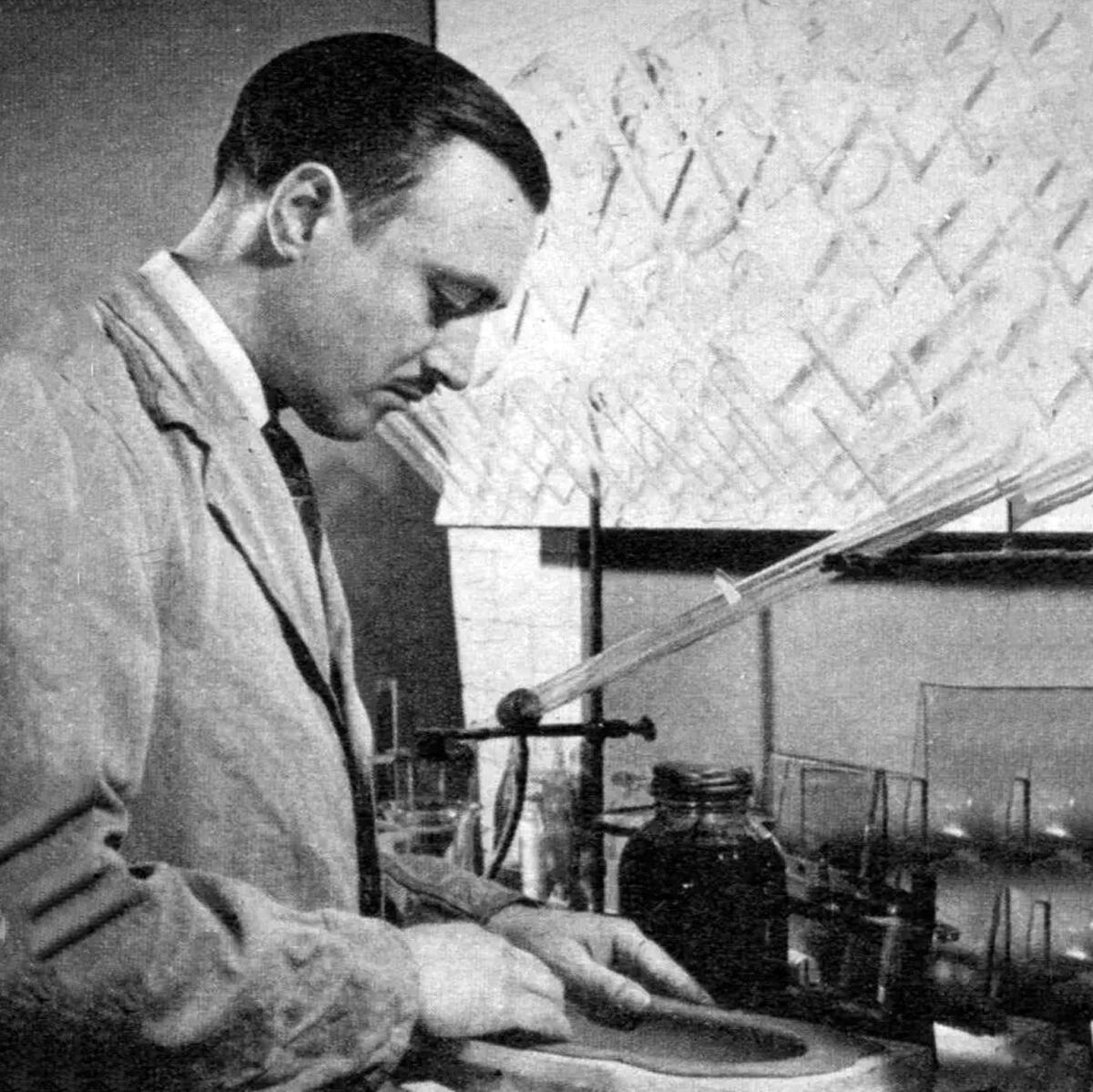
Egmont Arens would later become an influential industrial designer
In her brilliant and beautifully written study of life among the bohemians of the jazz age, Christine Stansell discusses the ideals of free love, “the raffish accomplice to free speech and free expression, a variant of the new played out in flirtations, seductions, fallings-in-love, fallings-out, carnal delight, and despair.” These elements surface throughout Chrisman’s diary, where she and her best friends got drunk at and fell into bed with one another. Rex Stout’s biographer John McAleer notes that in his letters Arens addressed Stout as “Silenus,” a reference to the drunken, bearded satyr of Greek myth. In 1925, the two men published a twelve-volume edition of the works of Giacomo Casanova translated by Arthur Machen, edited (anonymously) by Edmund Wilson, and illustrated by Kent; they appear to have taken the legendary seducer as their model. In this diary Chrisman refers to the pair as “the two men who murder women.” No wilting violet herself, Chrisman reports on her own romantic interests, among whom was the artist George Biddle (or possibly the writer George Cronyn – both were part of their clique). New Masses parties seemed offer the most frequent occasion for dalliance, with luncheons a close second. “Rex delegated his evening to Dorothy [Harris], wife of Harlem Renaissance artist Jimmy Harris] but sane now[.] I did very well without either of my poisoners. There is always George.” And at another gathering: “Drinks – Bang. Egmont stimulated by Fay. Rex & I went in Pantry. Egmont & Fay in Bed Room. Mess[?] -- & ‘so into the night.’”
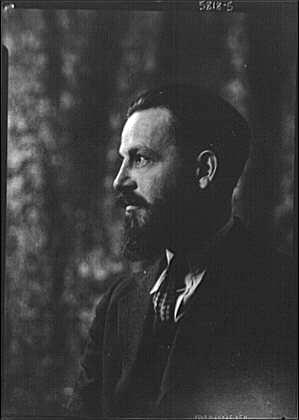
Rex Stout, one of Chrisman's extramarital partners, would later create Nero Wolfe. Photo by Arnold Genthe.
Stansell writes of the difficulty many bohemians had with foregoing emotional attachment in service to the ideals of sexual freedom. “George came to Lunch. Egmont had Camille [Davied],” Chrisman notes nonchalantly on January 21st. But on March 18th she exploded with jealous rage after Arens revealed he had lunch with Fay Stout. At the New Masses Ball in December, “Egmont & Fay & Helen [Ramsey] succeeded in getting most affectionate. Jealous & hurt[.] I had a hangover.” Jealousies aside, the erotic play described in this diary was sanctioned by all parties. McAleer quotes a letter from Arens to Stout: “Ruth has some magenta garters. You will enjoy snapping these on your return.” Yet in 1927 Rex and Fay Stout would leave New York for an extended stay in France, and between 1930 and 1932 everyone would change partners. Arens would marry Camille Davied (1893–1988), Stout would marry Pola Weinbach (1902–1984), and Chrisman would marry Lewis Stiles Gannett (1891–1966).
An exceptional window into the vigorous private lives of some of the greatest creative spirits of Manhattan modernism.
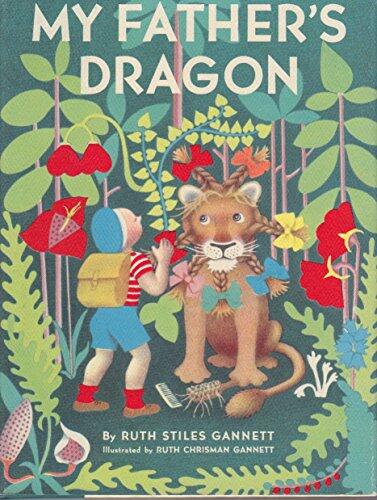
Ruth Chrisman would later illustrate beloved children's books
Selected References
Aaron, Daniel. Writers on the left: episodes in literary communism. New York: Columbia University Press, 1992
Churchill, Allen. The improper bohemians: a recreation of Greenwich Village in its heyday. New York: Dutton, 1959
McAleer, John J. Rex Stout: a biography. Boston: Little, Brown and Company, 1977
Stansell, Christine. American moderns: bohemian New York and the creation of a new century. New York : Metropolitan Books, 2000
Note: The free use of bold type in this description is in honor of the dishy columns of La Dolce Musto.