


Manuscript for an unpublished masterwork in American medicinal botany
Havard, Valery (1846–1927). Medical and Economic Botany. Typescript, ca. 1897-98. 1291 numbered leaves on thin laid paper, with holograph emendations throughout. Some photocopied titles laid in, not in the author’s hand. Loose pages housed in an army-issue field binder titled by hand, bound in buckram with straps, titled in manuscript on the cover. Some light wear both to sheets and binder. Now filed in two archival boxes, 1.0 linear feet.
The manuscript for an unpublished masterwork on American flora, written by a pioneering botanist and medical surgeon while serving in the United States army on the western frontier.
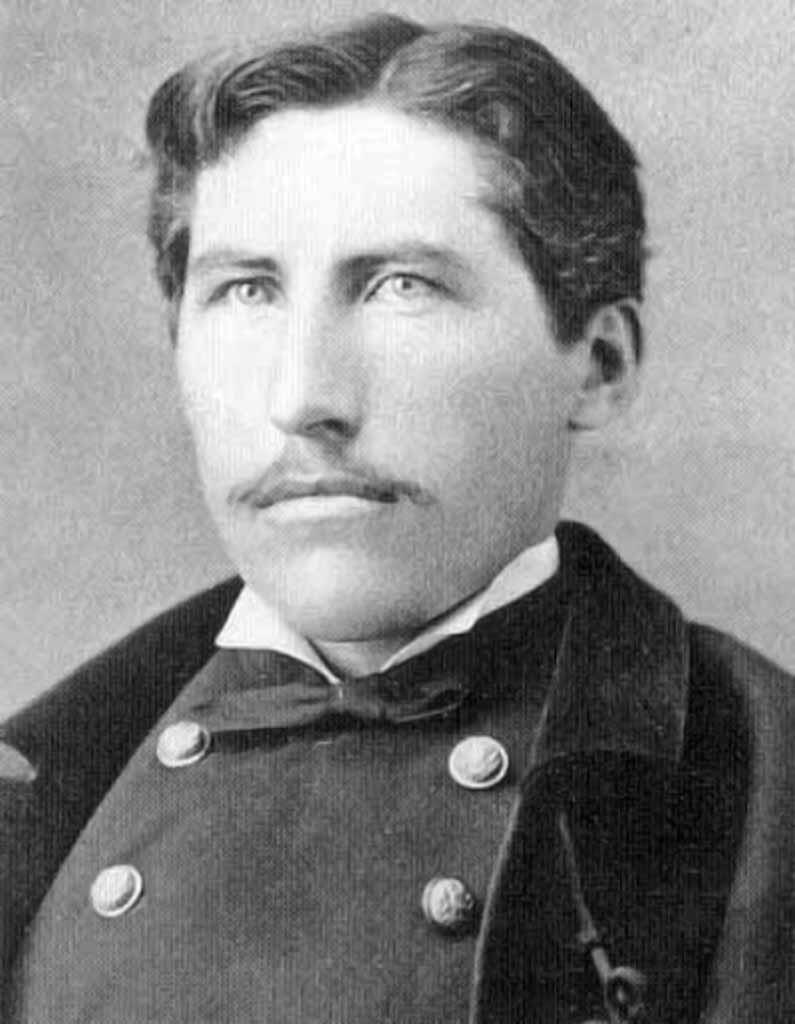
Valery Havard in 1880
Trained as a medical doctor in Paris and New York, Valery Havard pursued independent studies in botany. He was appointed to the medical department of the army in 1871 and served in frontier posts in Montana and Texas, where he first came to be interested in native edible plants, the subject of some of his earliest papers. Havard was officially detailed as botanist to expeditions to northwest Texas in 1881 and 1883 led by Captain William R. Livermore, Corps of Engineers. Between 1884 and 1898 he served in a series of posts in New York, North Dakota, and Wyoming, where he continued his studies.
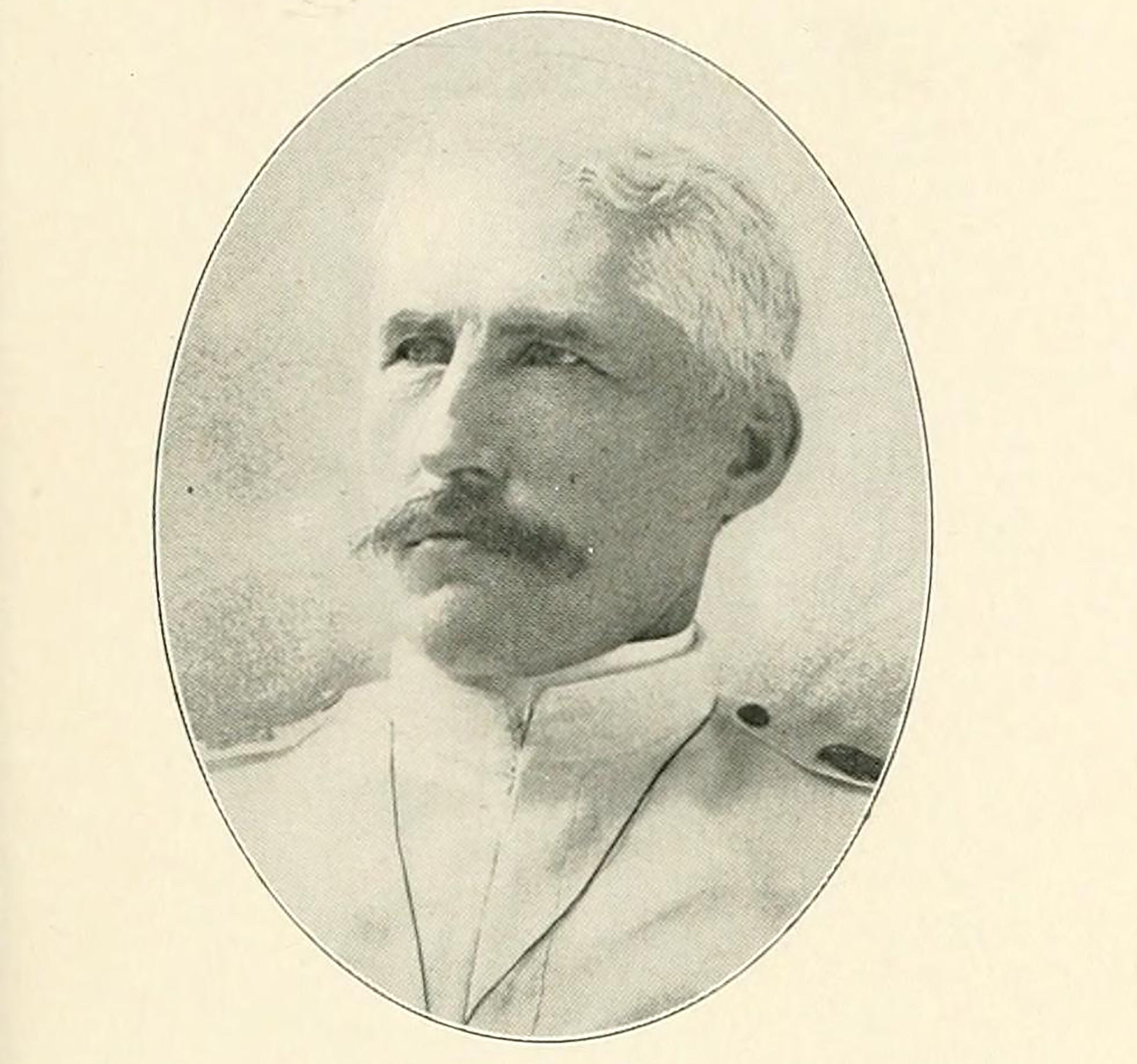
Valery Havard in 1902
In 1898, Havard was posted to Cuba to serve as chief surgeon of the Cavalry Division under General Joseph Wheeler. He was cited for gallantry in action during the battle of San Juan Hill. In 1901 the Association of Military Surgeons awarded Havard the Enno Sander prize for his work on organizing medical units during active service. Appointed Chief Surgeon of the Department of the East, Havard acted as medical attaché with the Imperial Russian Army during the Russo-Japanese War. From 1906 to 1910 he served as president of the Army Medical School in Washington, D.C. He published in 1908 a book on medical hygiene that was quickly adopted as the standard textbook .
In 1910, Valery Havard retired to Fairfield, Connecticut (his wife was from Bridgeport), but in 1917 he was recalled to active duty and returned to Cuba to reorganize the medical departments of the country’s army and navy. For this labor he received the Cuban Order of Military Merit. Relieved of this duty in 1923, he settled into a comfortable retirement. He died at sea en route to France in 1927.
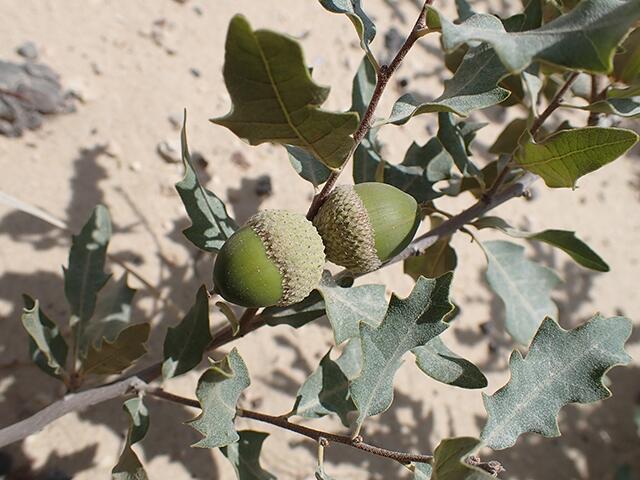
Quercus havardii (Photo: William Juett, Lady Bird Johnson Wildflower Center)
Havard's work in military medicine was vital, but his most lasting contributions may be to the field of botany. In the 1880s and 1890s, he published a series of works on the native flora of Texas that are treasured for their detailed descriptions of the landscape before the introduction of pastoral farming. He sent specimens now preserved in the collections of the United States National Herbarium and the Asa Gray Herbarium at Harvard University, and lent his name to a number of species he described during his time in Texas in the 1870s and early 1880s, including the Chisos bluebonnet (Lupinus havardii), Havard oak (Quercus havardii), and Havard's evening primrose (Oenothera havardii). His ethnobotanical studies, widely cited, were among the first systematic attempts to catalogue the botanical knowledge of North American Indians.
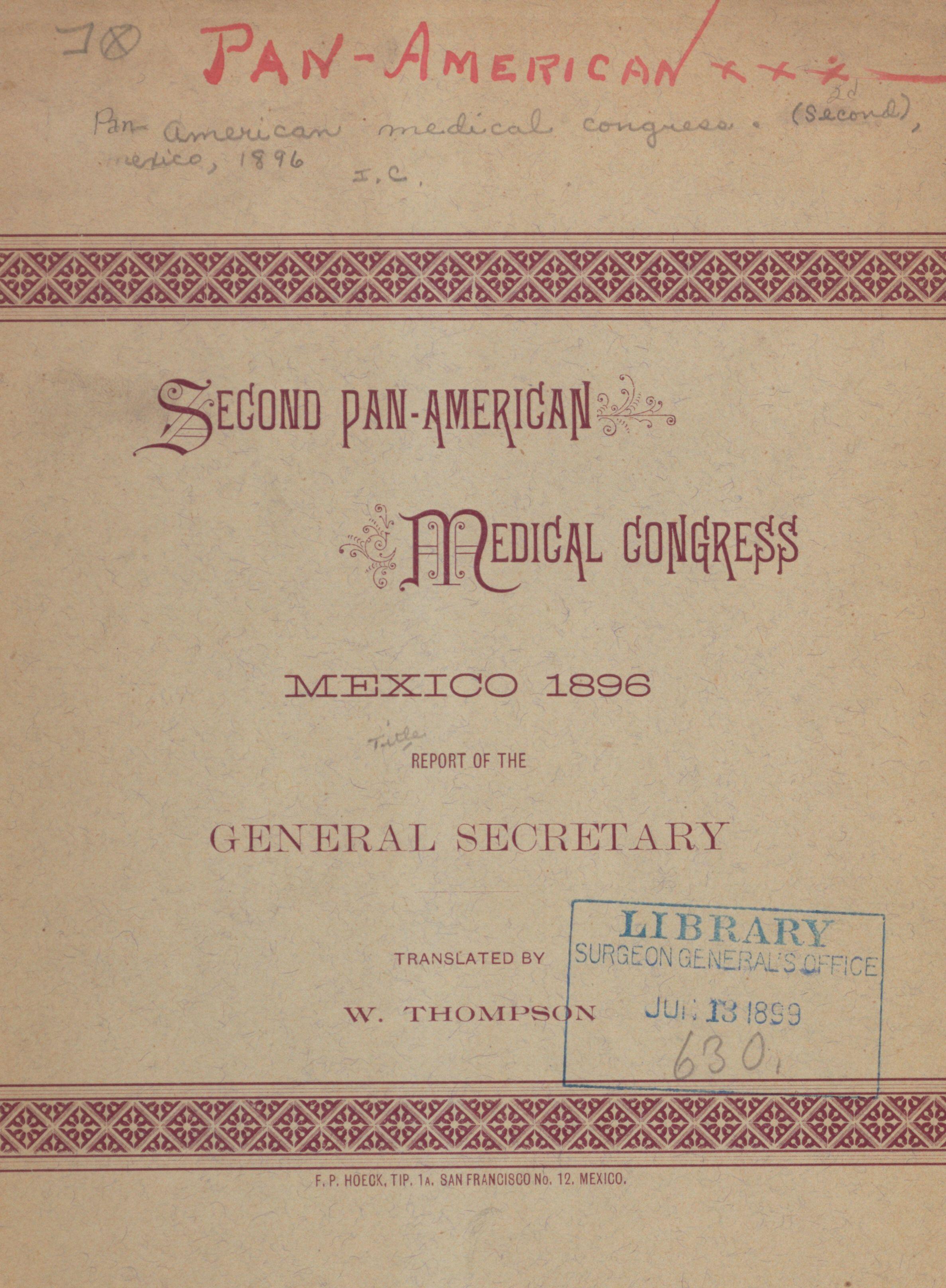
The present work was the product of an effort initiated at the Pan American Medical Congress of 1896.
The present manuscript represents the union of Havard's parallel vocations. The origins of the work appear to lie in an effort he organized at the second Pan American Medical Congress in 1896 to institute a systematic study of American medicinal flora. He and his colleagues circulated a memorandum soliciting information to compile "a complete list of the plants which have been used medicinally, however trivial such use may be," and requesting that samples be sent to the Smithsonian Institution. Havard's committee singled out the native population as being especially valuable sources for information:
The general reputation of a plant is not so much desired as the particulars ... heard from reliable observers. It is believed that much interesting knowledge can be obtained from Indians, Mexicans, and half-breeds, and that, consequently, Indian agencies and reservations are particularly favorable fields for our investigation (Langley 1897, 414)
This monumental manuscript appears to have been the result of that effort. Weighing in at almost 1300 pages, the work was, according to the author, “the first attempt made in this country to gather all the useful information scattered in American botanical literature … into a convenient and compact form.” Focusing on the spermatophyta (plants bearing flowers and seeds), Havard describes thousands of species, organizing them according to the taxonomic systems of Engler & Prantl’s Pflanzenfamilien and of Britton & Brown’s Illustrated Flora, and using the nomenclature approved by the Botanical Club of the American Association for the Advancement of Science in 1892 and 1893. It is very much an American text, focusing on species found in the United States with details on their distribution on the continent. Havard draws upon his extensive field research and on Indian lore to remark on the utility of each species as an edible, an ornamental, or a therapeutic. For example, he notes of the variety of Hieracium lachenalia or hawkweed:
They are all bitter and astringent, with ill-defined effect upon the kidneys and bronchial tubes. At least two species have been very highly praised for their efficacy against rattlesnake bites.
But he adds, drawing no doubt again on his experience:
In estimating the value of our numerous “snake-weeds” we should bear in mind that the average adult, if in fair health and not over-stimulated with whiskey, almost always recovers from a rattlesnake bite without treatment.
Havard's preface to the manuscript notes that his work was intended to appeal to a wide class of readers, including physicians, pharmacists, organic chemists, farmers, lumbermen, landscape architects, and “the large class of educated people who study botany for pleasure and recreation.”
Long lost, this manuscript will allow historians of science to more fully appreciate Havard's considerable contributions to American botany and assess the formation of medical knowledge at the turn of the Pan-American century
Select References
Havard, Valery. "Botanical outlines of the country marched over by the seventh United States Cavalry during the summer of 1877." Annual report of the chief of engineers to the Secretary of War for the year 1877, Appendix QQ, pp. 1681-1687
-----. List of plants found on the plains of western Dakota and eastern Montana during the summer of 1877 and spring of 1879. Washington : Government Printing Office, 1880.
-----. "The Mezquit." American naturalist, May, 1884.
-----. "Report on the flora of western and southern Texas, United States." National museum. Proceedings, 8 (1885): 449-533.
-----. "Distribution of the Buffalo Grass (Buchloe Dactyloides, Engelm.)." Bulletin of the Torrey Botanical Club, 15, no. 8 (1888): 215–18.
-----. Manual of drill for the hospital corps and company bearers of the U. S. Army. Bismark, Dakota: Tribune, 1889.
-----. "Food plants of the North American Indians." Bulletin of the Torrey Botanical Club, 22/3 (1895): 98-123
-----. "Drink plants of the North American Indians." Bulletin of the Torrey Botanical Club, 23/2 (1896): 33-46
-----. "Notes on trees of Cuba." The Plant World 4, no. 10 (1901): 181–85, 181-185, 221-225.
-----. Reports of Military Observers Attached to the Armies in Manchuria During the Russo-Japanese War, Part II: Washington, DC: GPO, 1906.
-----. Manual of Military hygiene for the military services of the United States. New York: Wood, 1908.
-----. "Personal recollections and military record of Colonel Valery Havard, Medical Corps, U.S. Army." Asa Gray Bulletin N.S. 3/2 (spring 1957): 177-92.
-----. [Portrait] in L. R. Hamersly, ed. A military album, containing over one thousand portraits of commissioned officers who served in the Spanish-American war (New York: L. R. Hamersly, 1902), 243.
Langley, S. P., H. H. Rusby, and Valery Havard. "Circular of the Sub-Commission of the Pan-American Medical Congress on Medicinal Flora of the United States."Bulletin of the Torrey Botanical Club 24, no. 8 (1897): 413–15.
Phalen, James M. "Valery Havard, Colonel, Medical Corps, U.S. Army." Army Medical Bulletin, 50 (Oct. 1939): 126-129
Product tabs
SOLD
Recommend this product
Manuscript for an unpublished masterwork in American medicinal botany
Related products
Correspondence Archive of Massachusetts Governor Increase Sumner (1771-1792)
Sumner, Increase (1746-1799). A small archive of 28 letters, mostly invitations sent to Sumner and his family, 1771-1792. Included is also a candid l...
view details
$2,250
View details

J. Robert Oppenheimer. The Open Mind (1955). Inscribed first edition.
Oppenheimer, J. Robert (1904–1967). The Open Mind. New York; Simon and Schuster, 1955. First edition. Near fine in a slightly rubbed dustwrapper.Insc...
view details
$6,500
View details

“A Billion Dollar Industry is in the Making”: The Gametronics conference on video games (1977)
Eimbinder, Jerry, ed. Gametronics: The Electronic Game Designer's Conference. Great Neck, NY: Electronic Engineering Times, 1977. First edition. 223p....
view details
$5,000
View details
On
hold
hold
Visiting Enrique Creel, Governor of Chihuahua
Creel, Hattie Virginia (1856-1915). Lengthy TLS to “Cousin Lucy” on visiting their cousin Enrique Creel in Chihuahua, Mexico, nd [circa 1909], carbon ...
view details
$850
View details

The literary archives of Dudley Barker and his alter ego, Lionel Black
Barker, Dudley (1910–1980). Literary archive, comprising one file of notes and correspondence on John Galsworthy and 46 manuscripts, 1935-1980. The ma...
view details
$9,500
View details

Lemuel Cox's labor contract for Londonderry Bridge, 1790
Cox, Lemuel (1736-1806). Articles of Agreement for the construction of a bridge in Londonderry, Ireland. 7 February 1790. Ink on vellum, about 73 x 43...
view details
$8,500
View details

A memoir of Siberian prisons by Kropotkin and Andréoli
[Andréoli, Émile (1835–1901) and Pyotr Alexeyevich Kropotkin (1842–1921)]. Siberian Convict Life. Corrected typescript, circa 1886. 99 pp., each page ...
view details
$8,750
View details

Original painting of the American bark Fury, with the captain’s ledgers
Wilson, Samuel H. (1836 – 1888). Ledgers of disbursements for the bark Fury and other vessels under his command, 1865 – 1887. 140 numbered pages, cont...
view details
$3,750
View details

After Venetia: Prime Minister H. H. Asquith's last mistress
Price on Request
After Venetia: Prime Minister H. H. Asquith's last mistress
Asquith, Herbert Henry, 1st Earl of Oxford and Asquith (1852–1928). Letters to Hilda Harrisson, 1915–1928. Over 360 autograph letters, totaling about ...
view details
Price on Request
View details

A Calligraphic Manuscript for a Pioneer in Religious Education
[Athearn, Walter S.] To Our Friend Walter S. Athearn, Dean, Boston University School of Religious Education and Social Service, 1918-1928. Four vellu...
view details
$350
View details

George Bernard Shaw ghostwrites a preface for Lawrence of Arabia
Lawrence, T[homas] E[dward] (1888–1935) and Shaw, George Bernard (1856–1950). Draft foreword to Revolt in the Desert. Holograph manuscript, [Ayot St. ...
view details
$11,000
View details

A revolutionary Tagalog manuscript from the Philippine-American War
Trinidad, Críspulo (1839-1925). Buhay ni Judit. Holograph manuscript, signed by the author and dated 22 September 1899. 16 x 22 cm; 99 pp. written on ...
view details
$8,500
View details

A slave sale mandated by the Louisiana Supreme Court
Sale of Slave by Suc[cessors] of Woodruff to Dr. James G. Belden, dated 1 April 1858. Holograph manuscript on printed form folded to make 4 pages. A ...
view details
$3,500
View details

Naomi Murdach and the golden age of trans pageantry in San Francisco
Murdach, Naomi [née Clinton E[dward] Tutt] (1932–2019). Photographic archive of gay theatricals and pageants in San Francisco, chiefly 1970–1972. Seve...
view details
$9,500
View details

Scientific racism, human remains, and the guano trade, 1845
Wonderful natural phenomenon. A specimen of a Negro man, preserved by guano, now exhibiting in the Victoria Saloon Rooms. Lowgate, Hull: William Steph...
view details
$8,750
View details

Manuscripts by Elisha Deming Andrews, Vermont minister and Michigan pioneer
Andrews, Elisha Deming (1783-1852). An archive of twelve sermons, with additional manuscripts, 1806-1825. Over 250 pages. Very good condition. A m...
view details
$850
View details

A Whittier between the Devil and Lowell factory girls
Whittier, [ _____ ], letter to William West, July 9, 1832. A lengthy, substantial, and amusing letter written on three sides of a single sheet, 39 cm ...
view details
$125
View details

Unpublished memoir of Bell Laboratories in Canada and New Jersey
Ferguson, James G[ordon] (1900 – 1985). Me and My Bell System (As I Remember Us). Mimeographed typescript, ca. 1965. 8½ x 11 in. 61 pp, stapled. Ther...
view details
$125
View details

Document Signed by Alexander Hamilton as Secretary of the Treasury, 1793
Hamilton, Alexander (1755 – 1804). Signed Treasury Receipt addressed to Samuel Gerry, Collector at Marblehead. Partially printed document dated June 2...
view details
$8,500
View details

Consumer culture, art, and subjectivity in Kazimierzowo, Chicago
Porembski, Olga V. (1924-2011). Rose Rosinski and Bruno Zidek, April 11, 1942. 96 leaves, 11½ x 14 in. (29 x 26 cm.) Homemade scrapbook comprised pri...
view details
$1,250
View details