



The antisocial gospel in Scotland: a virulent handbook for militant sectarians
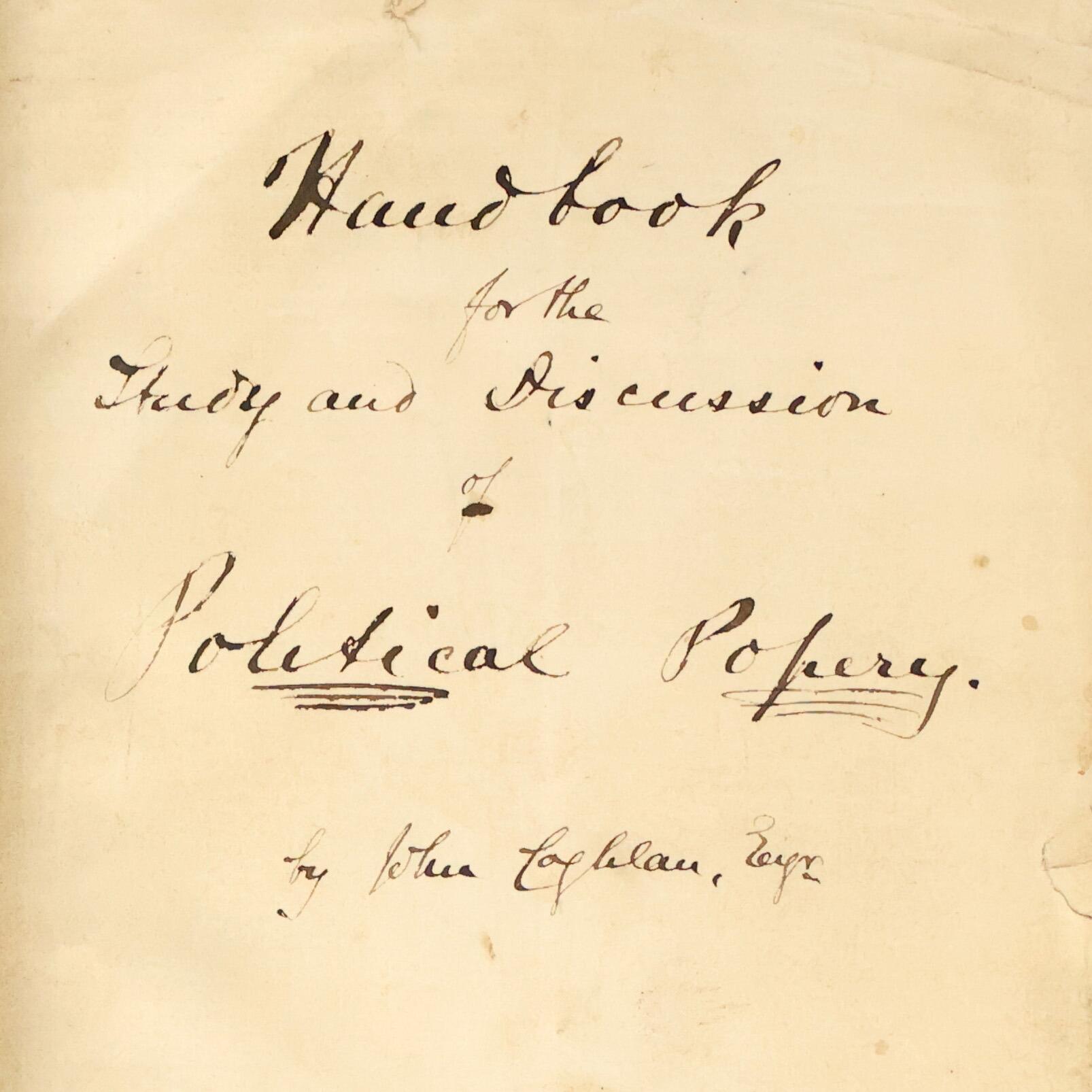
Coghlan, John (c.1809 – 1885) Handbook for the Study and Discussion of Political Popery. [Edinburgh, circa 1866]. Manuscript draft in the hand of Mansfield C. Souttar (1844–1892), circa 1866. 356 leaves of varying size, each leaf mounted at inner margin. Bound in half leather. Spine title mostly perished but still legible as “Mr Soutter's M.S. / Contents of / Mr Coghlan's book / 1868.” Bookplate of the Hope Trust, 31 Moray Place, Edinburgh, with shelfmark E168. [WITH] John Coghlan. Plan for the study of the Roman Catholic and Protestant controversy: illustrated by a partial treatment of the dogma of Peter's supremacy: with an appendix containing an analysis of the creed of Pope Pius IV, and a classified selection of questions for discussional purposes. Edinburgh: Paton and Ritchie, [c. 1860]. Some inoffensive library stamps, otherwise very good indeed.
A manuscript draft of a text propounded by the leaders of the anti-Catholic movement in late-nineteenth century Scotland. Intended for use in classes to indoctrinate Protestant controversialists, the text was copied out by a favorite student.
John Hope: moral crusader
In Scotland, “anti-Catholicism was essentially anti-Irish,” notes historian Steve Bruce. Immigration shifted religious demographics significantly in the early decades of the nineteenth century so that by the 1840s Irish transplants comprised about 10 percent of the population of Scotland. Immigrants were concentrated in particular regions. In Glasgow, for example, the Catholic population rose from 50 in 1795 to 25,000 in 1829 and almost 50,000 by 1843. Concurrent with the rise of industrialization and growing competition for labor, immigration provoked a violent response that played out in the streets, in the halls of Parliament, and in certain wings of both the Established and the Free churches. But the most organized anti-Catholic response came from laymen who, feeling that the government and the clergy were not doing enough, determined to take matters in their own hand.
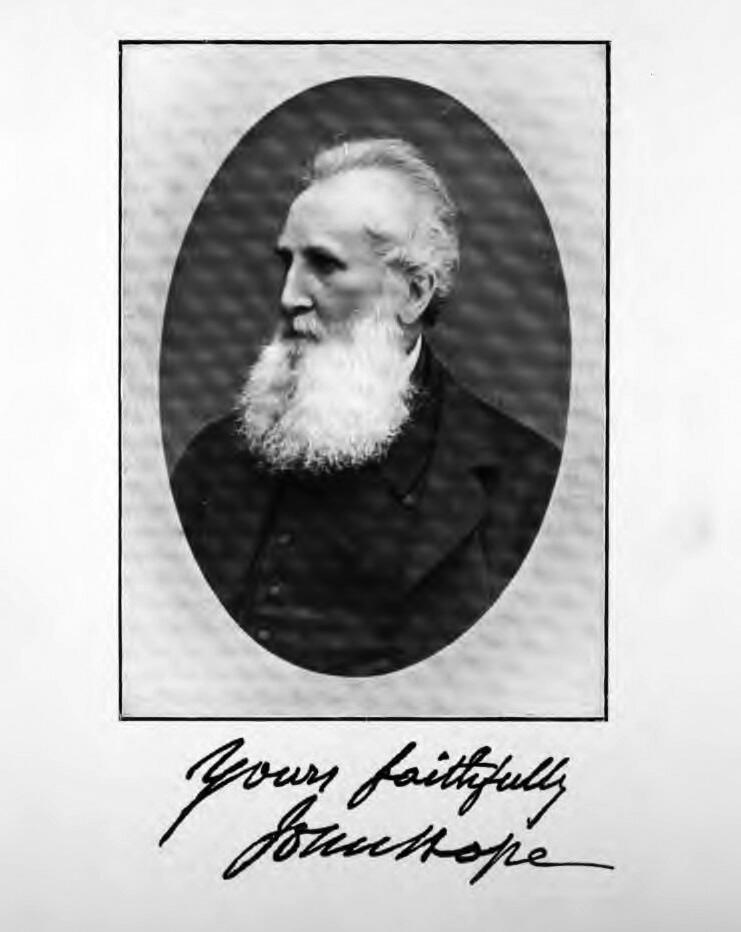
John Hope
Bruce calls John Hope (1807–1893) “the quiet bureaucrat behind the anti-popery movements” in 19th century Scotland. A successful lawyer and organizer for the Conservative Party, he made a lifelong practice of cultivating the moral lives of young clerks. “His favourite campaigning method was to arrange a large public meeting on, say, temperance,” notes Bruce, “and arrange for some articulate advocate of the cause to write a pamphlet,” which Hope would publish. In 1847 he founded the British League of Juvenile Abstainers, in which officers clad in the sort of pseudo-military uniforms that the Salvation Army (est. 1865) would later adopt would offer evening classes to young people who pledged to forego alcohol and tobacco and pay sixpence per month. Towards the end of his life, he founded the Hope Trust, which still awards scholarships today.
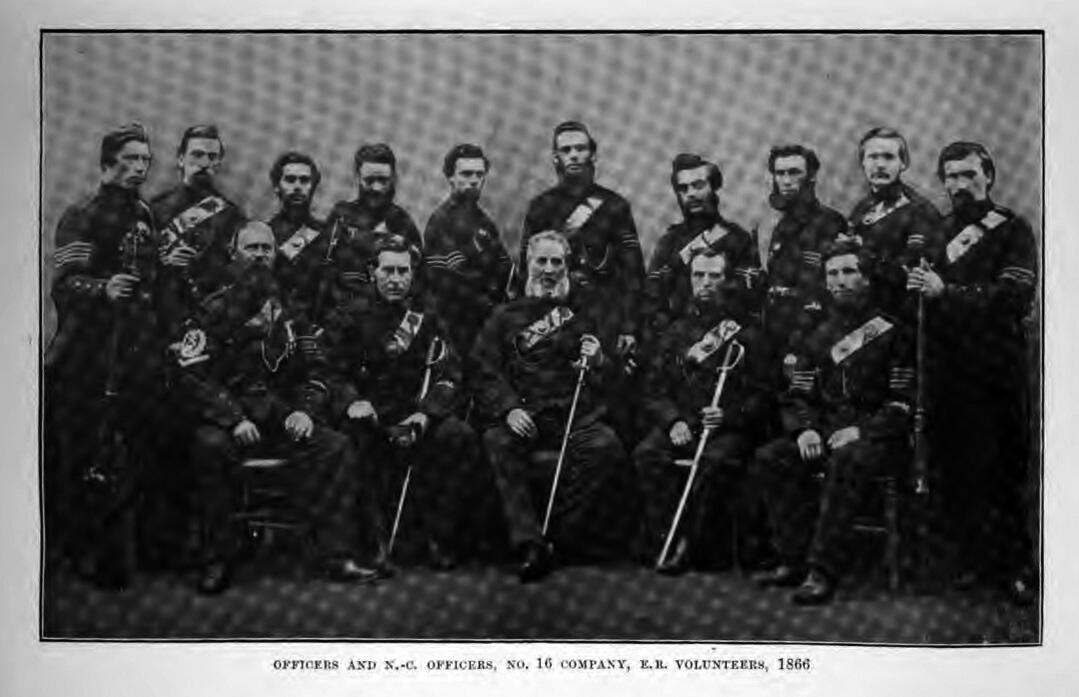
Leaders of John Hope's British League supplemented their civilian activism with military training by organizing themselves as a unit within the Volunteer Force established across the Empire in 1859.
Virulently anti-Catholic, Hope placed the inculcation of religious prejudice at the center of his philanthropic activities. As Bruce writes:
Protestantism was, for Hope, self-evidently superior to Rome. All one had to do was to present people with the facts, the evidence, and they would come to that conclusion. Hence the key to defeating Romanism was to educate people.
Hope funded a prize competition to promote essays on the “Popish controversy.” Jacob Primmer (1842–1914), a Church of Scotland minister whose 1897 book on “the nature, aims, and plottings of the Papal anti-Christian conspiracy in this country” went through multiple printings, was one of Hope’s star students. The present manuscript is the product of another.
John Coghlan: anti-Catholic theorist
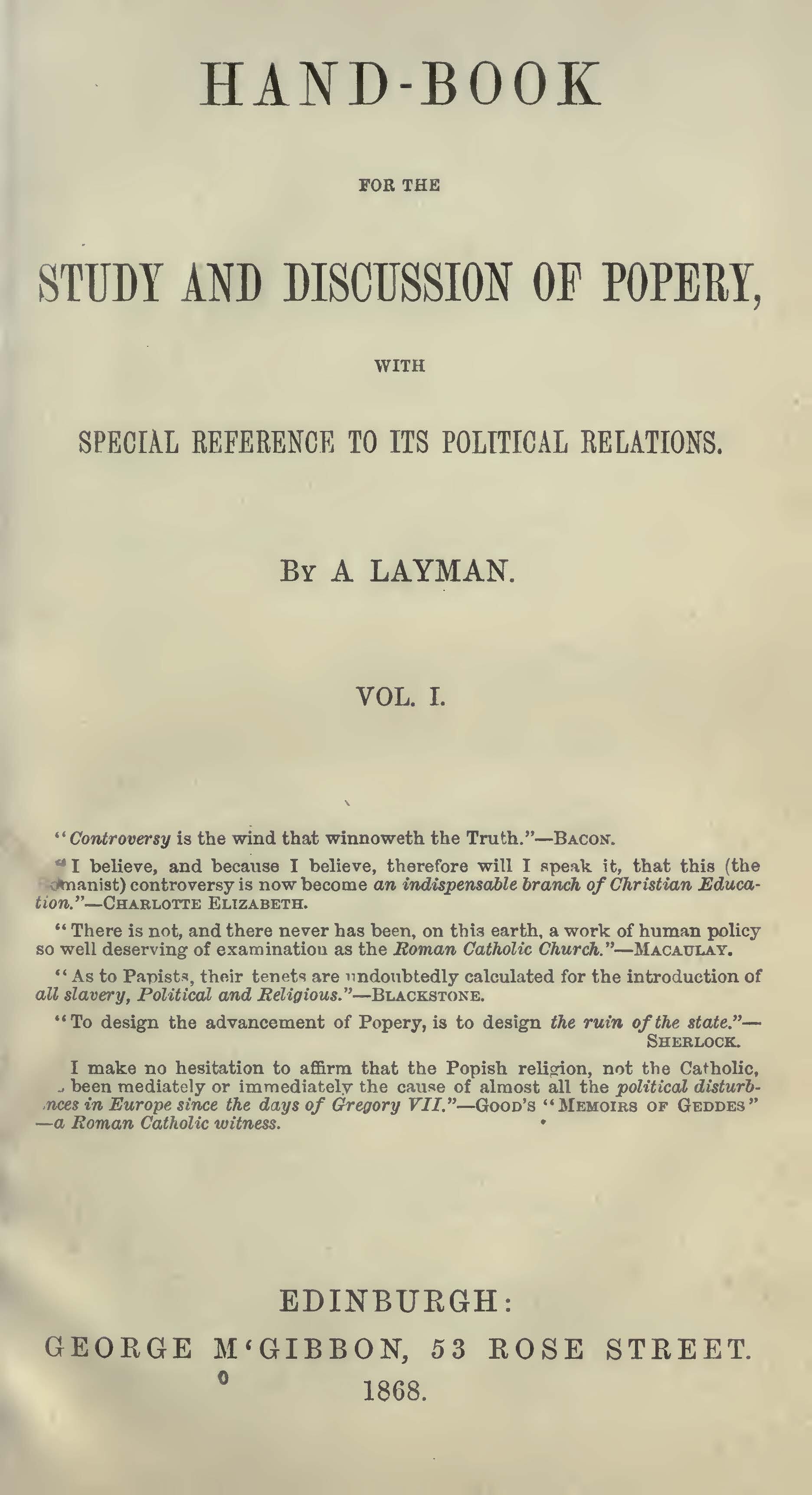
Title page of John Coghlan’s “magnum opus”
Born in Dublin, John Coghlan was a dedicated controversialist in Ireland before he accepted the call from the Scottish Protestant Association to lead a lay ministry in Bo’ness. His writings attracted the attention of John Hope, who recruited him to lead classes for the British League and to write anti-Catholic tracts. His Plan for the study of the Roman Catholic and Protestant controversy, was published around 1860 “under the auspices of John Hope, Esq.” and includes a three page open letter by Hope to John Bright, MP. (A copy of this volume, which as of this writing is not available digitally, is included with the manuscript.) Hope’s hagiographer calls Coghlan’s Hand-book for the study and discussion of popery: with special reference to its political relations, published between 1868 and 1875, his “magnum opus.” The two volumes of the latter work are, he says:
written in a lucid style, and show the author to be widely informed in all matters pertaining to the Roman Catholic controversy. In these two volumes the Protestant controversialist will find abundant material, in a convenient form, with which to equip himself for discussion on all the points in common dispute between Protestants and Romanists.
Coghlan’s controversial works are organized less as soapbox diatribes than as collections of educational resources to prepare militant Protestants to argue with members of the Catholic faithful. Following the model of the scholastic disputation, he offers summaries of Catholic doctrine and refutes them point by point. What makes Coghlan’s work interesting from a scholarly perspective is not the substance of his arguments but the role they played in fostering the sentiments of a generation of religious bigots.
David Jamie writes that Coghlan, who identified himself in the 1871 Scottish census as a missionary, earned the affection and admiration of his pupils:
The young men admired him for his encyclopaedic learning, and were drawn to him by his spirit of gentle kindness. In respect of his grey hairs and venerable appearance they accorded him their reverence, and there was about him a sort of loving simplicity which gained for him respectful affection. By his ardent love for truth, by his earnest advocacy of all that was good and pure, by the encouragement and stimulus he gave to those who sought to improve their minds, he exerted on the young men of the British League a very beneficial influence.
The present manuscript is in the hand of one of those young men of the British League.
Mansfield C. Souttar: a star student
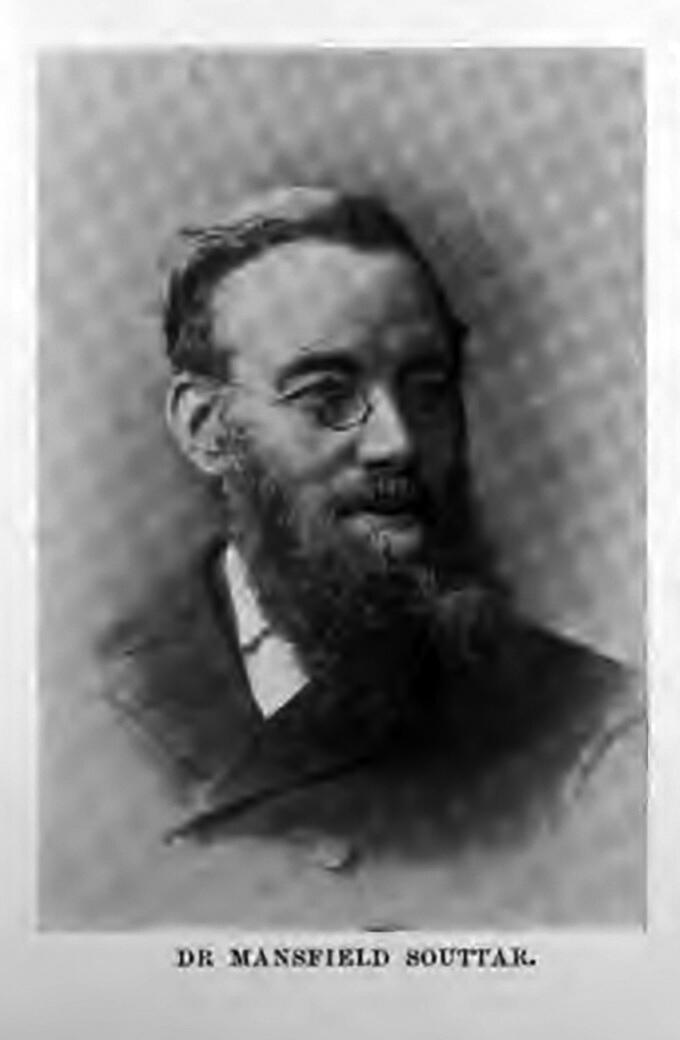
Mansfield C. Souttar
David Jamie singles out Mansfield C. Souttar for special mention in his hagiography of John Hope:
[Souttar] was one of the younger men who, becoming distinguished as a prizer at the British League classes, was singled out for advancement. Things were not made too easy for him. He was left to struggle; but he climbed the ladder bravely, fighting oftentimes with toil and weariness. He was faithful and successful as a lecturer in the country … He became a member of the [shorthand writing] class which was started in the League in 1862, to help in training Protestants as reporters, since it was believed that the Jesuits were making strong endeavours to dominate the British press. …
He never forgot his indebtedness to the British League; and when, in 1870, he obtained his heart's desire, and became a practising physician, he wrote a special letter warmly thanking Mr. Hope for the time and pains, not to mention the money, he had spent in his education and advancement. One of the few photographs that had a prominent position in 31 Moray Place [headquarters of the British League, and then the Hope Trust] was one of Mr. Mansfield Souttar. (227-28)
The manuscript appears to be an early version of the first volume of Coghlan’s Hand-book for the study and discussion of popery, following the general outline of the published work but with significant variation. The text offers opinions about the social, political and religious aspects of Catholicism, and includes remarks on John Henry Newman. It concludes: "Perhaps the Pope may yet indulge his flock by giving them the Scriptures and civil liberty, to which let us all say, Amen." The manuscript bears the fanciful imprint of “Edinburgh, Ballantyne and Co., Paul's Work” – this was a printer in Canongate, not a publisher. (The published text appeared under the imprint of George M’Gibbon and carries no statement of printing.) Souttar left Edinburgh for England under the auspices of the Scottish Reformation Society in the autumn of 1866, and that supplies the terminus ante quem for the production of the manuscript. Especially given the spine label, which misspells the younger man's name, we think it likely that it was bound not by Souttar but by John Hope and his associates after the book was issued in 1868.
Steve Bruce reminds us that in 1935, a “No Popery” party won 32% of the votes in the Edinburgh Council Election. This manuscript helps to explain how such a thing came to pass. A revealing relic of a dark and curious cult.
Selected References
Bruce, Steve. No Pope of Rome: anti-Catholicism in modern Scotland. Edinburgh: Mainstream Pub, 1985.
Coghlan, John. Plan for the study of the Roman Catholic and Protestant controversy: illustrated by a partial treatment of the dogma of Peter's supremacy: with an appendix containing an analysis of the creed of Pope Pius IV, and a classified selection of questions for discussional purposes. Edinburgh: Paton and Ritchie, [c. 1860]
----- (as “A Layman”). Hand-book for the study and discussion of popery: with special reference to its political relations. 2 vols. Edinburgh: George M’Gibbon, 1868, 1875.
Jamie, David. John Hope: Philanthropist And Reformer (Abridged ed.). Edinburgh: The Hope Trust, 1907. NB: we have seen no evidence that an unabridged edition was ever published.
Primmer, Jacob. Pastor Jacob Primmer in Rome, 6th ed. Dunfermline: Dunfermline Citizen Office and London: J. Kensit and W. Wileman, 1912
Product tabs
$0
$2,750
Recommend this product
The antisocial gospel in Scotland: a virulent handbook for militant sectarians
Related products
A memoir of Siberian prisons by Kropotkin and Andréoli
[Andréoli, Émile (1835–1901) and Pyotr Alexeyevich Kropotkin (1842–1921)]. Siberian Convict Life. Corrected typescript, circa 1886. 99 pp., each page ...
view details
$8,750
View details

Unpublished memoir of Bell Laboratories in Canada and New Jersey
Ferguson, James G[ordon] (1900 – 1985). Me and My Bell System (As I Remember Us). Mimeographed typescript, ca. 1965. 8½ x 11 in. 61 pp, stapled. Ther...
view details
$125
View details

Harold Laski on law, ideology, and social justice
Laski, Harold J. (1893—1950). The Crisis in the Theory of the State. Manuscript, signed on the final page, ca. 1936. 30 pp. With fragments of original...
view details
$8,500
View details

After Venetia: Prime Minister H. H. Asquith's last mistress
Price on Request
After Venetia: Prime Minister H. H. Asquith's last mistress
Asquith, Herbert Henry, 1st Earl of Oxford and Asquith (1852–1928). Letters to Hilda Harrisson, 1915–1928. Over 360 autograph letters, totaling about ...
view details
Price on Request
View details

Naomi Murdach and the golden age of trans pageantry in San Francisco
Murdach, Naomi [née Clinton E[dward] Tutt] (1932–2019). Photographic archive of gay theatricals and pageants in San Francisco, chiefly 1970–1972. Seve...
view details
$9,500
View details

An important Methodist church register from the Second Great Awakening, recording a shark attack
Webb, Rev. Daniel (1778-1867), et al. Church Register of the Eastern Methodist Episcopal Church, Lynn, Massachusetts, 1813-1840. 21 x 16½ cm. (8¼ x 6 ...
view details
$1,750
View details

A revolutionary Tagalog manuscript from the Philippine-American War
Trinidad, Críspulo (1839-1925). Buhay ni Judit. Holograph manuscript, signed by the author and dated 22 September 1899. 16 x 22 cm; 99 pp. written on ...
view details
$8,500
View details

Manuscripts by Elisha Deming Andrews, Vermont minister and Michigan pioneer
Andrews, Elisha Deming (1783-1852). An archive of twelve sermons, with additional manuscripts, 1806-1825. Over 250 pages. Very good condition. A m...
view details
$850
View details
On
hold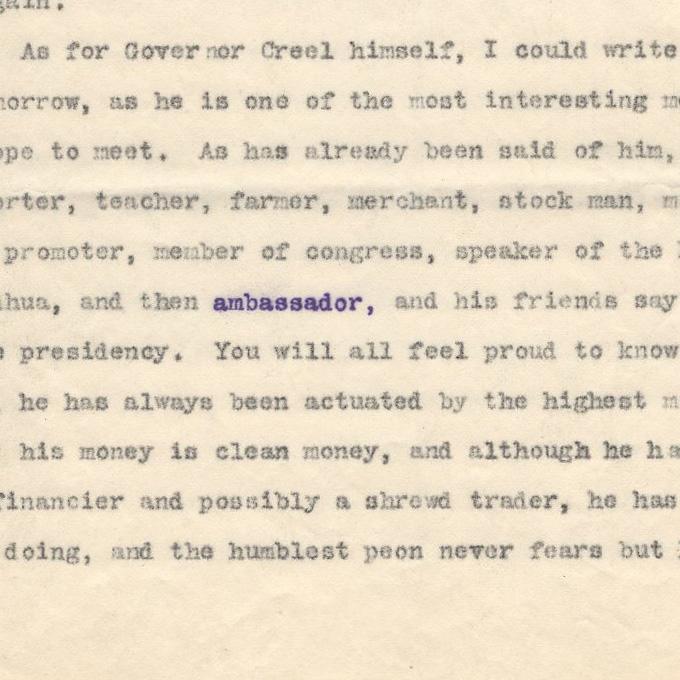
hold
Visiting Enrique Creel, Governor of Chihuahua
Creel, Hattie Virginia (1856-1915). Lengthy TLS to “Cousin Lucy” on visiting their cousin Enrique Creel in Chihuahua, Mexico, nd [circa 1909], carbon ...
view details
$850
View details

A slave sale mandated by the Louisiana Supreme Court
Sale of Slave by Suc[cessors] of Woodruff to Dr. James G. Belden, dated 1 April 1858. Holograph manuscript on printed form folded to make 4 pages. A ...
view details
$3,500
View details

Correspondence Archive of Massachusetts Governor Increase Sumner (1771-1792)
Sumner, Increase (1746-1799). A small archive of 28 letters, mostly invitations sent to Sumner and his family, 1771-1792. Included is also a candid l...
view details
$2,250
View details
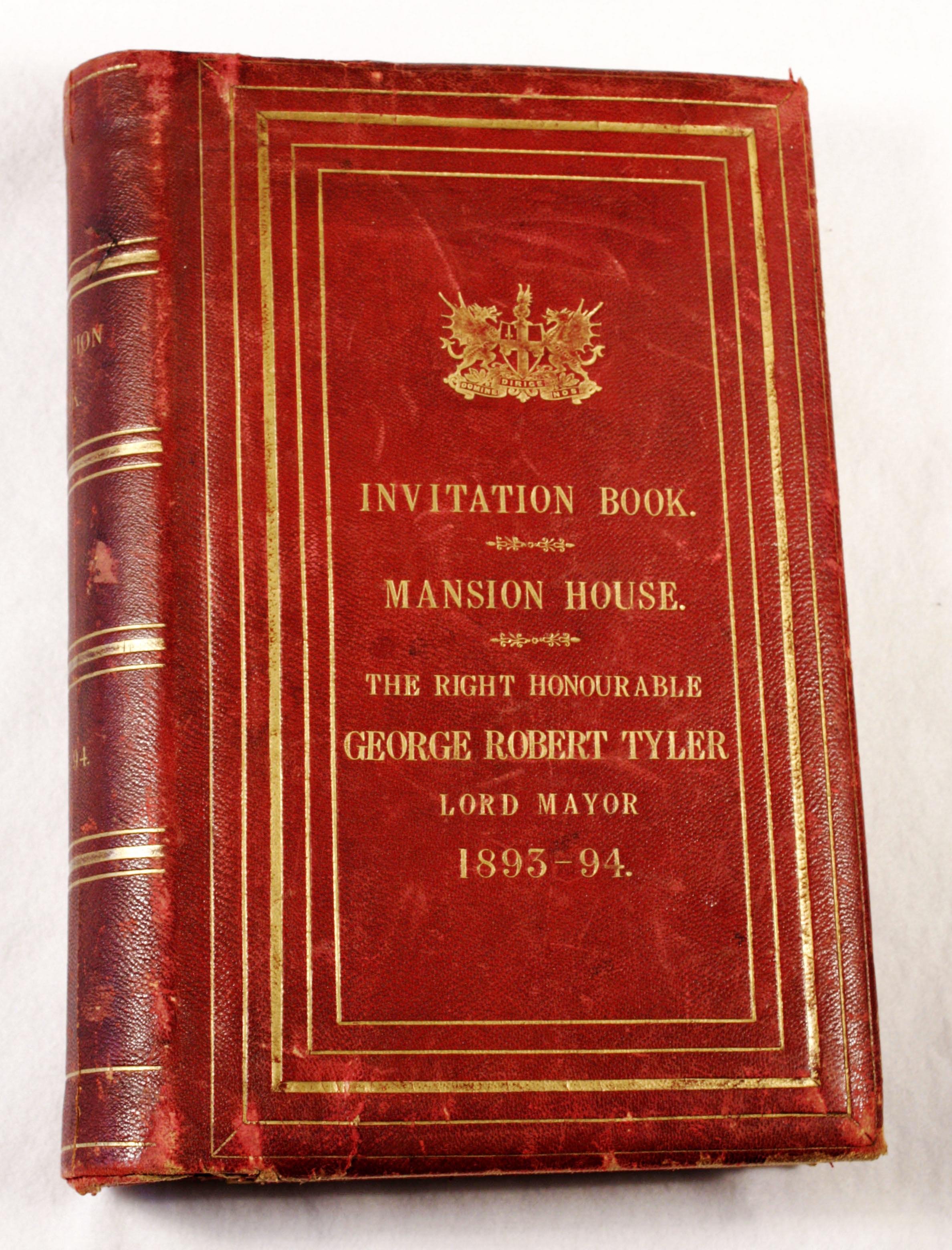
The Guest Books of the Lord Mayor of London (1893-1894)
Tyler, Sir George Robert, 1st Baronet (1835-1897). Invitation Book. Mansion House. The Right Honourable George Robert Tyler, Lord Mayor. 1893-94. 36 c...
view details
$8,500
View details

Manuscript Archive for Atomsk, a Cold War novel by intelligence operative Paul Linebarger
Linebarger, Paul Myron Anthony (1913 - 1966). Atomsk: A Novel of Suspense by "Carmichael Smith." Original manuscript archive for the novel published p...
view details
$25,000
View details
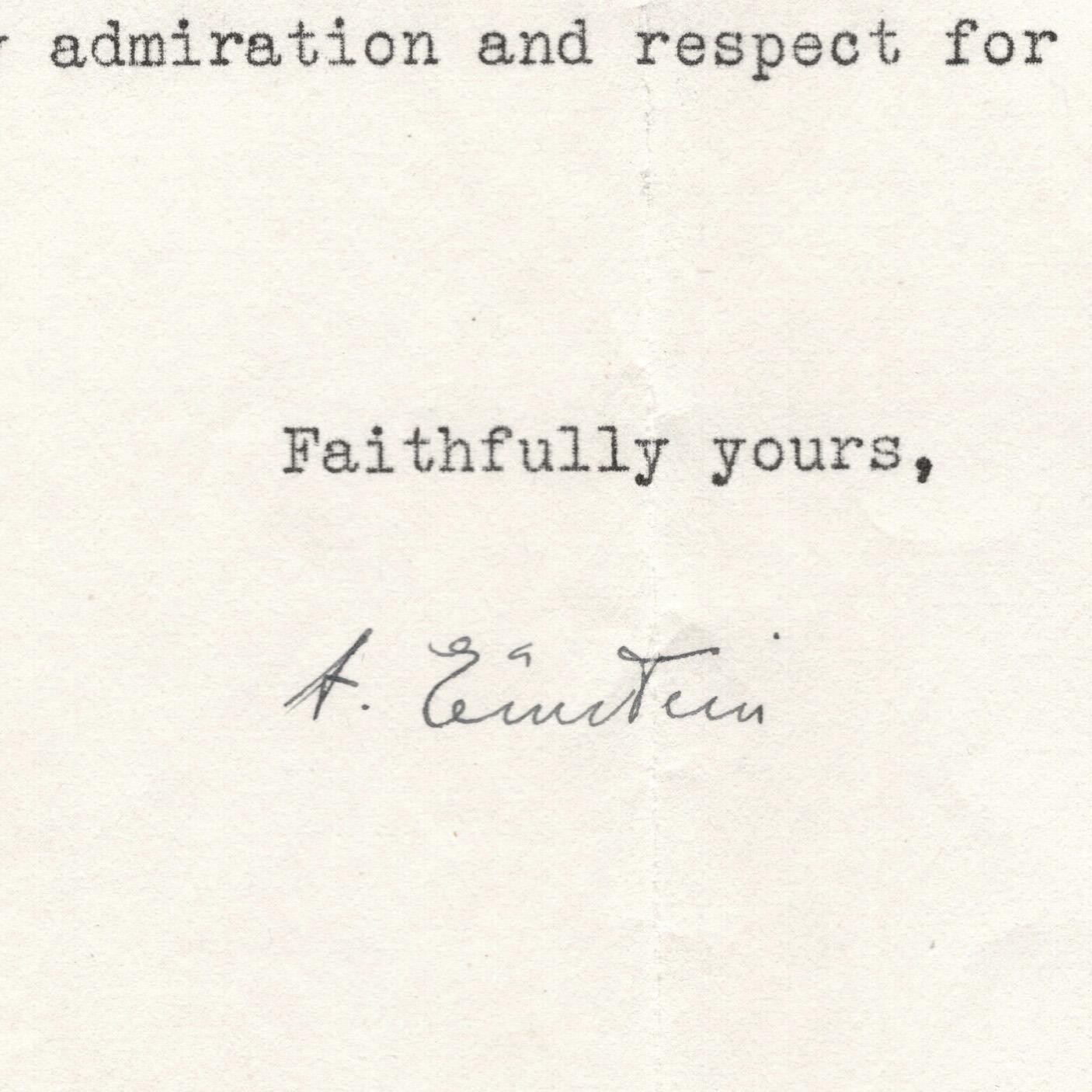
Einstein presents a book on Atomic Theory
Einstein, Albert (1879 – 1955). Typed letter signed (TLS) to Theodora Dehon, Princeton, New Jersey, 29 April 1947. 1 page. Creased from having been fo...
view details
$11,500
View details

Document Signed by Alexander Hamilton as Secretary of the Treasury, 1793
Hamilton, Alexander (1755 – 1804). Signed Treasury Receipt addressed to Samuel Gerry, Collector at Marblehead. Partially printed document dated June 2...
view details
$8,500
View details

Samuel Palmer: The sketchbook of 1865-71
Palmer, Samuel (1805–1881). Pocket notebook, 1865-71. 50 leaves, about 7 x 12 cm. The notebook has been partially paginated in pencil by Palmer: [pp] ...
view details
$37,500
View details

Manuscript for an unpublished masterwork in American medicinal botany
Havard, Valery (1846–1927). Medical and Economic Botany. Typescript, ca. 1897-98. 1291 numbered leaves on thin laid paper, with holograph emendations ...
view details
$0
View details

A Calligraphic Manuscript for a Pioneer in Religious Education
[Athearn, Walter S.] To Our Friend Walter S. Athearn, Dean, Boston University School of Religious Education and Social Service, 1918-1928. Four vellu...
view details
$350
View details