



A 30-year Play-by-Mail collection
Persons, Kelly S. (b. 1955), collector. Play-by-Mail Games archive, circa 1972–2005. An extensive collection representing the activities of one dedicated gamer over the course of more than thirty years. The archive is centered on gaming dossiers including rules, specification sheets, turn results, personal correspondence and records for at least 125 campaigns across 60 different games. Also included are runs of 20 key publications, scores of rule sets and about 200 pieces of ephemera related to conventions, product releases, and the like. We have done some basic work to group and alphabetize scattered materials but we have kept the collector’s organization fundamentally intact, and each dossier is as found, filed in repurposed 9 x 12 in. envelopes. The archive is housed in eight banker’s boxes (12 linear feet).
An exceptionally complicated pastime, Play-by-Mail (PBM) adventures are multiplayer strategy or role-playing games (RPGs) where participants communicate across geographical distance. Largely supplanted by the opportunities offered by digital communications, PBM games enjoyed peak popularity in the 1980s and 1990s. Adopting distinctive game personae and abiding by a set of rules or scenarios particular to each campaign, players typically pay for each turn, sending their moves to the Gamemaster (GM), with the result that play unfolds over the course of months or even years.
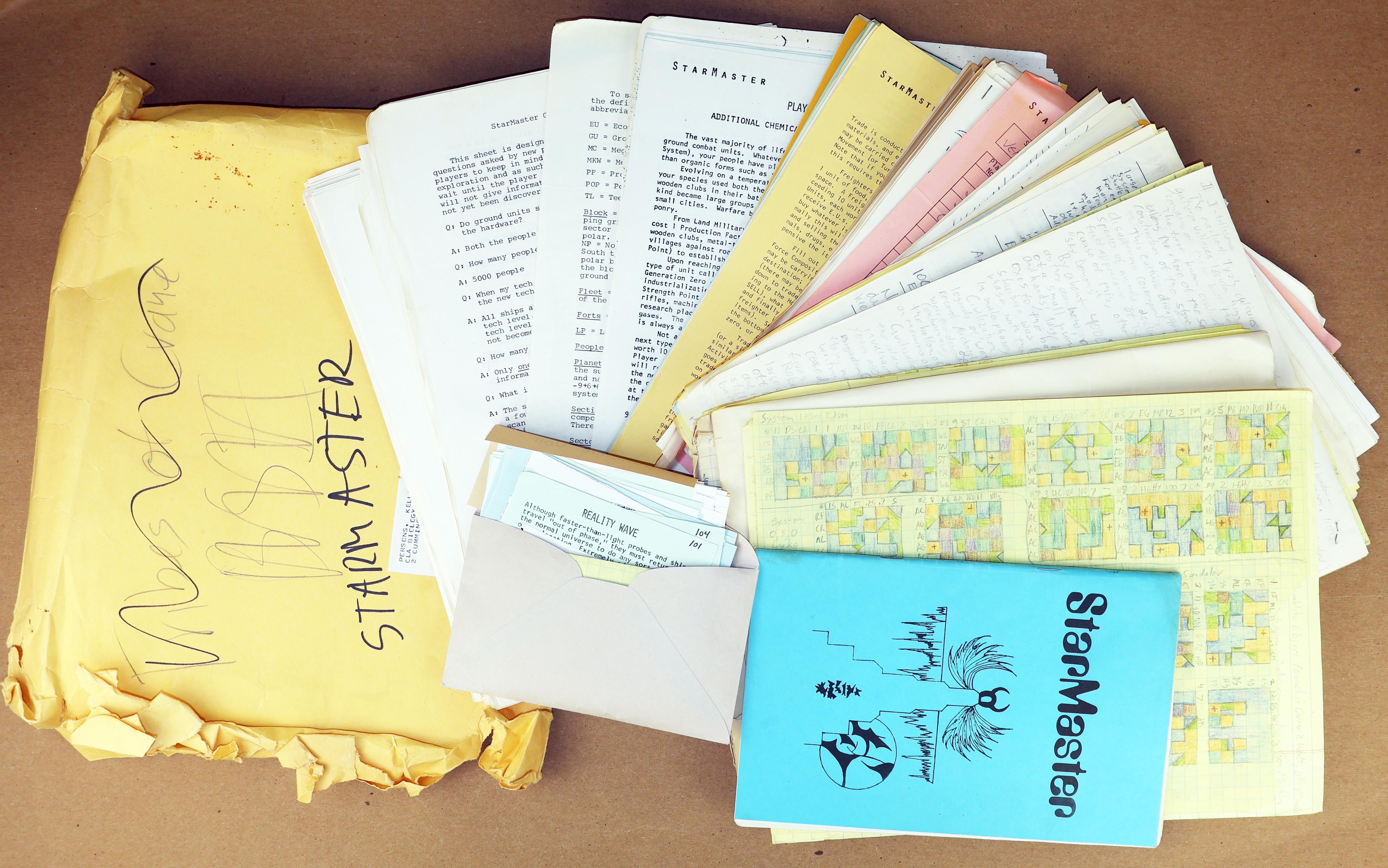
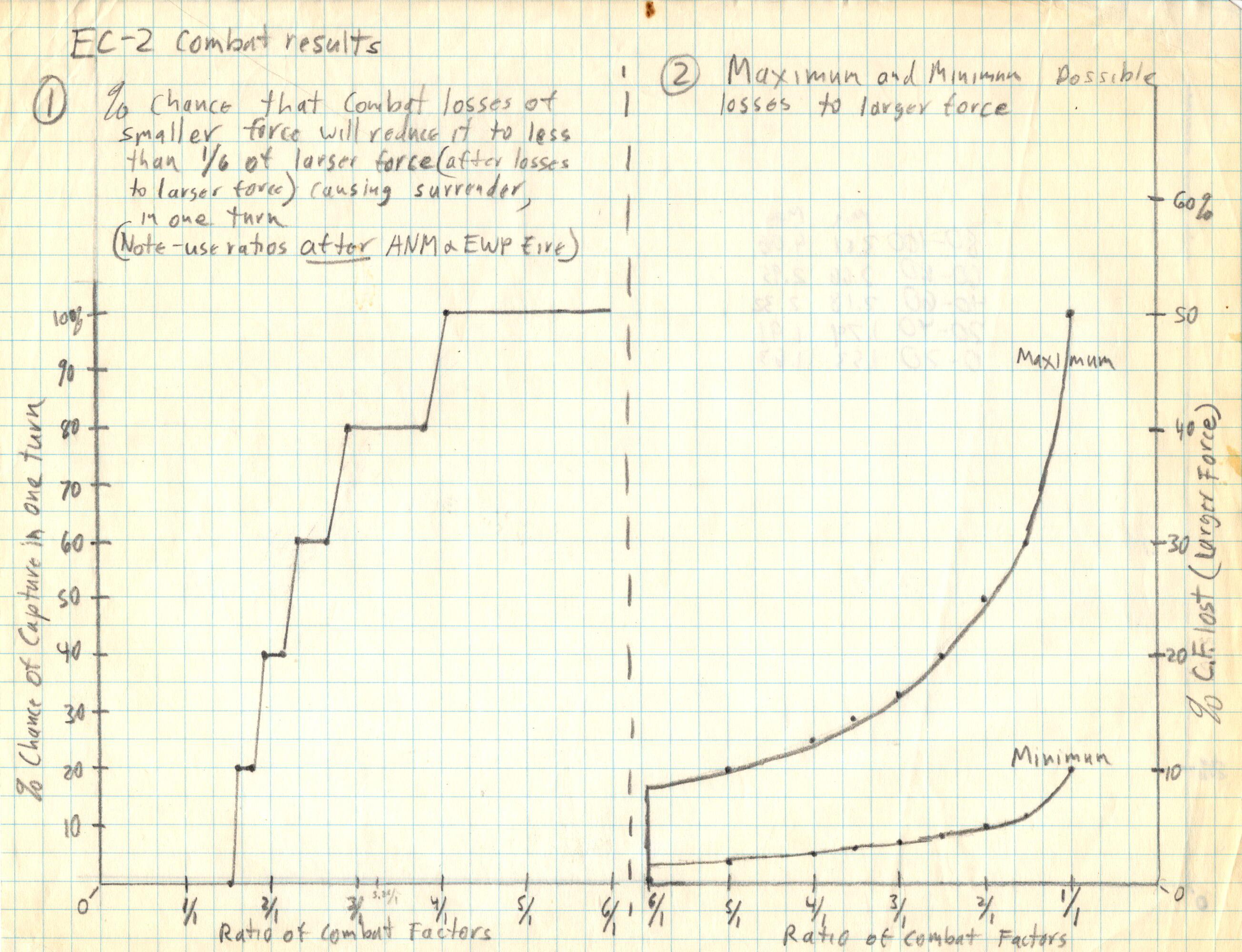
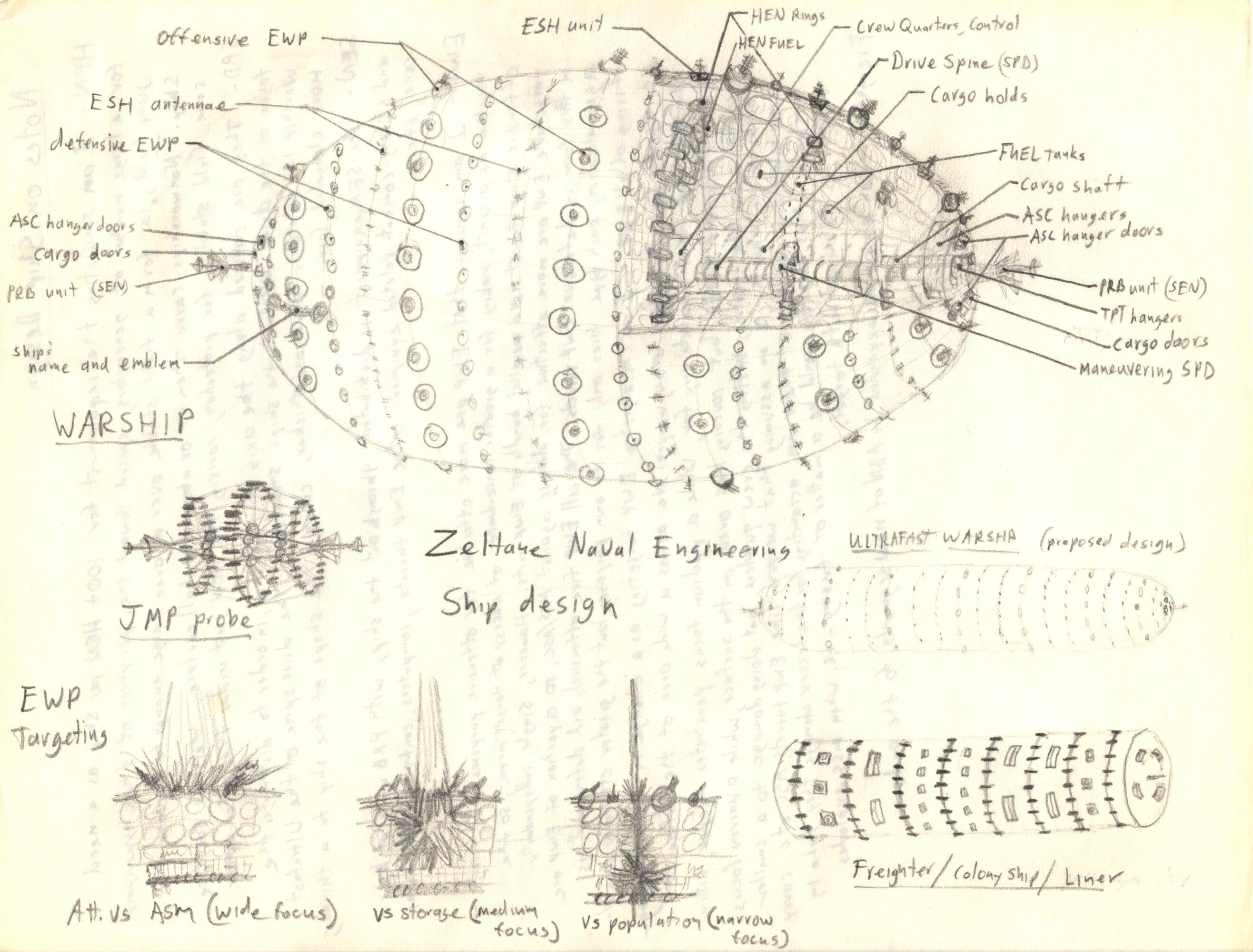
Persons's campaign dossier for StarMaster, with a rule book, GM communications, personal notes and charts, correspondence from other players, and turn results.
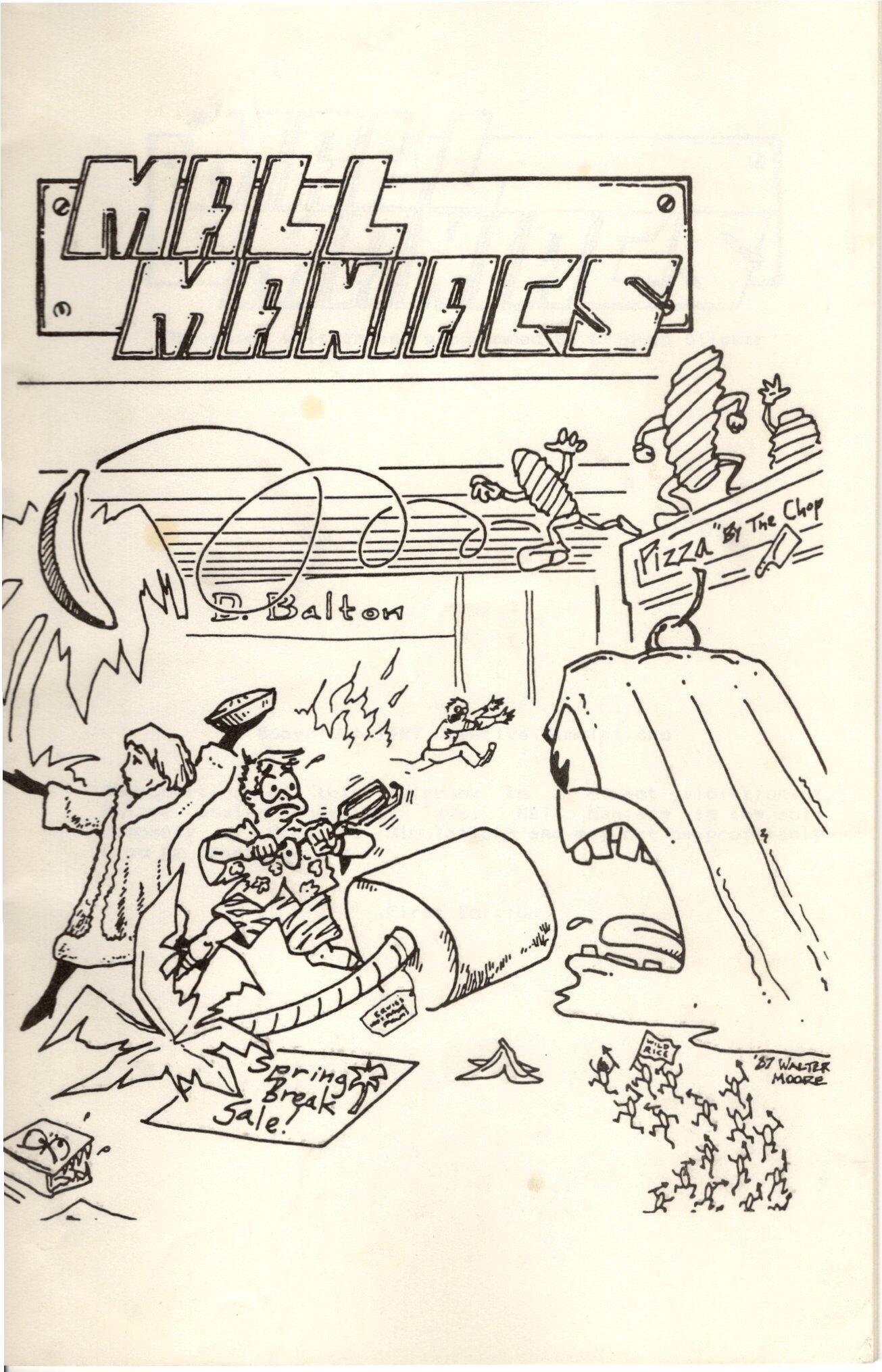
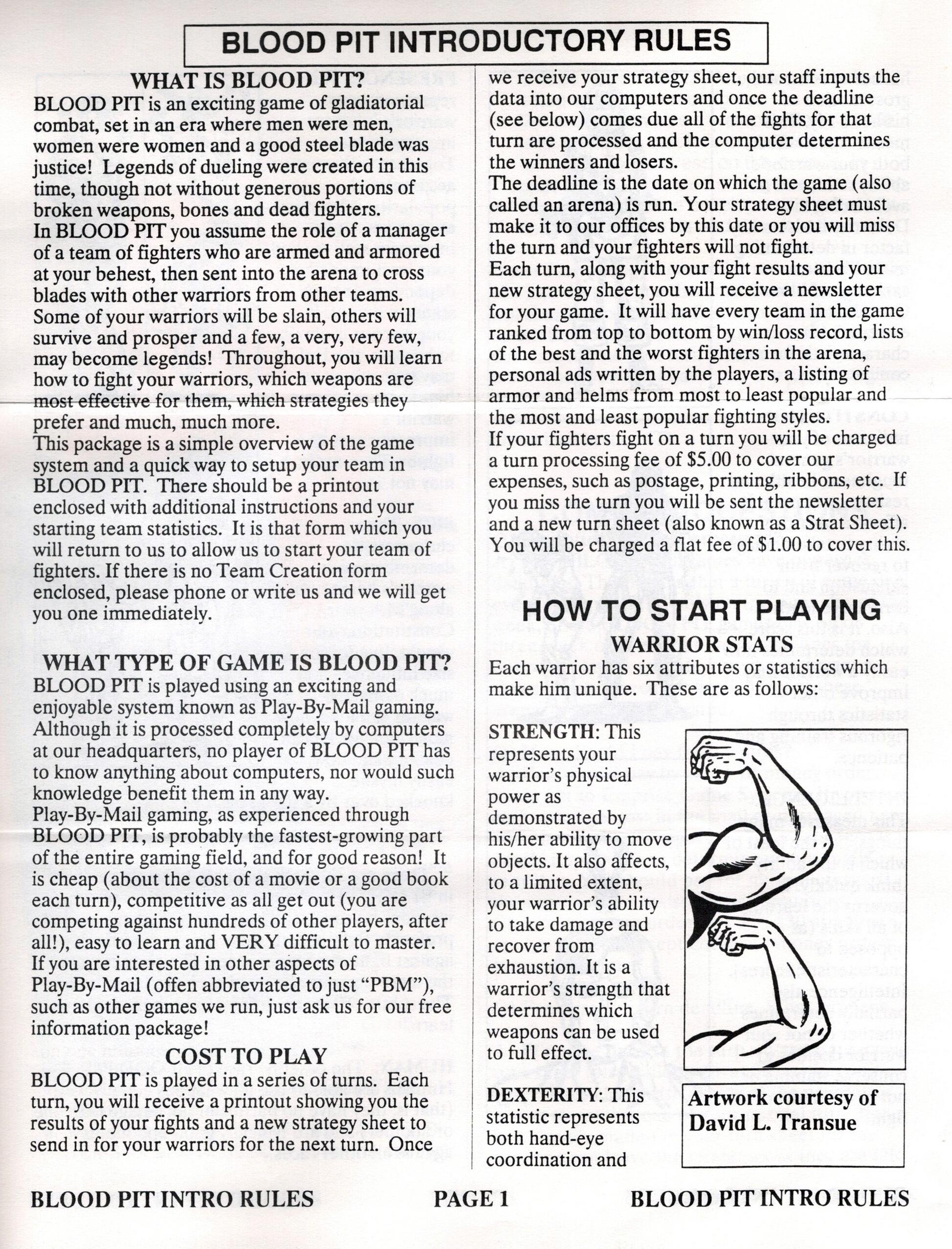
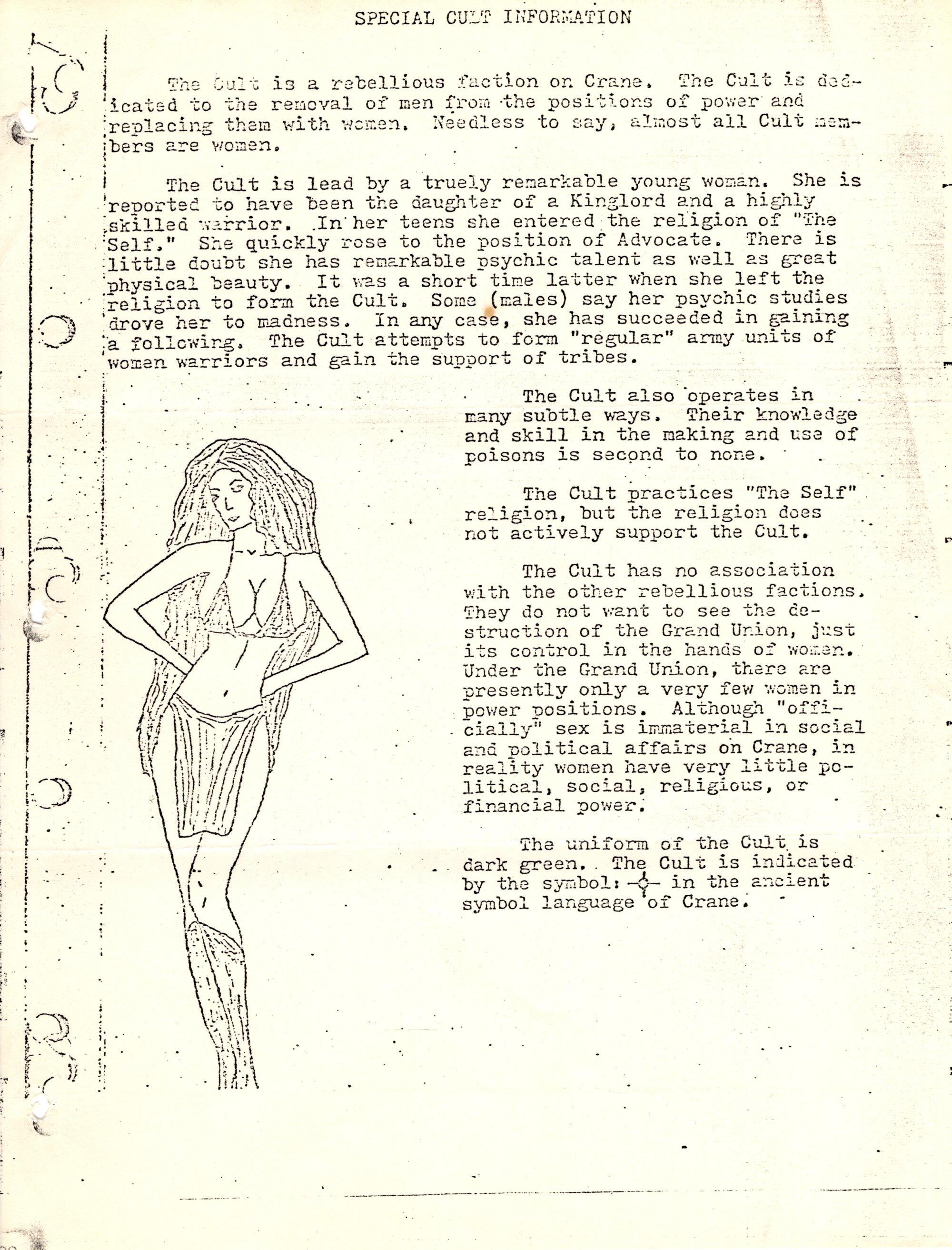
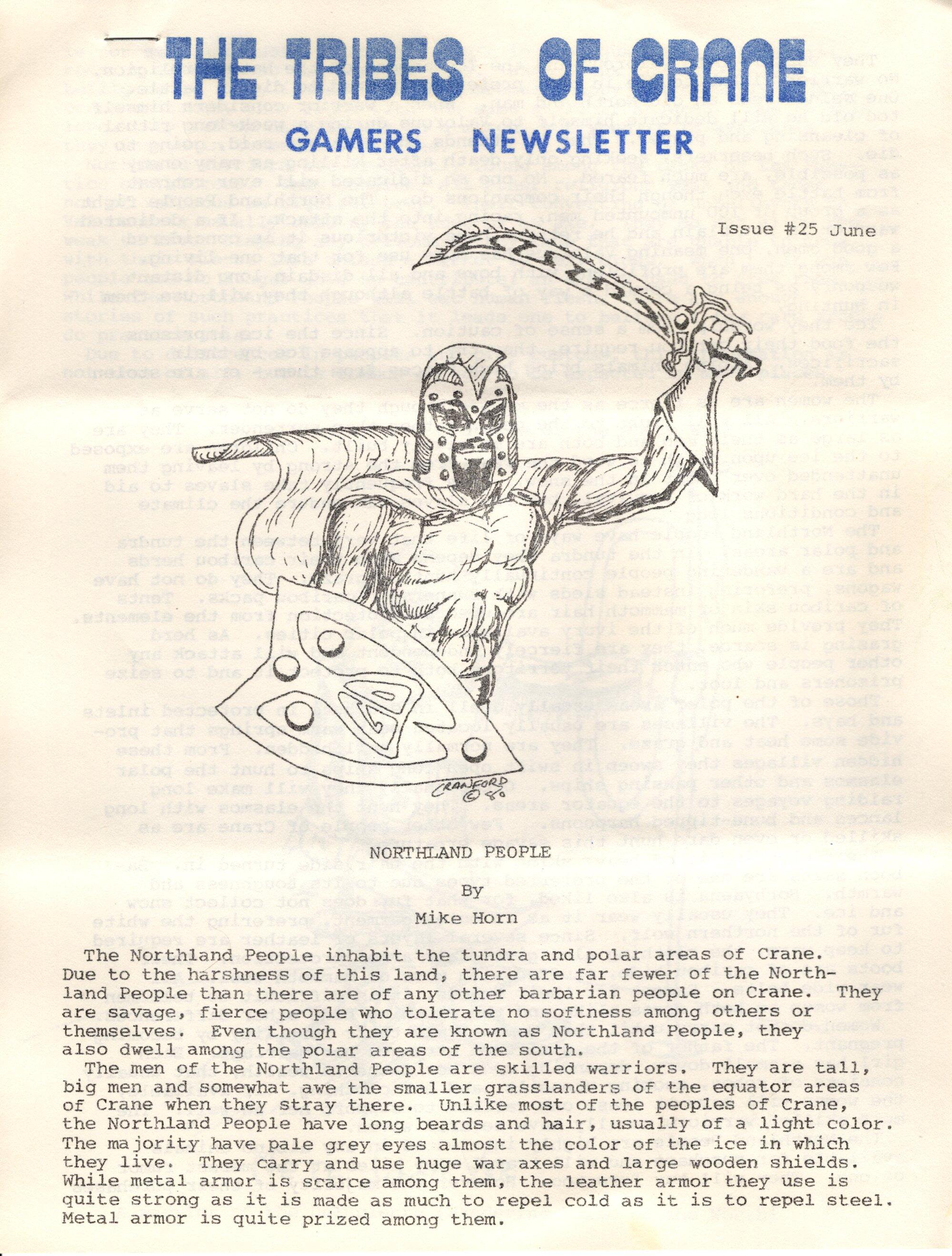
The bulk of the Kelly S. Persons collection dates from the 1980s and 1990s, though there are rule sheets with publication dates as early as 1972 for Battle Plan, Nuclear Destruction, and other early games developed by Richard “Rick” Loomis, who would later found Flying Buffalo, one of the few lasting companies in the field. By every measurable standard, even the most successful PBM games were very limited in circulation, and the Persons collection includes a number of games issued by other hobbyists. The collection includes modules for such famous games as Tribes of Crane, It’s a Crime, Alamaze, and Empyrean Challenge, reputed to be “the most complex game system on Earth,” as well as rule books for Monster Island, and a mad romp through the primordial ooze titled You're an Amoeba, GO! For some campaigns, the GMs issued newsletters offering updates, commentary, and new data to aid players’ decisions. The dossiers for Tribes of Crane, StarMaster, and The North Island Campaign include complete runs of these publications.
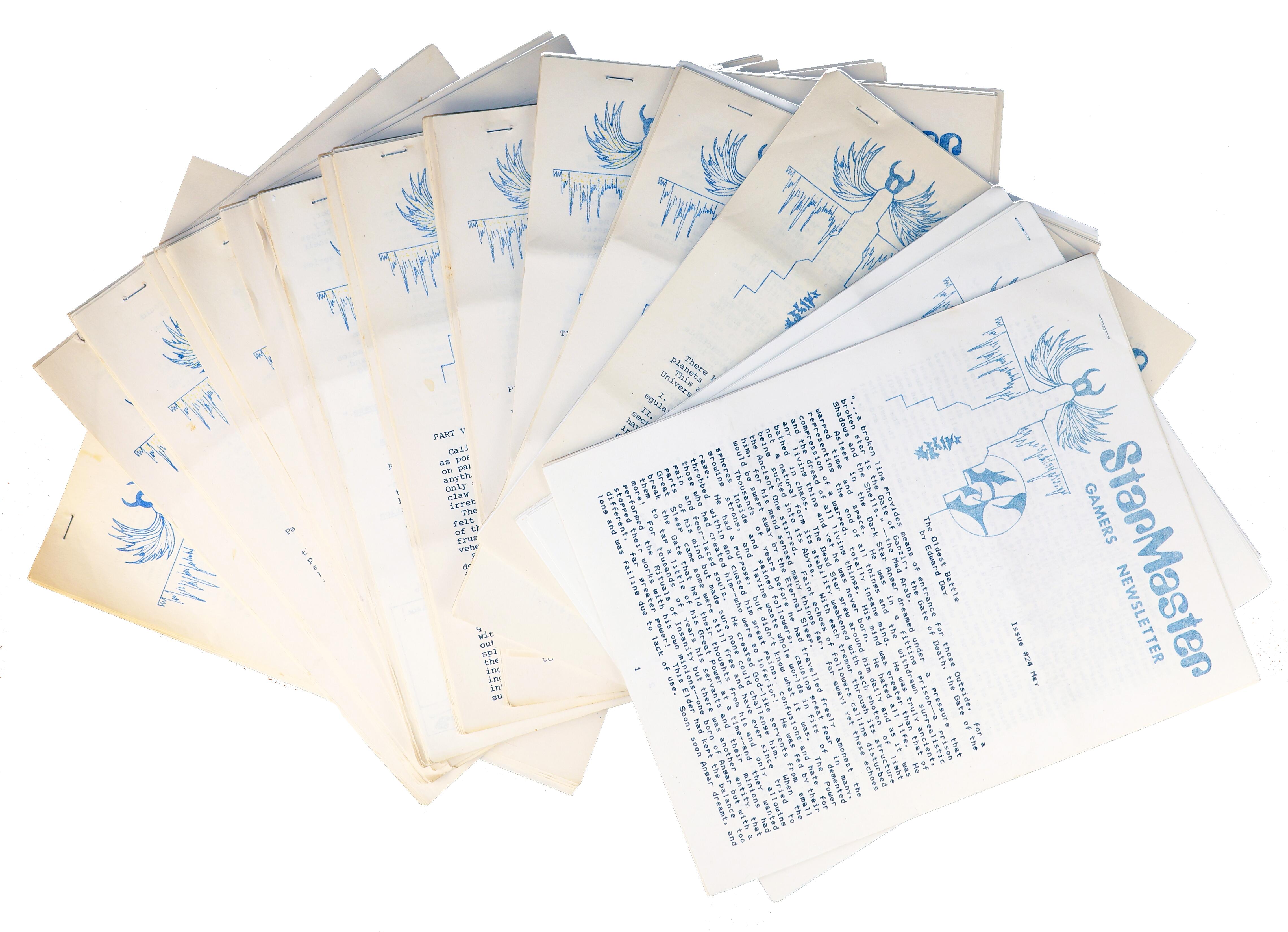
A complete run of 24 issues of the newsletter for StarMaster
Beyond the rule books, Persons’ game dossiers – the heart of this archive – offer a rare perspective into how PBM games were actually played. There are dossiers for at least 125 campaigns in the collection, each in its own folder. Some dossiers are rather thin, others are full to bursting. Keeping records of moves was as necessary as in championship chess but much more difficult, with the typical game involving 10 to 20 players. Depending upon the campaign, a dossiers might contain game play materials, computer-generated turn results – sometimes hundreds of pages long -- handwritten charts, tables, invoices, and other personal campaign materials. As in the classic game Diplomacy, PBM players were encouraged to communicate with each other to form alliances and strategize, giving rise to some fascinating correspondence.
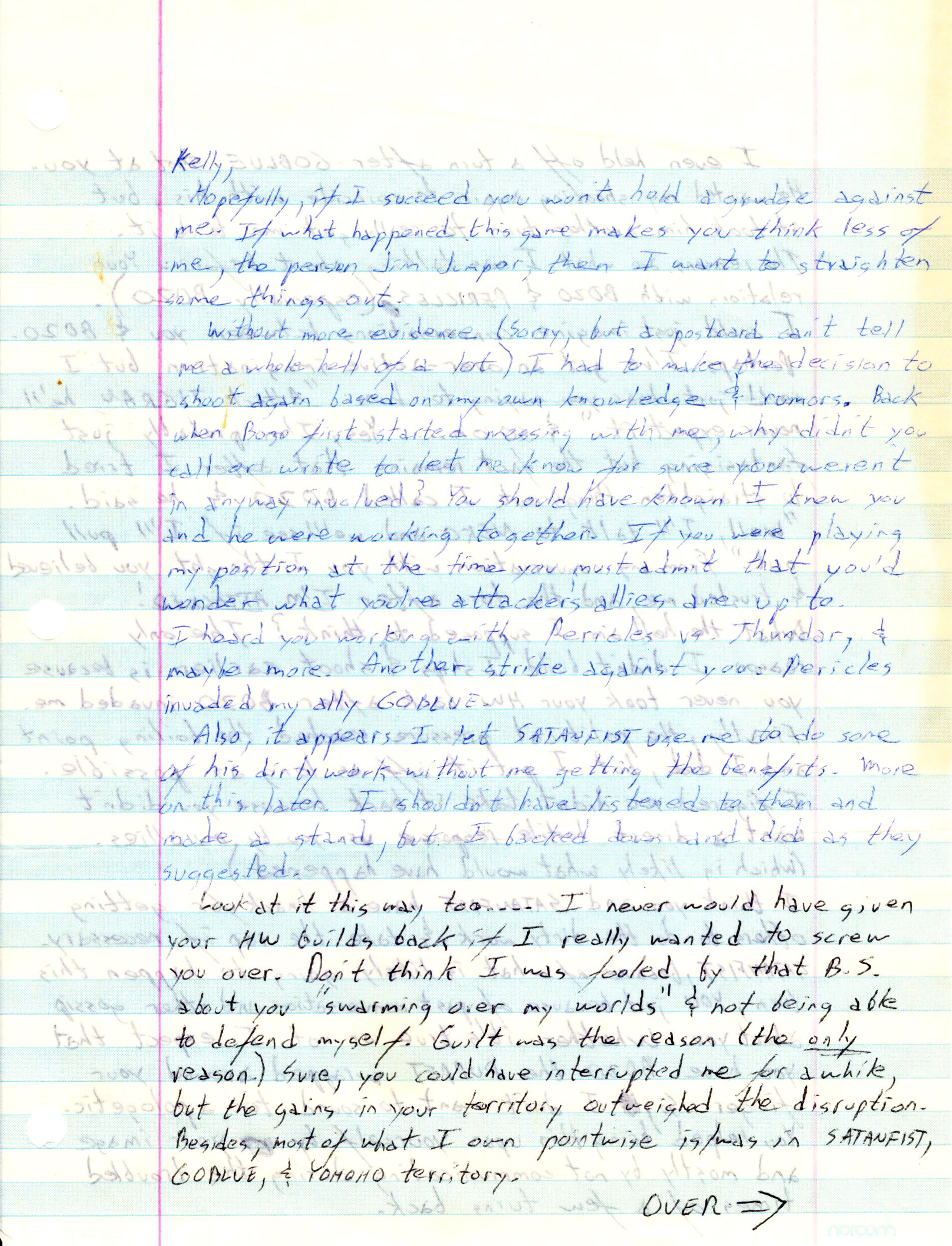
In this four-page letter, one player (TIGRAN) justifies his attack on NEKO
(Persons’ character) with a lengthy analysis of alliances and betrayals during the campaign. “It appears I let SATANFIST use me to do some of his dirty work without me getting the benefits,” TIGRAN laments.
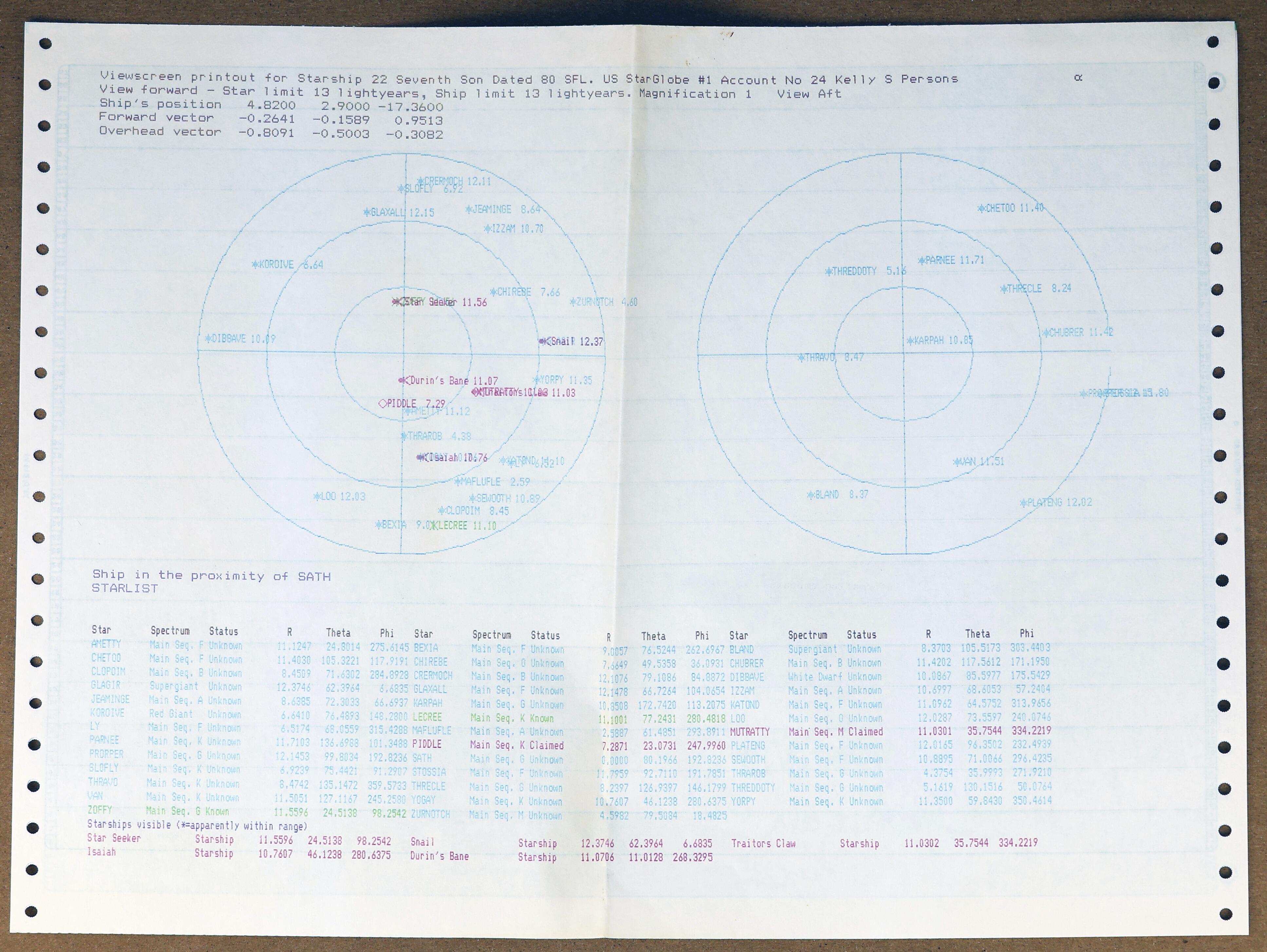
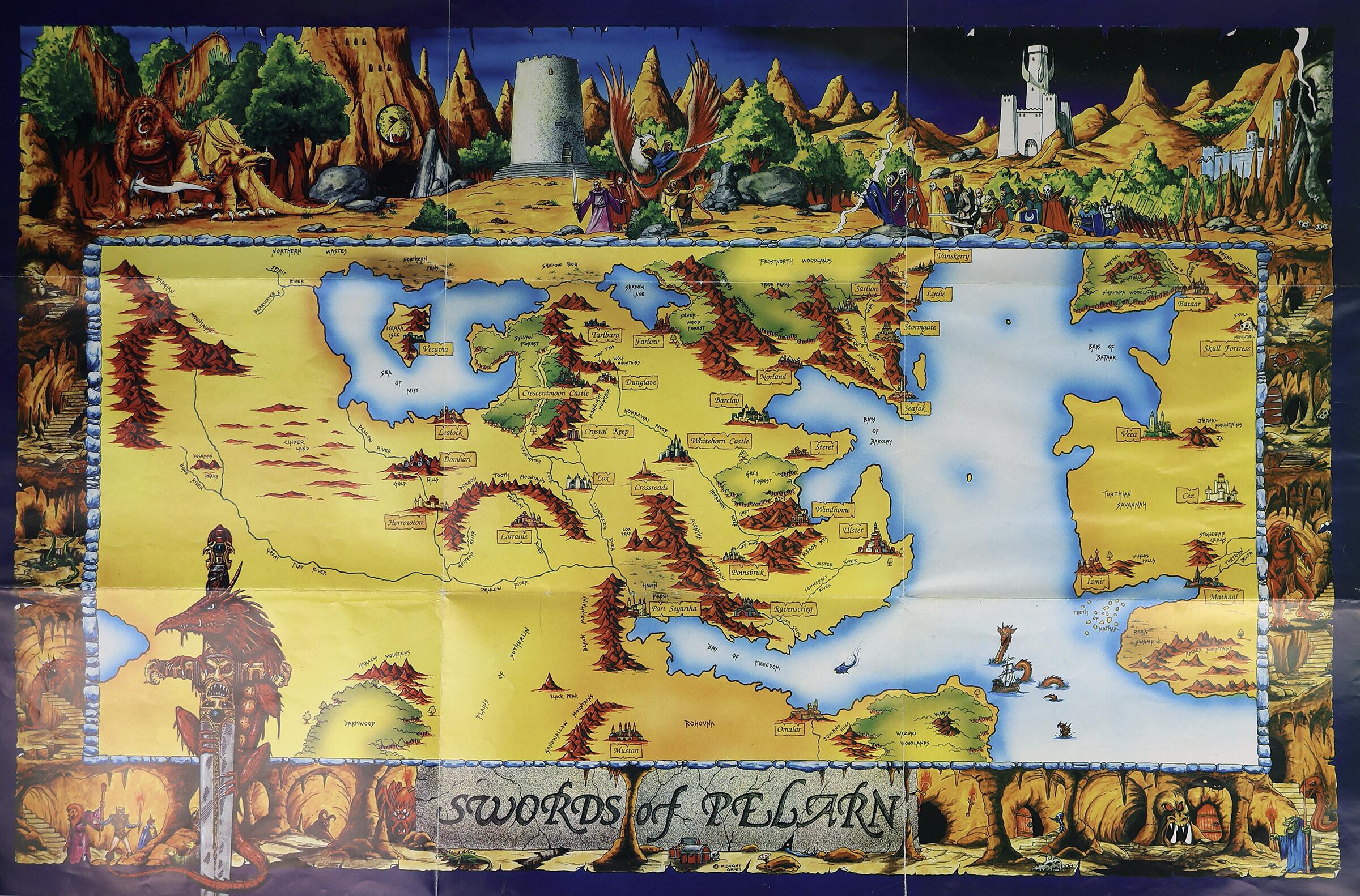
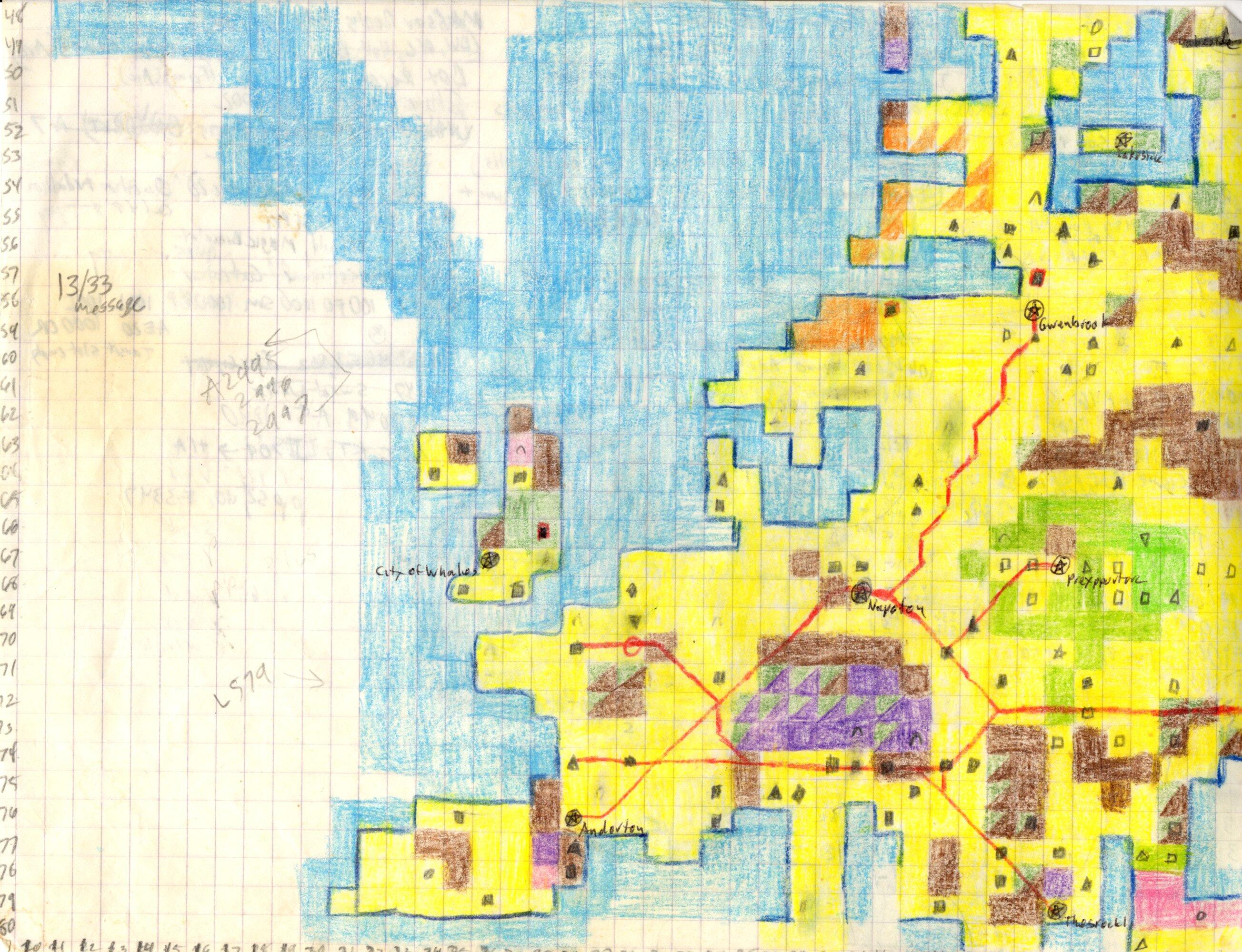
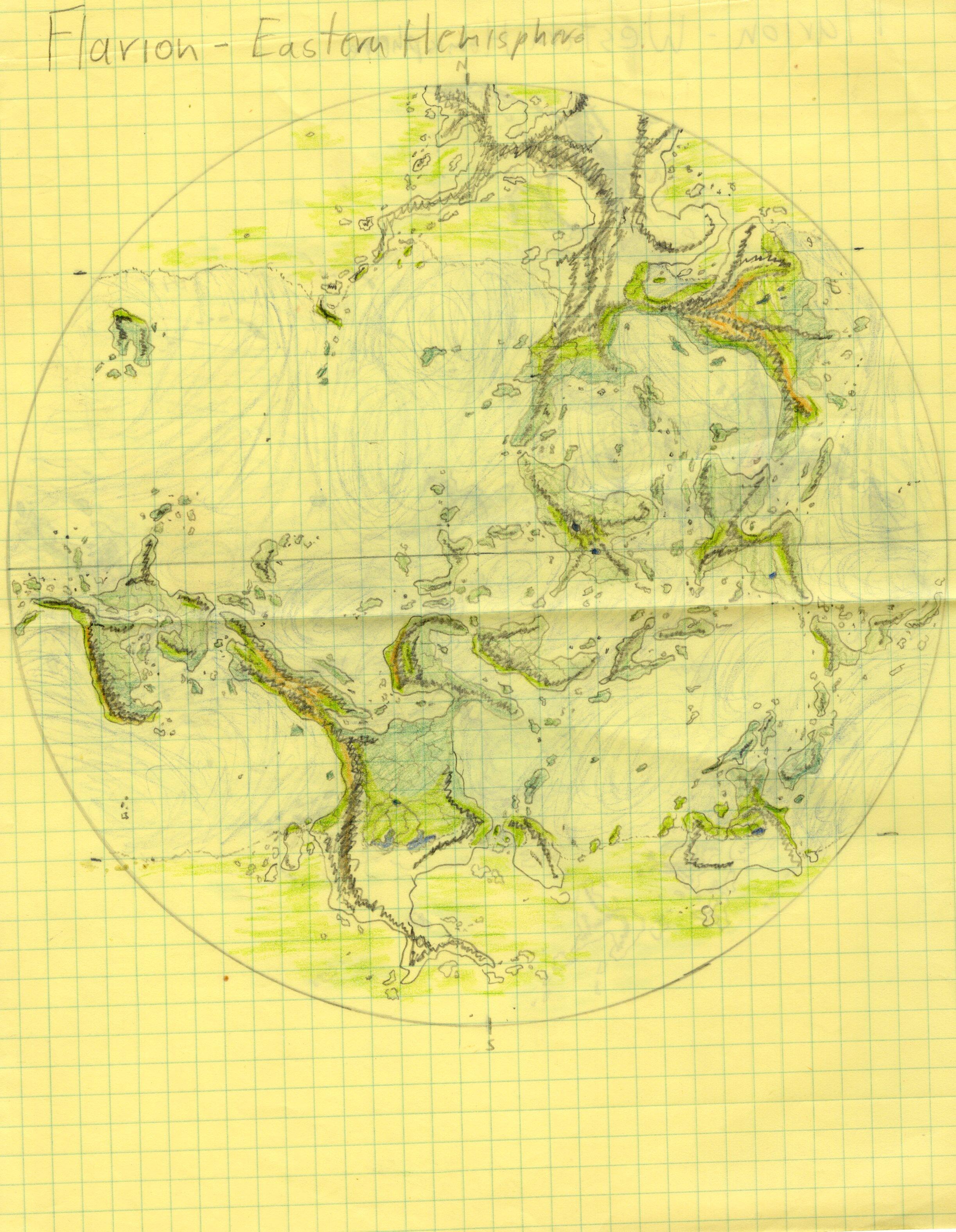
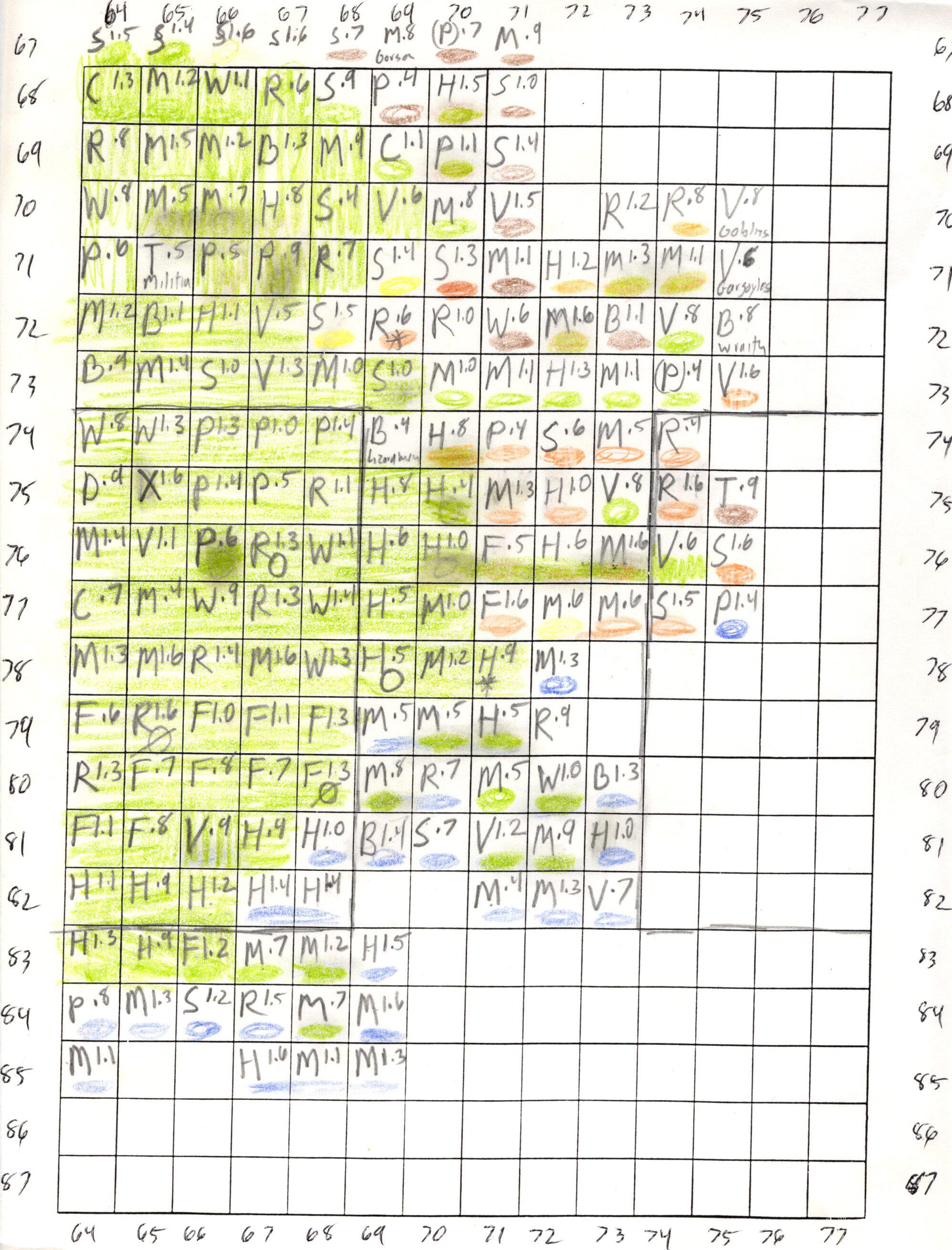
Some games supplied players with maps – a number of printed examples are included in the dossiers; others required do-it-yourself cartography, typically executed on graph paper. Still others offered computer-generated charts to document the positions of players and game elements such as planets and non-player spacecraft.
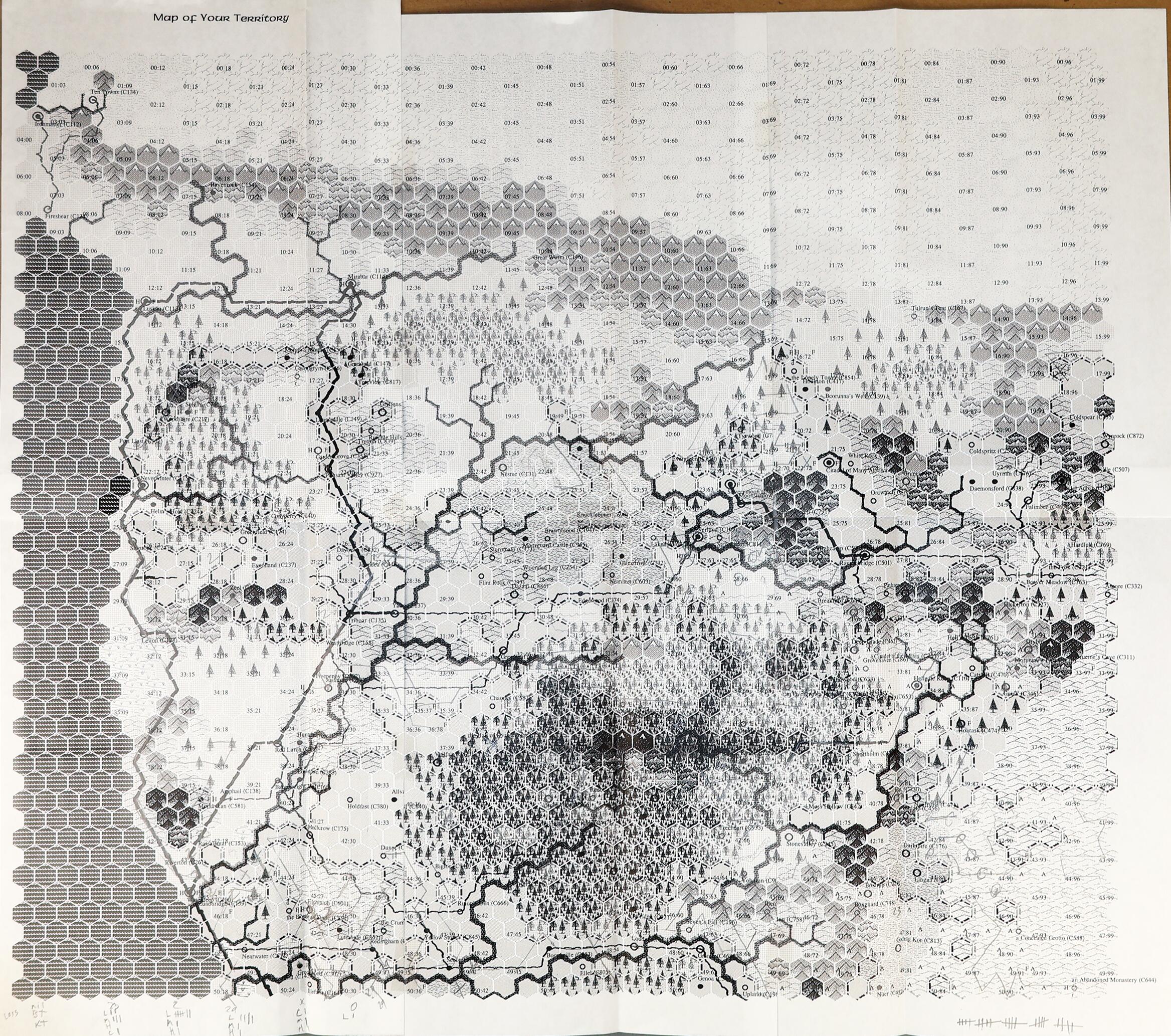
Many campaign dossiers contain printed or hand-drawn maps. Those for Alamaze contain computer-generated schematics illustrating relative positions at the end of each turn. Printed on multiple sheets, the maps to be pieced together.
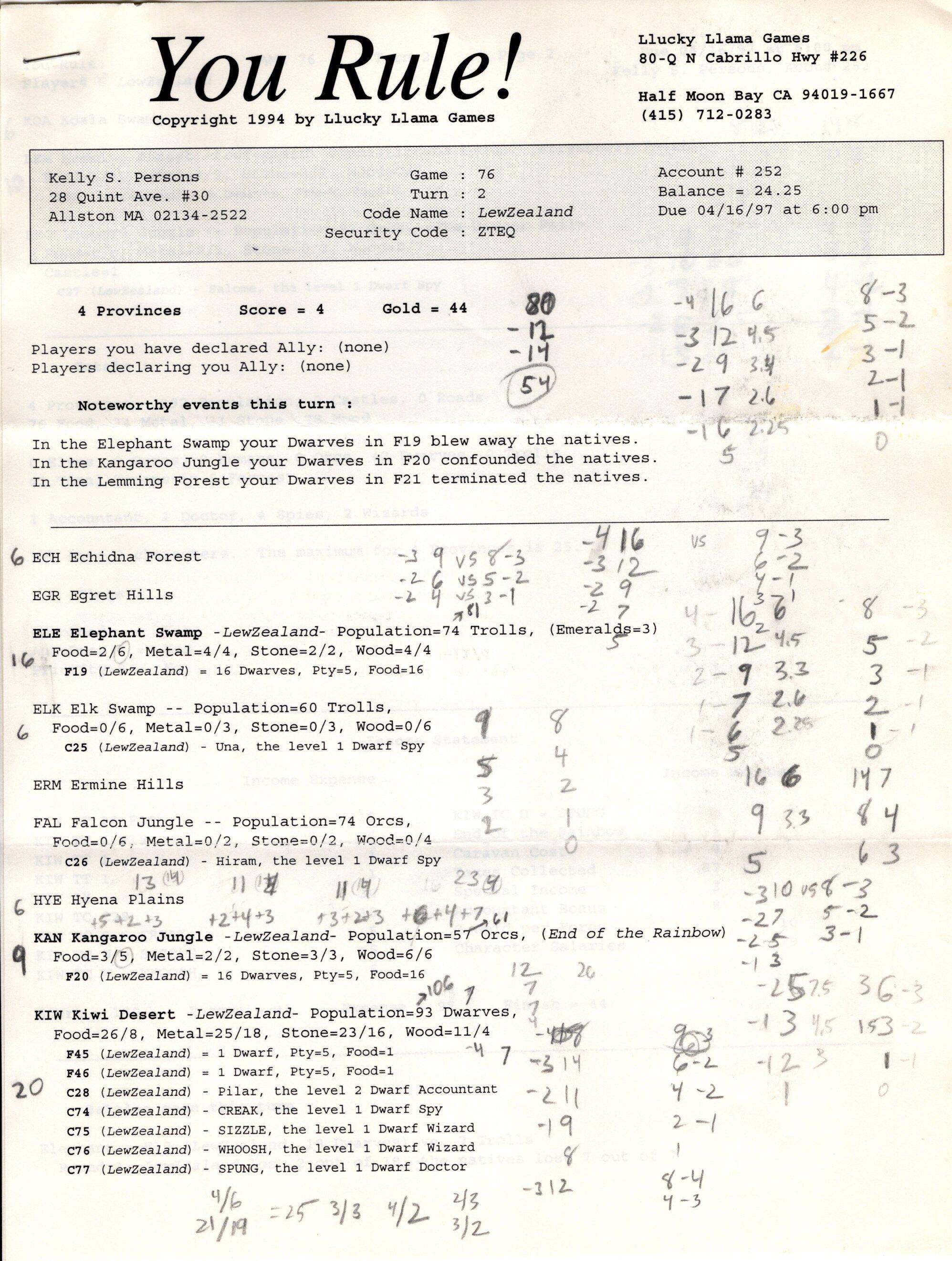
In some games, the GM was him- or herself a character requiring direct engagement during the campaign. The human touch of the GM is evident even in some games that needed a computer to calculate the results of turn inputs from multiple players. For example, a note from the GM of You Rule! game 36 congratulates Persons for tying the high score and completing the game in the fastest time.
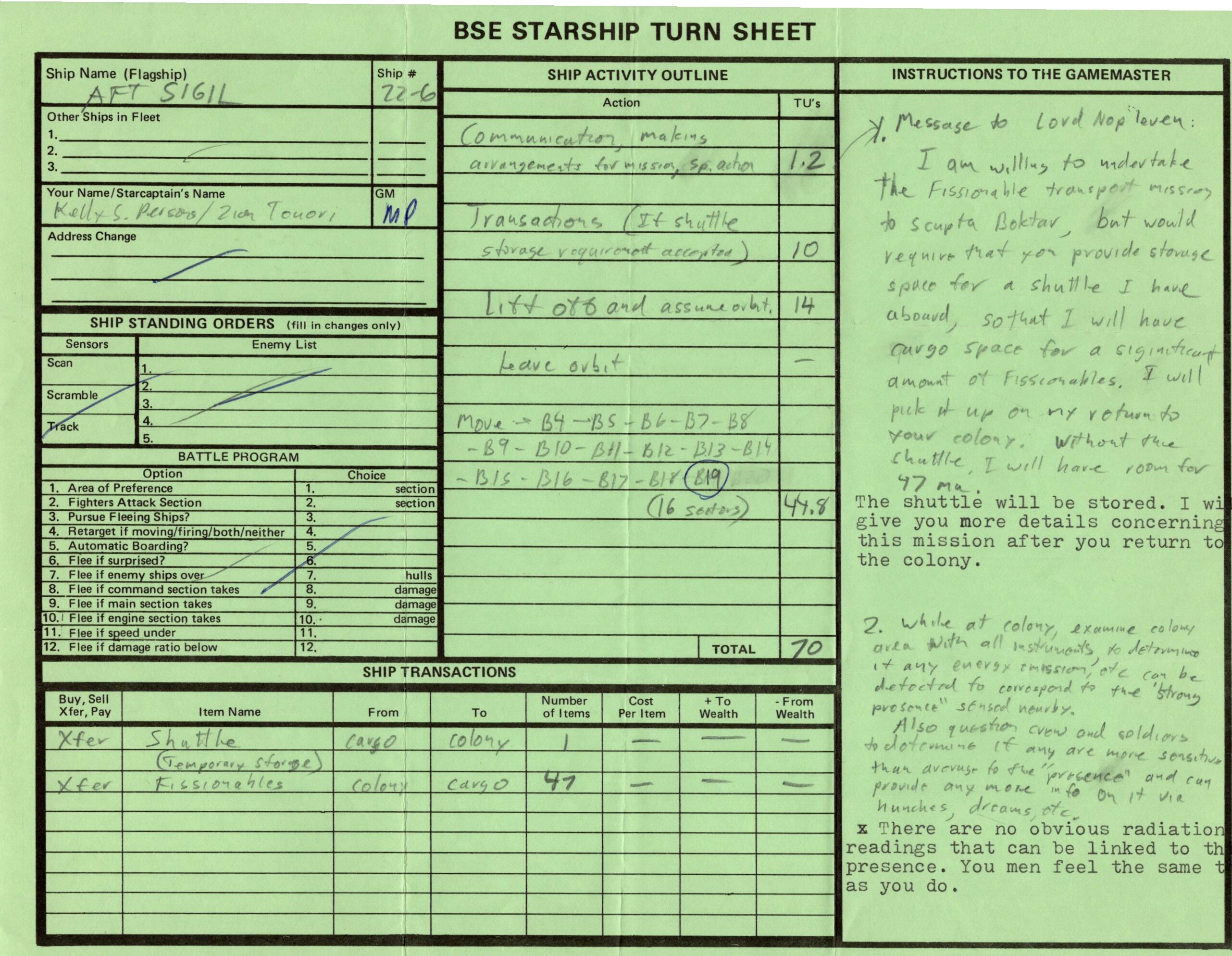
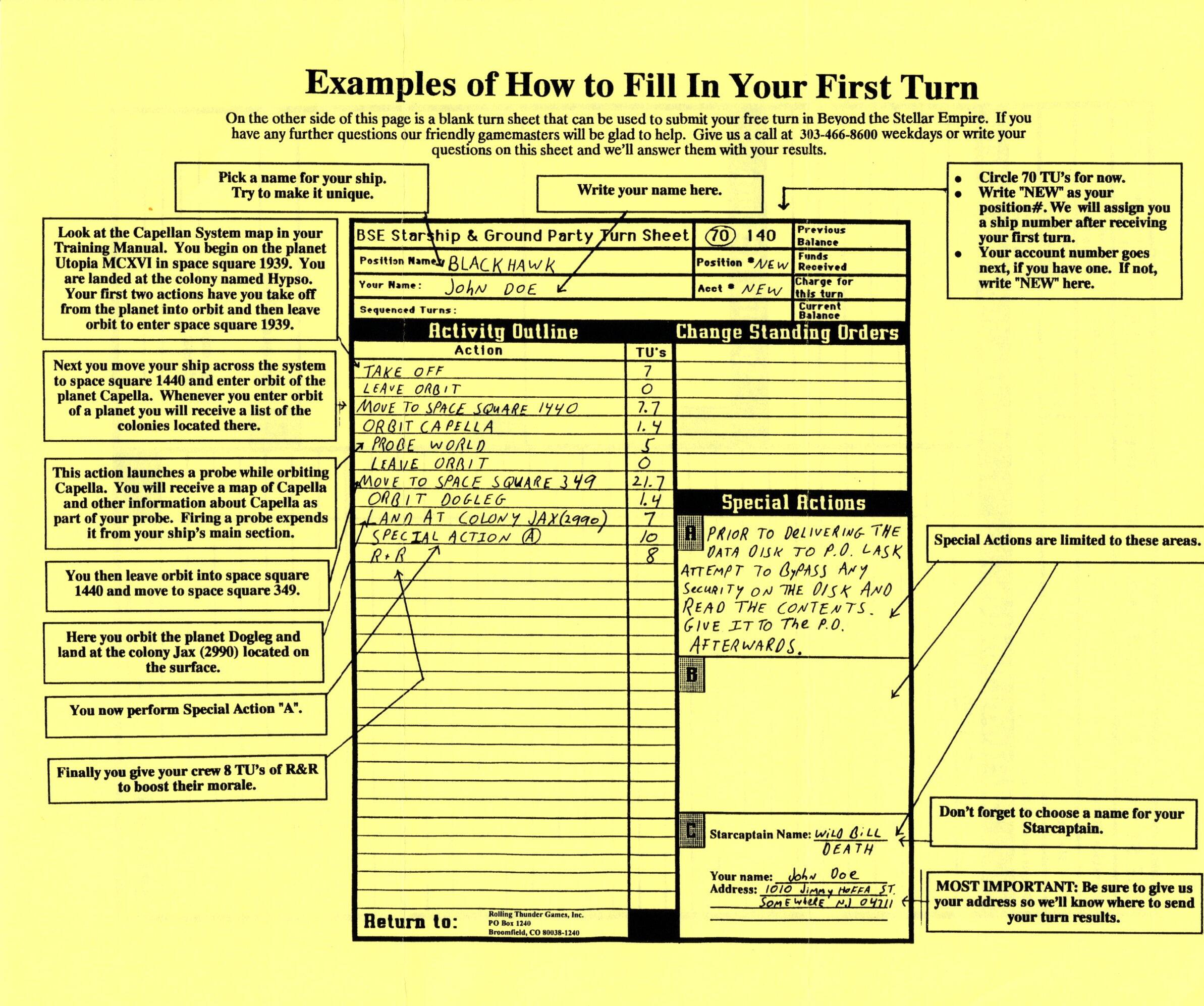
In this turnsheet for Beyond the Stellar Empire, the GM offers typed responses to the player’s queries.
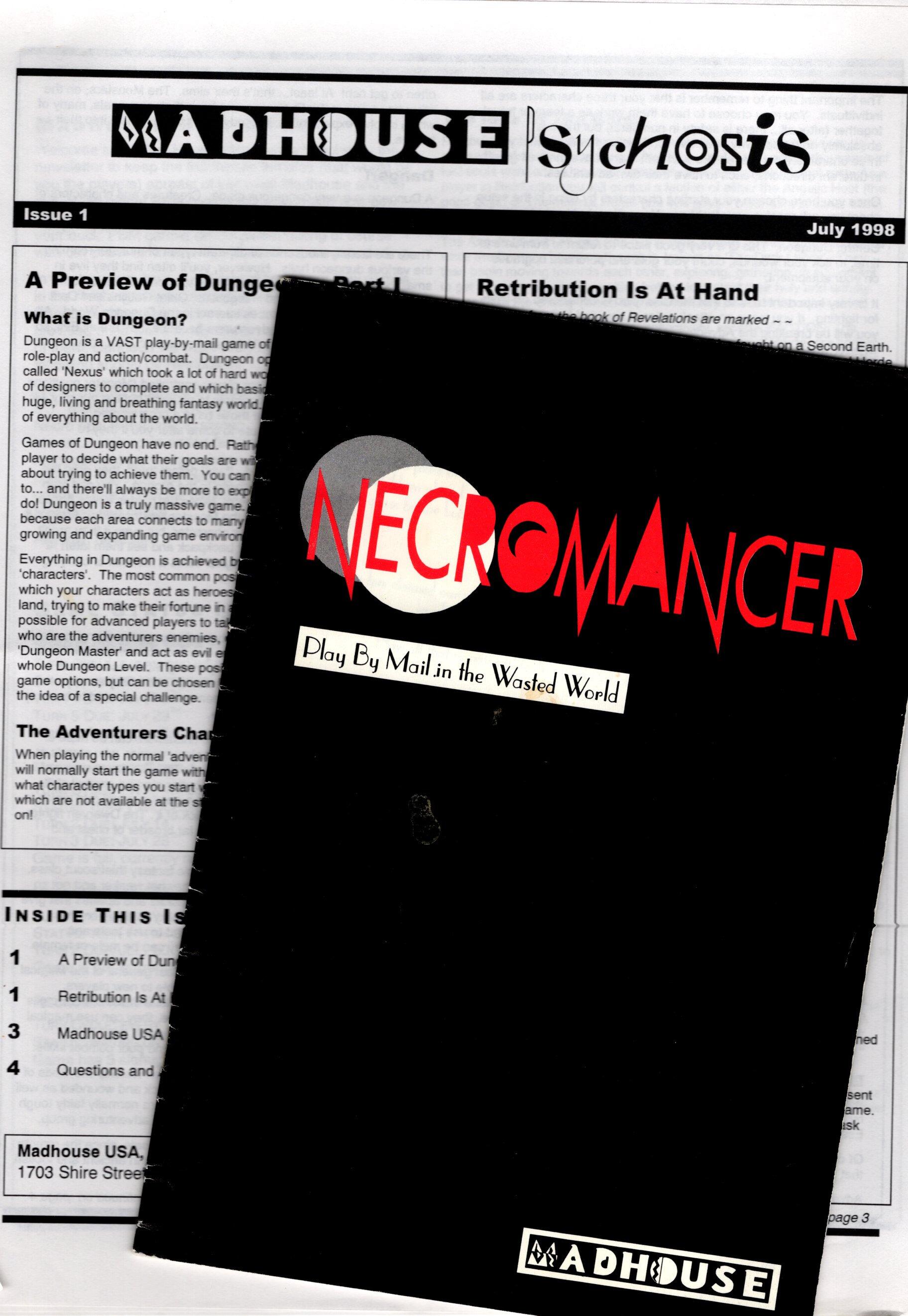
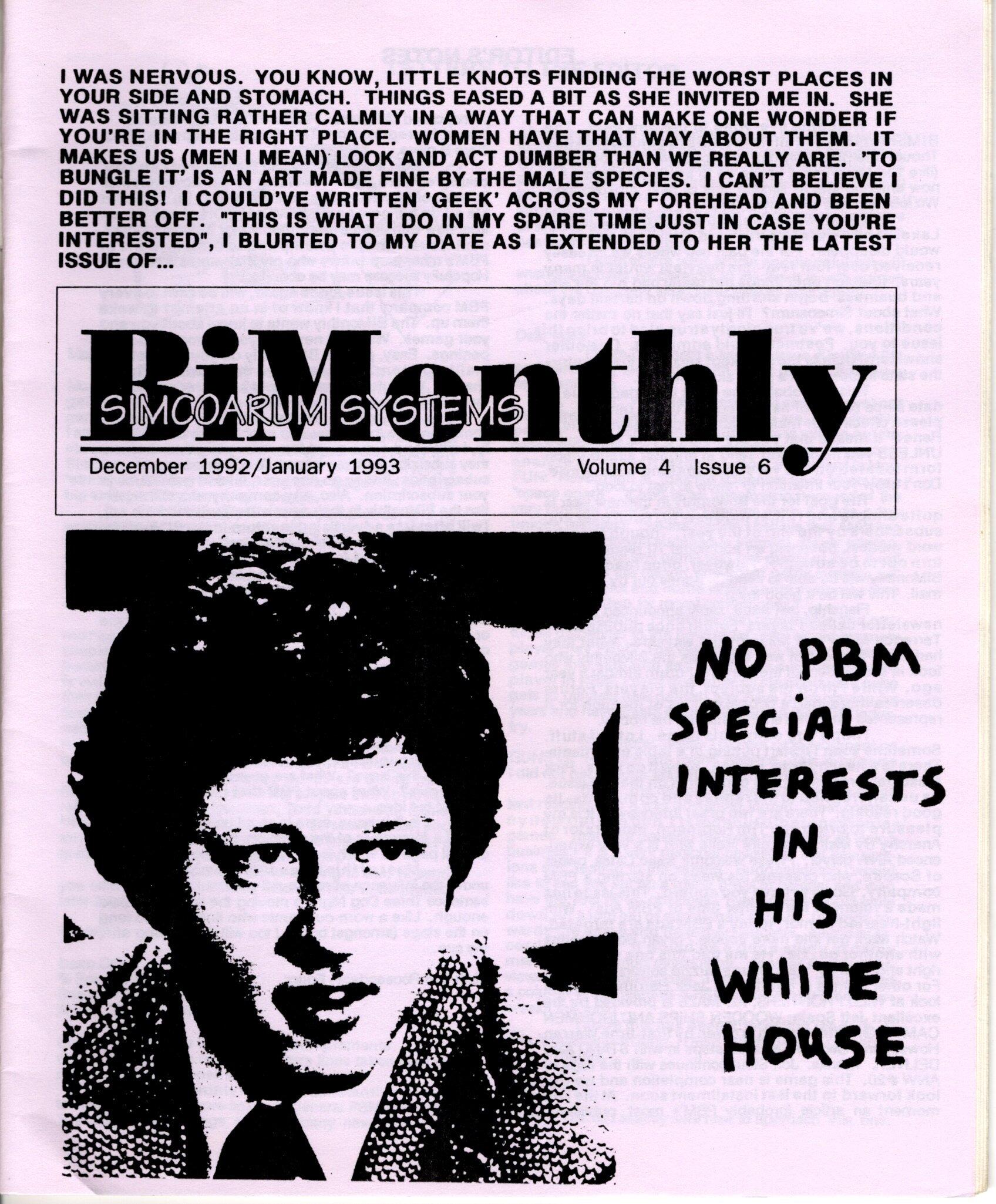
In addition to the game-specific materials, the Persons PBM collection also includes many general publications on the hobby. Some were relatively slick periodicals – “semi-prozines” in fannish parlance (e.g. Flagship of Postal Gaming, Paper Mayhem). Others were produced by the game publishers (e.g. Flying Buffalo Quarterly, Simcoarum Systems). Still others were strictly fan productions (e.g. PBM Gaming World, Nuts & Bolts of Gaming). All offer vital resources for the historian – reviews, interviews, profiles, and personal essays by producers, GMs, and gamers.
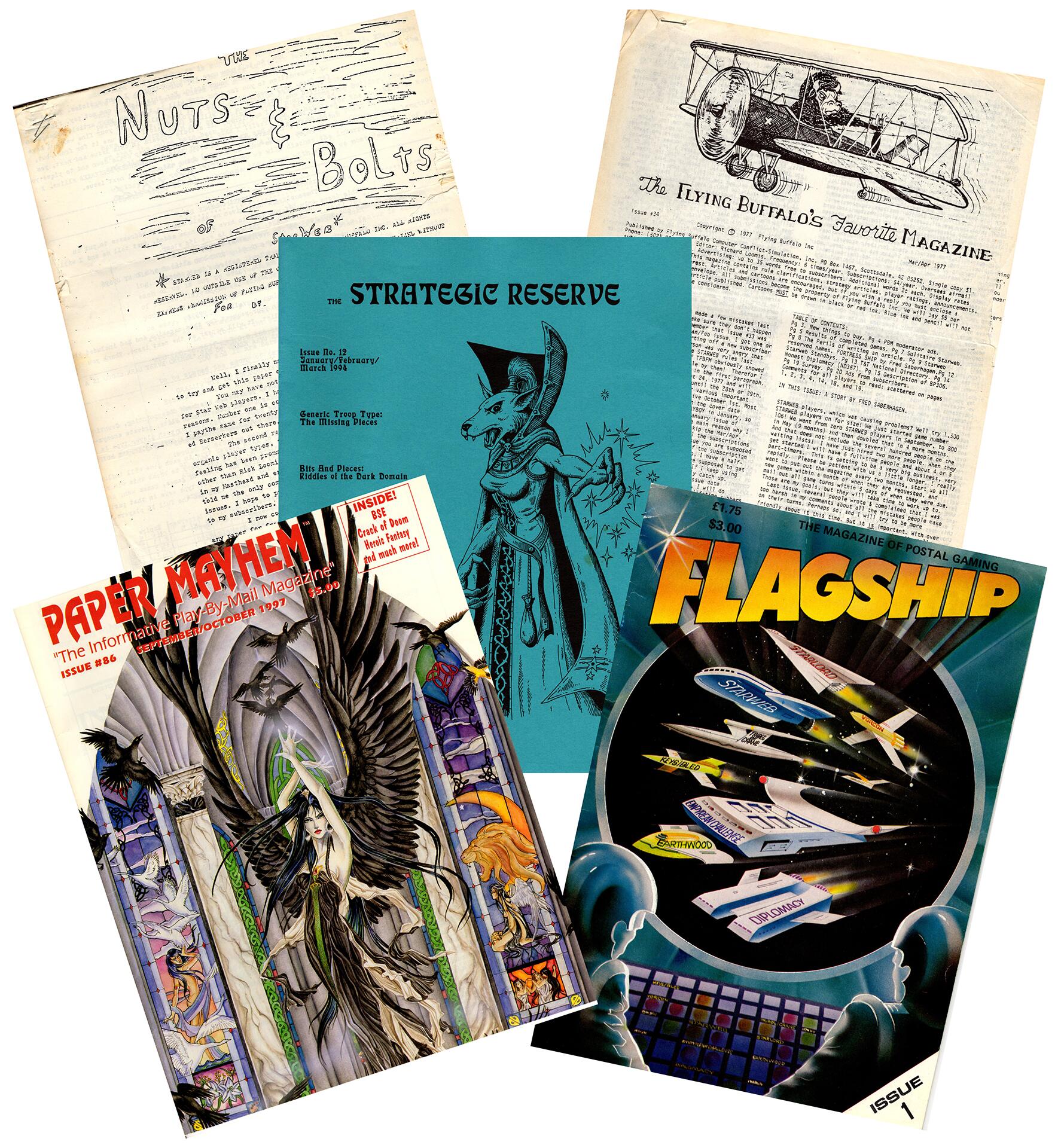
The Persons collection includes substantial runs of key PBM publications.
Based in the Boston area, Kelly S. Persons has long been active in science fiction fan organizations, including the UMass Science Fiction Society (UMSFS), the New England Science Fiction Association (NESFA), and Massachusetts Convention Fandom, Inc. (MCFI). He is honored in the community for his expertise in managing convention logistics. He is listed in the 1987-1988 edition of Who’s Who among Play-by-Mail Gamers. Until his retirement, he spent his daylight hours as a cell culture specialist at the Boston University School of Medicine.
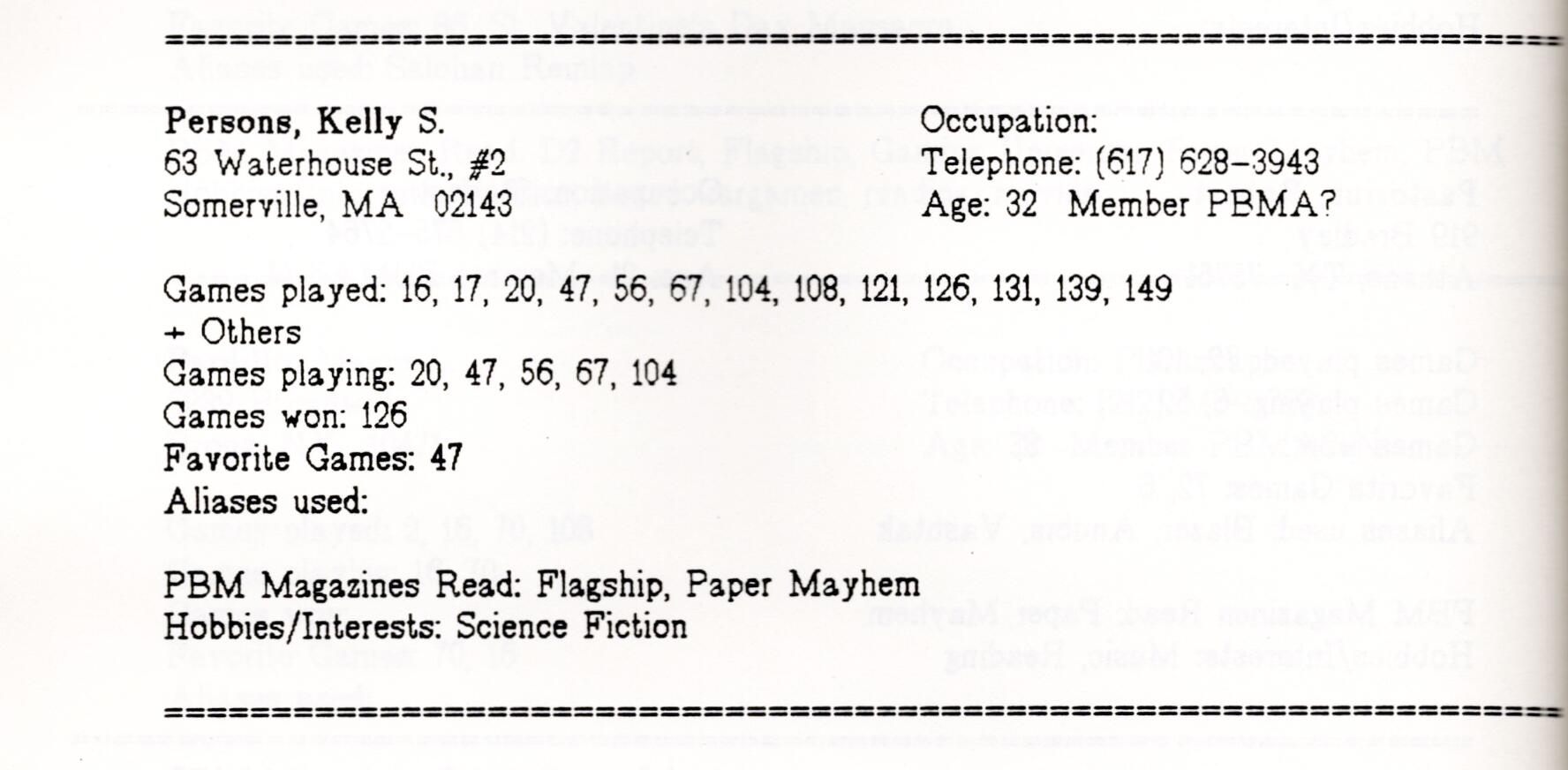
Beyond egoboo, Who’s Who among Play-by-Mail Gamers helped participants to contact one another – often a strategic necessity.
We know of only one other PBM archive, the Muir Family collection at UC Riverside, which is smaller, later, and much narrower in scope than the present offering. Historians have long lamented the lack of archival resources for PBM gaming. The Kelly S. Persons collection answers their prayers.
Selected References
Appelcline, Shannon. Designers & dragons: the 70s: a history of the roleplaying game industry. Evil Hat Productions, 2014.
Hill, Mark. Remember when multiplayer gaming needed envelopes and stamps? Wired, 20 June 2021. https://www.wired.com/story/multiplayer-gaming-envelopes-stamps-play-by-mail-history/
Mulholland, Carol and Ken Mulholland. Games mastership: how to design and run a play-by-mail game. Time Patterns, 1989.
Spencer, David. Paper dreams: a history of play-by-mail gaming. Pulp Hero Press, 2025.
Zagal, José P. and Sebastian Deterding, eds. Role-playing game studies: transmedia foundations. Routledge, 2018.

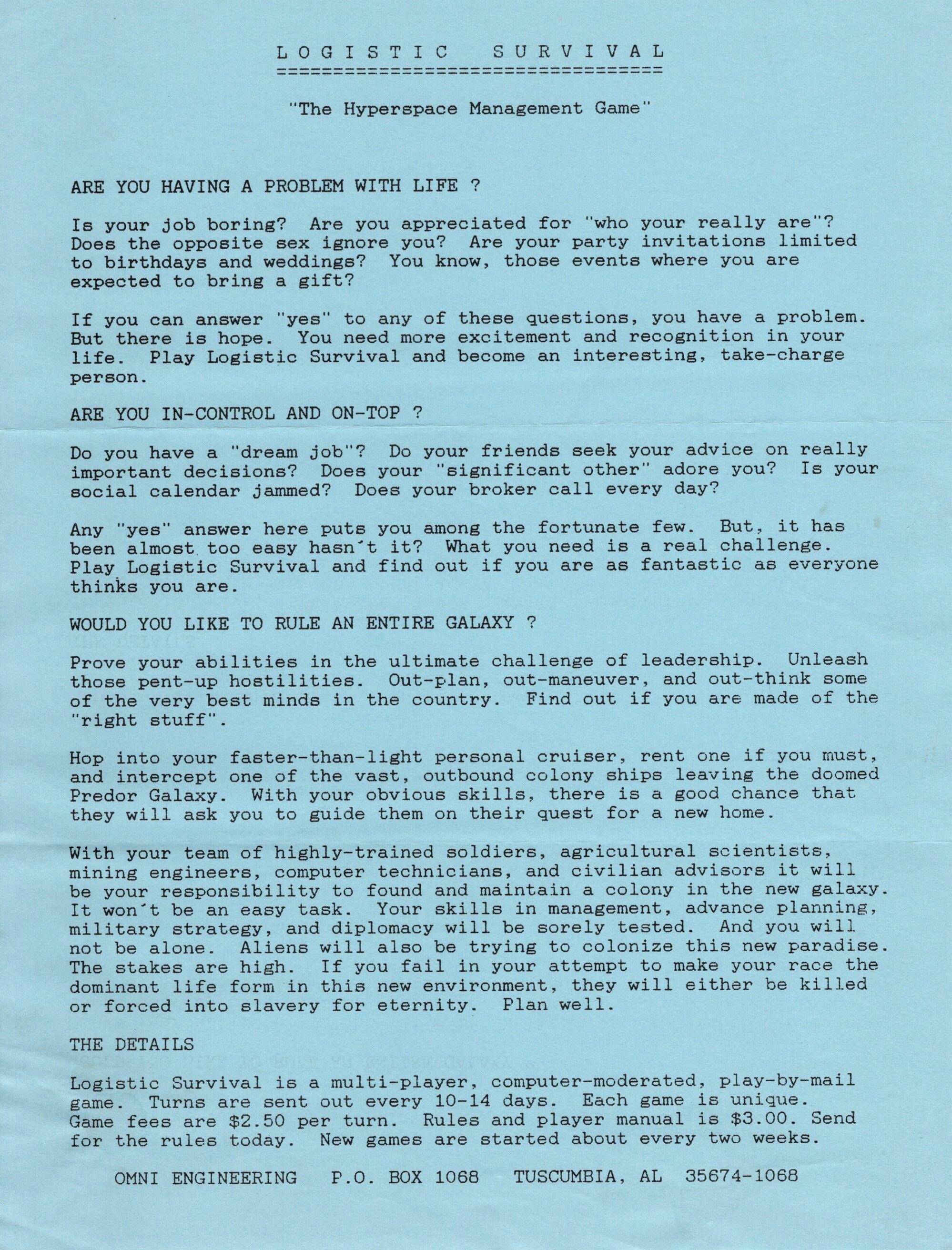
From an advertising flyer in the
Persons collection.
Product tabs
Price on Request
Recommend this product
A 30-year Play-by-Mail collection
Related products
E. E. CUMMINGS, Lawd My Hope (1936). Manuscript for a lost poem.
CUMMINGS, Edward Estlin "E. E." (1894-1962). Lawd My Hope, original manuscript, [1936]. 8 ½ x 11 inches. Folding creases, a few cryptic notations in ...
view details
$5,000
View details

F. Scott FITZGERALD. The Princeton Bric-A-Brac (1915). His "country club."
FITZGERALD, F. Scott (1896-1940)]. The Princeton Bric-A-Brac, Volume XLI. Philadelphia: E.A. Wright Bank Note Co., 1915. First edition. Gilt embossed ...
view details
$1,500
View details

Marcel Pagnol's draft for the unpublished screenplay of Carnaval (1953)
Pagnol, Marcel (1895–1974). Dardamelle, 1953. Manuscript, about 90 pages in a school notebook dated 4 January 1953. This is very much a working manusc...
view details
$8,500
View details
Five unpublished manuscripts by Madeleine L'Engle
L'Engle, Madeleine (1918–2007). A small archive of early plays and poems, circa 1941–1966. Five typescripts, comprising four plays and one collection ...
view details
$8,250
View details

Harlan ELLISON, Sex Gang (1959). First edition
Ellison, Harlan (1934-2018) writing as Paul Merchant. Sex Gang. San Diego: Nightstand Books No. 1503, 1959. First edition. Light rubbing to covers, ot...
view details
$1,000
View details

The original art for A Dark Adapted Eye by Barbara Vine / Ruth Rendell, winner of the Edgar Award
Sciacca, Thomas; Ruth Rendell (1930 – 2015). A Dark-Adapted Eye, 1986. Acrylic on Masonite. 13 ¾ x 11 ½ in. (central image: 11 ½ x 8 ½ in.). Some soil...
view details
$2,250
View details

A Coded film script by Lynn Riggs
Riggs, Lynn (1899-1954) and W. P. Lipscomb (1887-1958). The Garden of Allah: Dialogue Continuity. American Version. [Culver City:] Selznick Internatio...
view details
$750
View details

George Lucas. Star Wars: From the Adventures of Luke Skywalker (1977). First edition.
Lucas, George (b. 1944). Star Wars: From the Adventures of Luke Skywalker. New York: Del Rey / Science Fiction Book Club, 1977. First edition. A very ...
view details
$200
View details

Richard Matheson. The Shrinking Man (1973). First hardcover edition.
Matheson, Richard (1926-2013). The Shrinking Man. London: David Bruce & Watson, 1973. First hardcover edition. A fine, unread copy in a crisp dust...
view details
$750
View details

E. E. "Doc" Smith, Vortex Blaster, inscribed
Smith, Edward E. "Doc" (1890–1965). The Vortex Blaster. Reading: Fantasy Press, 1960. Fine in a very good dustwrapper with a nick to the top gutter.In...
view details
$2,750
View details

Correspondence from the 18th century Irish poet Mary O’Brien
O'Brien, Mary (fl. 1785–1790). Three autograph letters from the author and her husband Patrick O’Brien to Michael Bourke, 1785 and n.d. 3 pp. bifolia....
view details
$3,500
View details

George Lucas. Star Wars: From the Adventures of Luke Skywalker (1977). Pristine first edition.
Lucas, George (b. 1944). Star Wars: From the Adventures of Luke Skywalker. New York: Del Rey / Science Fiction Book Club, 1977. First edition. A fine ...
view details
$750
View details

The literary archives of Dudley Barker and his alter ego, Lionel Black
Barker, Dudley (1910–1980). Literary archive, comprising one file of notes and correspondence on John Galsworthy and 46 manuscripts, 1935-1980. The ma...
view details
$9,500
View details

Charles DICKENS, The Mystery of Edwin Drood (1870), First American edition
Dickens, Charles (1812-1870). The Mystery of Edwin Drood, and Some Uncollected Pieces. Boston: Fields, Osgood, & Co., 1870. First American editio...
view details
$600
View details

Pennsylvania, the Promised Land: emigration songs from the earliest years of the Harmony Society in America
Neff, Jacob (1757–1818). Harmony Society hymnal. [Lancaster, Pennsylvania], 1804–06. Manuscript. 88 pp. of German verse with musical annotations. Smal...
view details
$0
View details

Asimov, Pebble in the Sky, first edition
Asimov, Isaac (1920–1992). Pebble in the Sky. Garden City: Doubleday, 1950. First edition. Near fine in very good plus dustwrapper with minor faults. ...
view details
$1,500
View details

Inscribed by Clark Ashton Smith to Robert E. Howard
Smith, Clark Ashton. Ebony and Crystal: Poems in Verse and Prose. Auburn, California: Clark Ashton Smith, 1922. Octavo, pp. [i-iv] v-vii [viii-x] 1-15...
view details
$8,500
View details